














Have you ever removed your earbuds after a long video call or marathon run and felt immediate relief as the pressure in your ear canals vanished? You are not alone. Issues like ear fatigue, sweat buildup, and the safety risk of being blocked from your environment are driving the audio industry away from "in-ear" isolation toward "open-ear" awareness.
Seeking a solution that keeps your ears open brings you to two main contenders: bone conduction vs open ear headphones. Though they often share similar hook or neckband designs, they rely on entirely different physics to deliver sound to your brain. This article is designed to clarify these technologies. We will answer the core question: What is the difference between bone conduction and open ear air conduction, and why does it matter for your comfort? By the end, you will know exactly which device fits your life.
What Are Open Ear Headphones and How Do They Work?
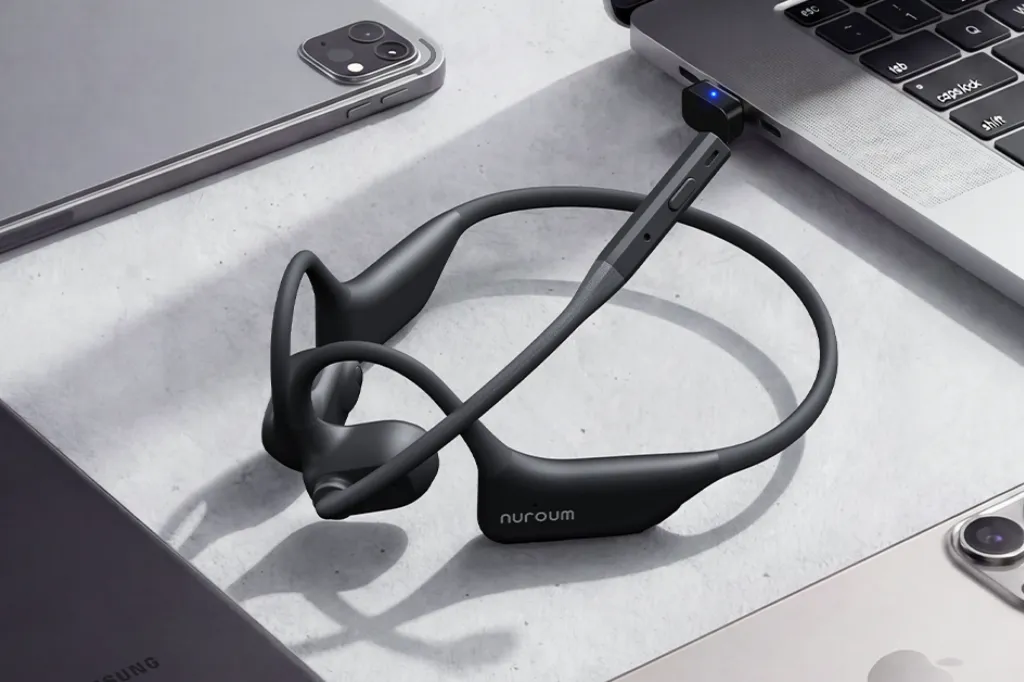
To understand the nuance of bone conduction vs open ear technology, we first need to define the broader category. "Open ear" is often used as an umbrella term, but in the specific context of the current market, it usually refers to Open-Ear Air Conduction Headphones.
Unlike traditional earbuds that seal off the ear canal to trap bass and block noise, ear-free headphones are designed to leave the ear canal completely unobstructed. They typically rest gently on the outer ear (the pinna) or hover slightly above it, utilizing directional audio technology to beam sound directly into your ear without physical insertion.
The Physics: Directional Air Conduction
How do they play music without the person next to you hearing everything? It comes down to precision acoustics.
- Beamforming Technology: Open ear headphones use localized speakers that direct sound waves toward the ear canal at a specific angle.
- Phase Cancellation: Many high-end models utilize phase cancellation algorithms. This technology emits an inverse sound wave to cancel out sound leakage, ensuring that your audio remains private even though the speaker is not sealed in your ear.
- Natural Acoustics: Because the sound travels through the air before hitting your eardrum, the audio retains the natural resonances of your outer ear. This often results in a soundstage that feels wider and more immersive, similar to listening to stereo speakers in a room rather than having sound injected directly into your brain.
Common Form Factors
When shopping for bluetooth headphones open ear, you will typically encounter two designs:
- Ear Hooks: These hook around the back of the ear and let the speaker driver rest over the ear opening. They are popular for sports and stability.
- Clip-On Cuffs: A newer style that clips onto the side of the ear like an earring.
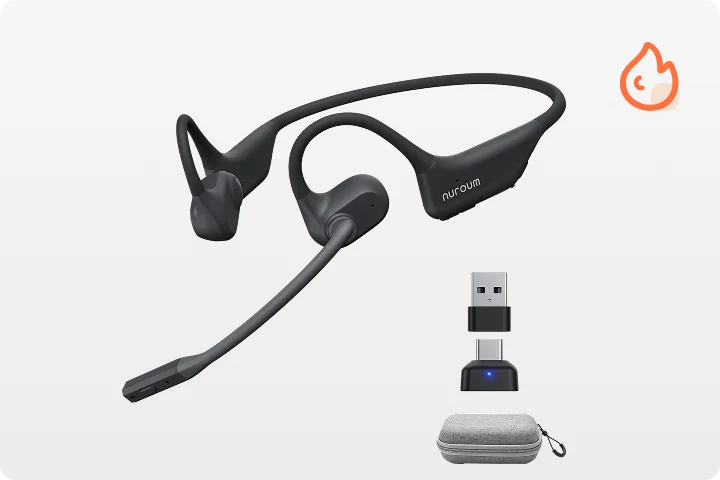
- Neckbands: A connected wire running behind the head, often used in professional business headsets to ensure stability during long calls.
Why They Are Gaining Popularity
The rise of open ear air conduction is driven by a desire for high-fidelity audio without the "underwater" effect of occlusion. Occlusion occurs when you plug your ear, causing your own voice to sound boomy and loud inside your head (the chewing-loudly effect). ear-free headphones eliminate this entirely, making them a top choice for professionals who spend hours on calls.
What Are Bone Conduction Headphones and How They Deliver Sound
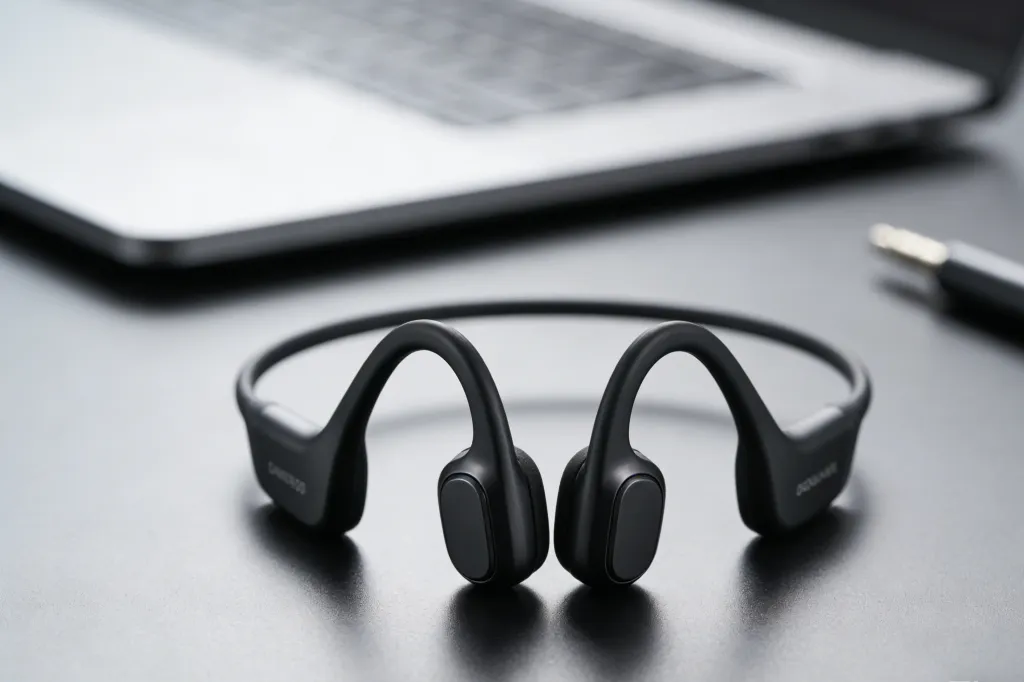
If ear-free headphones are about precision air travel, bone conduction headphones are about bypassing the air entirely. This technology might seem like science fiction, but its roots go back to the 18th century. The famous composer Ludwig van Beethoven, who suffered from hearing loss, reportedly utilized a rudimentary form of bone conduction by biting on a metal rod attached to his piano to "feel" the music through his jaw.
The Mechanism: Vibrating the Skull
So, how do they work in modern electronics?
- Transducers, Not Speakers: Instead of a traditional speaker cone that pushes air, bone conduction headphones use transducers (vibrating plates).
- The Bypass: These transducers rest against your cheekbones or the mastoid bone behind your ear. When they vibrate, they send mechanical waves through your cranial bones.
- Direct to Cochlea: These vibrations bypass the eardrum (tympanic membrane) entirely and travel directly to the cochlea (the inner ear). The fluid in the cochlea moves, stimulating the tiny hair cells that send electrical signals to your auditory nerve.
The "Inside Your Head" Sensation
Because the sound is not passing through the outer ear, the listening experience is unique. Users often describe it as the music playing "inside their head" or being a background soundtrack to their life. This leaves the eardrum completely free to process ambient sounds—traffic, nature, or office chatter.
Primary Use Cases for Bone Conduction
- Swimmers: Since they don't rely on air (which doesn't travel well underwater), waterproof bone conduction headphones are the only viable option for listening to music while swimming.
- Hearing Impairment: For individuals who have damage to their eardrums or middle ear but have a healthy cochlea, bone conduction can restore the ability to hear audio clearly.
- Heavy Industry: In environments where workers must wear foam earplugs for protection, bone conduction headphones allow them to still hear communication radios through their cheekbones.
Limitations of Physics
While innovative, bone conduction faces physical limitations regarding audio fidelity.
- Bass Response: Bass frequencies require significant air displacement to be "felt" and heard deeply. Vibrating the bone hard enough to replicate deep bass can cause an uncomfortable tickling sensation on the cheekbones.
- High-Frequency Loss: Higher frequencies can sometimes get dampened as they travel through bone density, leading to a sound signature that is focused heavily on the mid-range (vocals).
Bone Conduction vs Open Ear Headphones in Sound Comfort and Awareness
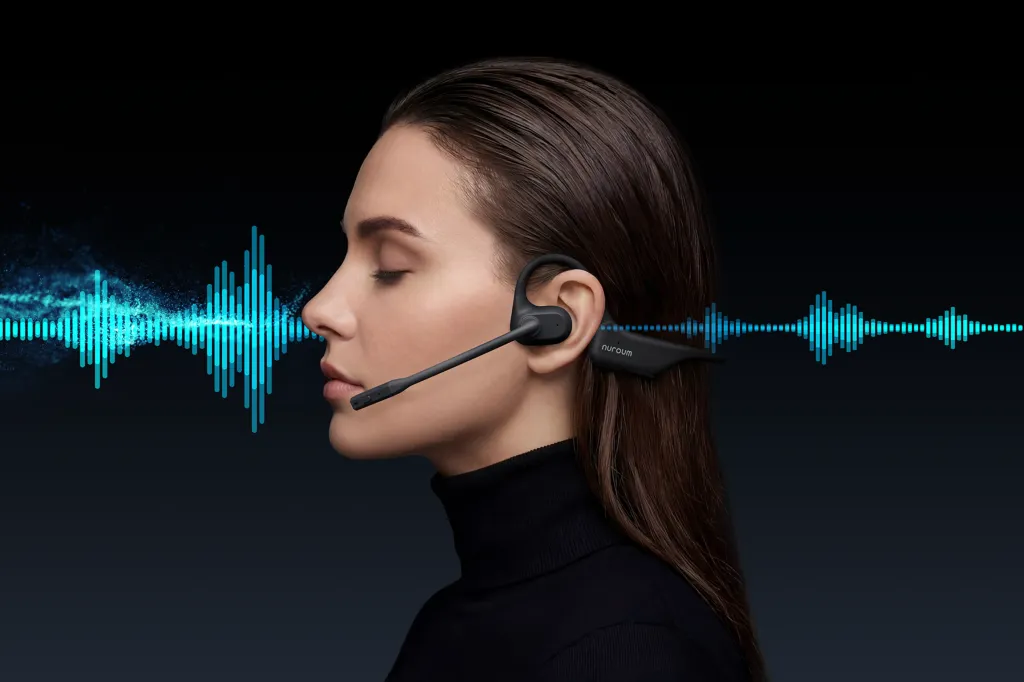
Now that we have established the definitions, let's enter the ring for the main event: bone conduction vs open ear. Which technology reigns supreme for the average user? We will break this down into three critical categories: Sound Quality, Comfort, and Situational Awareness.
Round 1: Sound Quality and Fidelity
This is the most distinct differentiator between the two technologies.
Open Ear (Air Conduction): Because ear-free headphones still utilize the eardrum, they can take advantage of the full frequency range that human hearing is accustomed to.
- Bass: While not as thumping as a sealed in-ear monitor, modern open ear drivers can produce punchy, audible bass because they are moving air.
- Clarity: The separation of instruments and high notes is generally superior. If you are an audiophile who wants to appreciate the nuances of a track, open ear is the clear winner.
- Call Quality: For voice calls, air conduction offers a more natural voice reproduction. If you are looking for the best open ear headphones for phone calls, air conduction models like the Nuroum OpenEar Pro 2 generally provide a clearer, more professional audio profile for both the wearer and the recipient.
Bone Conduction:
- Bass: As mentioned, bass is the Achilles' heel of bone conduction. It often sounds "tinny" or lacks depth.
- The "Tickle": Turning the volume up to get a fuller sound often results in intense vibration against the skin, which many users find distracting or itchy.
- Clarity: Excellent for podcasts and vocal-heavy content, but music can sound compressed.
Winner: Open Ear (Air Conduction) takes the gold for music and general audio fidelity.
Round 2: Comfort and Long-Term Wear
Open Ear (Air Conduction): Most air conduction open ear headphones use ear hooks. The comfort depends heavily on the weight distribution.
- Pros: Nothing touches your ear canal. No heat buildup. No pressure on the delicate skin inside the ear.
- Cons: If the ear hook is too tight, it can cause soreness on the top of the ear (where glasses rest).
Bone Conduction: These typically use a clamping force to ensure the transducers stay pressed firmly against the cheekbones.
- Pros: Extremely stable. They will not fall off during a backflip.
- Cons: The "Clamp." To work effectively, they must press against the head. After 2–3 hours, this pressure can cause headaches or "jaw fatigue" for some users.
Winner: Tie. It depends on your head shape. If you are sensitive to clamping pressure, Open Ear air conduction is usually lighter and gentler.
Round 3: Situational Awareness
The primary selling point for both is safety. Whether you are running on a city street or listening for a crying baby while working from home, you need to hear the world.
- The Equality of Openness: Both technologies leave the ear canal open (unless you wear earplugs with bone conduction).
- The Difference: Because bone conduction bypasses the eardrum, some users feel they have "super hearing" regarding their surroundings because their eardrum is 100% dedicated to ambient noise. However, loud open-ear air conduction can mask ambient noise slightly more than bone conduction simply because there is a source of sound closer to the canal entrance.
Winner: Bone Conduction (by a very slight margin) for absolute maximum environmental awareness in dangerous environments.
Comparison Table: At a Glance
| Feature | Open Ear (Air Conduction) | Bone Conduction |
|---|---|---|
| Audio Mechanism | Directional Speakers (Air) | Vibrating Transducers (Bone) |
| Sound Quality | High (Good Bass & Treble) | Mid-Range Focused (Less Bass) |
| Bass Response | Natural | Weak (Vibration felt) |
| Ear Fatigue | Very Low | Low (but possible clamping pressure) |
| Leakage | Minimal (with Phase Cancellation) | Minimal |
| Best For | Office, Calls, High-Fidelity Music | Swimming, Heavy Hearing Impairment |
| Battery Life | Generally Better | Average (Vibration takes power) |
Are Bone Conduction Headphones Better for Your Ears?

A common myth in the audio world is that bone conduction is inherently "safer" because it doesn't use the eardrum. Is this true? When asking are bone conduction headphones better for your ears, we must look at hearing health from two angles: Infection/Hygiene and Noise-Induced Hearing Loss (NIHL).
The Hygiene Factor: No More Ear Infections
This is where both open ear and bone conduction shine, but for the same reason.
- Ear Wax Impaction: Traditional earbuds push ear wax deeper into the canal, which can lead to impaction, temporary hearing loss, and infection.
- Moisture Buildup: Wearing earbuds for hours creates a warm, moist environment in the canal—a perfect breeding ground for bacteria (Otitis Externa or "Swimmer's Ear").
Verdict: Both styles eliminate this risk entirely. If you are prone to ear infections, either choice is a massive upgrade from in-ears.
The Hearing Loss Factor: The Cochlea Doesn't Care
This is the critical medical reality: Hearing loss usually occurs in the cochlea, not the eardrum.
According to the Centers for Disease Control and Prevention (CDC), noise-induced hearing loss occurs when the microscopic hair cells within the cochlea are damaged by excessive energy (volume) over time.
- The Pathway Doesn't Matter: Whether the energy arrives via air waves (Open Ear) or bone vibration (Bone Conduction), once it reaches the cochlea, it is processed as sound energy.
- Volume is the Villain: If you crank your bone conduction headphones to maximum volume to drown out a noisy construction site, you are sending damaging levels of energy to your cochlea. In fact, because bone conduction has poor isolation, users often turn them up louder than noise-canceling headphones, which can ironically increase the risk of hearing damage.
The Verdict on Safety
So, are bone conduction headphones better for your ears than open ear air conduction?
- Biologically: No. Both pose the same risk if played too loudly.
- Mechanically: Yes, strictly for those with damaged eardrums.
- Situationally: Both are safer than noise-canceling headphones when running outdoors because they allow you to hear approaching cars.
For the average user looking for an open ear headphones with mic for daily work, air conduction is often safer simply because the clearer audio quality means you don't have to crank the volume to 100% just to understand what someone is saying.
How to Choose Between Bone Conduction and Open Ear Headphones
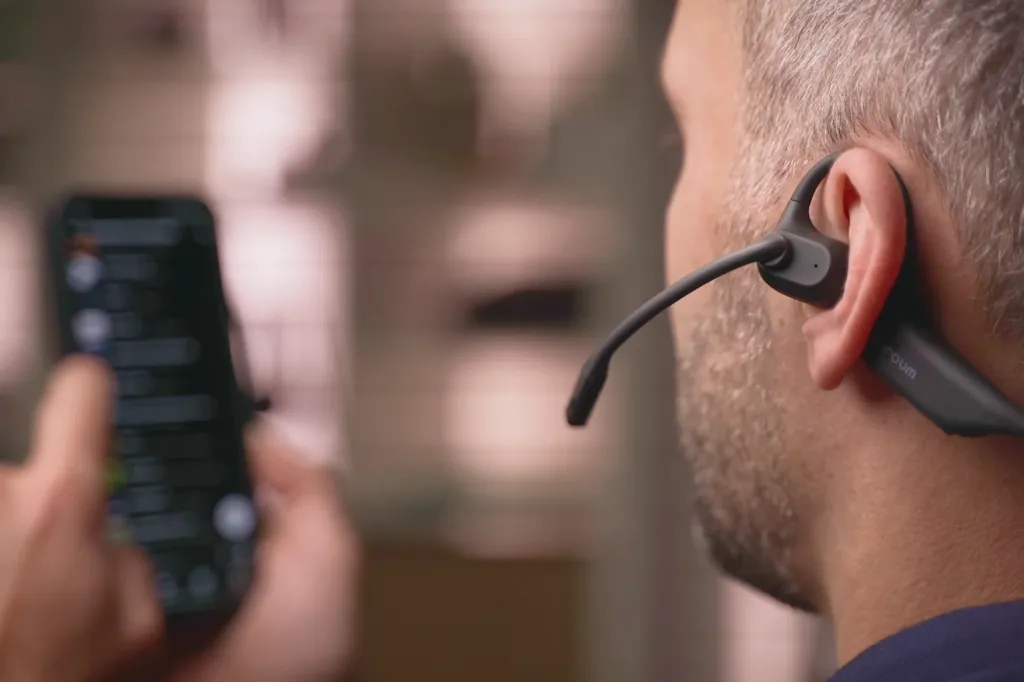
You have the science, the comparisons, and the health data. Now, how do you actually spend your money? The choice between bone conduction vs open ear ultimately comes down to your primary activity.
Scenario A: The Professional / Office Worker
You spend 4-6 hours a day on Zoom, Teams, or client calls. You need to hear your own voice naturally (sidetone) and hear if a colleague asks you a question.
- The Pick: Open Ear (Air Conduction).
- Why: Voice clarity is paramount. Bone conduction can make voices sound slightly muffled or nasal. Open ear headsets, especially those with boom microphones, offer broadcast-quality communication.
- Recommendation: Look for a headset with multipoint pairing and DSP noise cancellation for the microphone.
Scenario B: The Outdoor Runner / Cyclist
You run on busy roads. You need to hear a Tesla creeping up behind you, but you also need a driving beat to keep your pace.
- The Pick: Open Ear (Air Conduction) is generally preferred today, though Bone Conduction is the classic choice.
- Why: Modern open ear hooks are lighter. Bone conduction clamping can become annoying when combined with sunglasses and a helmet strap. However, if you cycle at high speeds, wind noise can be an issue for both, but bone conduction is slightly less susceptible to wind turbulence in the ear cup.
Scenario C: The Swimmer
You want to listen to a podcast while doing laps.
- The Pick: Bone Conduction.
- Why: Physics. Bluetooth does not travel through water, and air conduction sounds terrible underwater. Waterproof bone conduction headphones with built-in MP3 storage are the only functional choice here.
Scenario D: The Hearing Aid User
You wear In-The-Ear (ITE) or Behind-The-Ear (BTE) hearing aids but want to listen to private audio.
- The Pick: Bone Conduction.
- Why: Because they sit on the cheekbone, they do not interfere physically with the hearing aid in the canal, allowing you to use both devices simultaneously.
Key Features to Look For
Regardless of which type you choose, ensure your device has:
- Bluetooth 5.3 or higher: For stable connectivity and lower battery consumption.
- Multipoint Connection: The ability to connect to your laptop and phone simultaneously.
- IPX Rating: Look for at least IPX4 for office use (sweat/spill resistant) or IPX7/8 for sports.
- Mic Quality: If you plan on using these for communication, ensure there is a dedicated microphone boom or advanced ENC (Environmental Noise Cancellation).
The Comprehensive Solution: Nuroum OpenEar Pro 2
While the debate between bone conduction and open ear often forces a compromise, the Nuroum OpenEar Pro 2 emerges as a tailored solution for the modern professional. It addresses the specific shortcomings of bone conduction—namely microphone quality and bass response—while retaining the open-ear safety benefits.
Why it stands out as a superior choice:
- Targeted Bass Enhancement: Unlike the "tinny" vibration of bone conduction, the OpenEar Pro 2 uses large air-conduction drivers to deliver a warm, full-bodied sound profile suitable for both voice and music.
- Professional Boom Microphone: Most bone conduction headsets rely on integrated microphones near the ear, which can struggle with clarity. The OpenEar Pro 2 features an adjustable boom arm that places the mic right near your mouth, utilizing advanced Noise Cancellation (ENC) to strip away background chatter.
- Zero-Vibration Comfort: By eliminating the need for cheekbone contact, it removes the "tickle" and clamping fatigue, allowing for true all-day wearability during back-to-back meetings.
For those specifically seeking an open ear headphones with mic that handles the rigors of a noisy office or remote work setup, this model represents the evolution of open-ear technology—prioritizing clarity without isolation.
Conclusion
The debate of bone conduction vs open ear isn't about one technology being "better" than the other—it is about which one solves your specific problems.
If you are a swimmer or have specific middle-ear hearing issues, bone conduction is a miraculous tool that bypasses the limitations of nature. However, for the vast majority of users—runners, office workers, and commuters—Open Ear Air Conduction offers a superior balance. It provides better sound fidelity (especially bass), eliminates the uncomfortable vibrations of bone conduction, and offers a lightweight fit that disappears on your head for all-day wear.
Prioritizing your hearing health doesn't mean you have to sacrifice audio quality. By choosing a high-quality open ear device, you get the safety of situational awareness mixed with the rich audio experience you deserve.
FAQs
1. Can others hear my music with open ear or bone conduction headphones?
This is called "sound leakage." Early versions of both technologies struggled with this. However, modern ear-free headphones use directional audio and phase cancellation to minimize leakage significantly. At 50-60% volume (safe listening levels), a person sitting in the next cubicle will likely hear nothing. Bone conduction also leaks sound because the casing itself vibrates, effectively becoming a small speaker at high volumes. Generally, premium ear-free headphones now manage leakage better than bone conduction at high volumes.
2. Do bone conduction headphones have good bass compared to open ear?
Generally, no. Physics is the limitation here. To hear bass through bone, the device has to vibrate violently, which creates a tickling sensation that many find unbearable. Ear-free headphones rely on air conduction, which handles low-frequency waves much more naturally, providing a fuller, warmer sound profile without the physical buzzing sensation on your face.
3. Can I wear glasses with bone conduction or open ear headphones?
Yes, but comfort varies. Bone conduction headphones usually wrap around the back of the head and loop over the ears, which means they compete for space with your glasses' arms. This can get painful after an hour. Many modern open ear headphones use a softer, more flexible ear hook design or a clip-on style that interferes less with eyewear. If you wear thick-framed glasses, testing the fit is essential, though open-ear hooks generally offer more adjustability.
4. Are open ear headphones suitable for driving?
In many jurisdictions, driving with both ears covered (using noise-canceling headphones) is illegal and dangerous. Ear-free headphones are an excellent legal alternative in many states because they do not block ambient noise like sirens or horns. They are excellent for hands-free calling while keeping your hands on the wheel and your ears open to the road. However, always check your local traffic laws regarding headphone use while driving.