






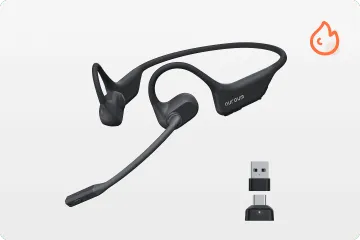
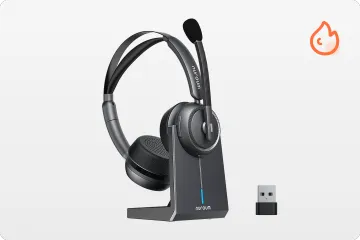
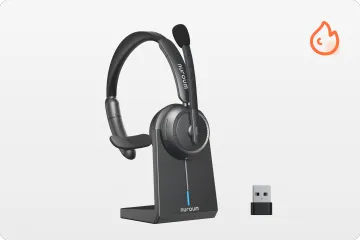
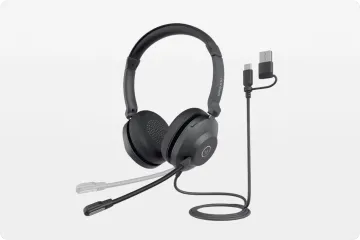




When shopping for high-quality audio gear, you’ll inevitably face the big question: open back vs. closed back headphones. While they might look similar at a glance, the way they handle airflow and sound waves creates two completely different listening experiences.
In this guide, we’ll break down the difference between open back and closed back headphones to help you decide which one deserves a spot on your desk.
Understanding the Meaning: Open Ear vs. Closed Ear Headphones
At the most basic level, the difference lies in the "cup" or the outer shell of the earphone.
What are Open Back Headphones? (Soundstage & Airflow)
Open back headphones feature ear cups with perforated covers—usually a mesh or grille—that allow air and sound to pass through the back of the driver.
- The Benefit: This design eliminates pressure build-up and prevents standing waves. The result is a "wide soundstage," meaning the music feels like it’s happening in the room around you rather than inside your skull.
- The Trade-off: They offer zero isolation. Everyone around you will hear your music, and you will hear every car horn or conversation nearby.
What are Closed Back Headphones? (Isolation & Bass)
So, what are closed back headphones exactly? These are designed with a solid outer shell that completely seals the back of the driver.
- The Benefit: They are the kings of isolation. By trapping the sound inside, they provide a private listening experience and significantly better "passive noise cancellation."
- The Trade-off: Because air is trapped, they can sometimes sound "boxy," and your ears might get warm during long sessions. However, this seal creates much more impactful and punchy bass.
Quick Comparison: Difference Between Open Back and Closed Back Headphones
To help you decide at a glance, here is a breakdown of how open ear vs. closed ear headphones stack up:
| Feature | Open Back Headphones (Open Ear) | Closed Back Headphones (Closed Ear) |
| Design Structure | Perforated or vented ear cups that allow air and sound to pass through | Fully sealed ear cups that block external airflow |
| Soundstage | Wide, natural, speaker-like spatial imaging | Narrower, more intimate soundstage |
| Bass Response | Lighter, more accurate bass | Stronger, punchier bass with more impact |
| Midrange Clarity | Very natural and transparent | Slightly colored due to enclosure resonance |
| Treble Detail | Airy and detailed high frequencies | Controlled highs with less airiness |
| Noise Isolation | Minimal passive isolation | High passive noise isolation |
| Sound Leakage | Significant — others nearby can hear your audio | Very low leakage |
| Recording Suitability | Poor (mic bleed risk) | Excellent for studio recording |
| Comfort & Breathability | Cooler for long sessions due to airflow | Warmer over time due to sealed design |
| Portability | Best for stationary/home use | Suitable for travel and commuting |
| Best Use Cases | Audiophile listening, mixing, critical listening | Gaming, office work, calls, tracking vocals |
| Wireless Availability | Limited but growing (open back wireless headphones) | Widely available across price ranges |
| Headset / Mic Integration | Rare | Common (closed back headsets with boom mics) |
| Privacy | Low — audio is audible to others | High — private listening experience |
Best Use Cases: Matching Design to Your Lifestyle
Choosing between open back headphones vs. closed back isn't about which is "better" in a vacuum—it’s about where you’ll be using them.
For the Home Audiophile: The Rise of Open Back Wireless Headphones
Traditionally, high-end open backs required a wired amp. However, the market is shifting. We are seeing more open ear headphones with mic that allow you to enjoy that signature "airy" sound while moving freely around your house. If you have a quiet home office, this is the gold standard for pure musical enjoyment.
For Gamers and Professionals: Why Closed Back Headsets Dominate
If you’re in a competitive match or a Zoom call, closed back headsets are the superior choice. They prevent your game audio from bleeding into your microphone and block out the sound of your mechanical keyboard. For the office, a closed design is a matter of politeness—your coworkers don't want to hear your playlist. This makes a professional wireless microphone headset the perfect solution for both gaming and remote work, combining voice clarity with freedom of movement.
For Content Creators: Mixing with Open vs. Recording with Closed
- Mixing/Mastering: Most engineers prefer open backs because the frequency response is usually more neutral and natural.
- Recording/Tracking: If you’re singing into a mic, you must use closed back headphones. If you wear open backs, the backing track will leak into the microphone, ruining your recording.
Product Spotlight: The Ultimate Office Companion – Nuroum HP31D
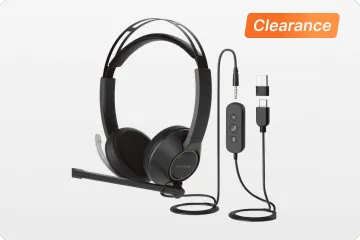
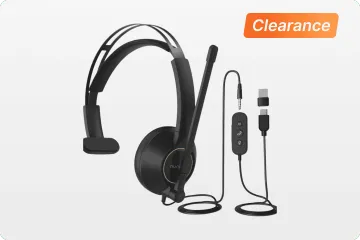
After understanding the principles of open ear vs. closed ear headphones, you might ask: which product truly leverages the advantages of a closed-back design in a practical work setting? The Nuroum HP31D provides a compelling answer. As a closed back headset specifically engineered for remote work and open-plan offices, it precisely addresses the pain points of modern professionals, making it the ideal noise cancelling headphone with mic for office environments.
- Exceptional Passive Noise Isolation: Thanks to its classic closed ear design, the HP31D's circumaural (over-ear) earcups effectively block out ambient conversations and environmental noise. This allows you to instantly enter a state of deep focus, even in a bustling café or a busy office.
- AI Noise-Canceling Microphone for Crystal-Clear Communication: Beyond the inherent isolation benefits of its closed-back construction, the HP31D is equipped with advanced AI-powered Environmental Noise Cancellation (ENC) technology. This means it not only ensures you hear clearly, but also guarantees that your voice is the only thing heard by your callers, perfectly addressing the common shortcomings of traditional headsets in call quality.
- Ultimate All-Day Wearing Comfort: Many worry about closed-back headphones feeling hot or clamping too tightly. However, the HP31D features high-quality protein leather ear cushions and a 180° rotatable design, weighing a mere 140g. This lightweight and ergonomic build ensures comfortable wear, even during extended video conferences.
- Flexible Connectivity Options: Supporting both Bluetooth 5.4 and a dedicated USB Dongle, the HP31D ensures stable and reliable wireless connectivity. This addresses potential concerns about signal latency that some users might have with wireless headphones, offering a seamless plug-and-play experience.
Final Verdict: Which One Should You Pick?
The choice between open back vs. closed back headphones ultimately comes down to your primary use case and listening environment.
- Choose Open Back if: You primarily listen in a quiet, private environment, prioritize the widest soundstage and most natural audio reproduction, and value a comfortable, airy fit for long sessions.
- Choose Closed Back if: You need excellent sound isolation for commuting, working in a noisy office (like with the Nuroum HP31D), require powerful bass, or need to prevent sound leakage (e.g., for recording or private calls).
FAQs
What are closed back headphones?
Closed back headphones are headphones with earcups that are completely sealed on the outside. This design prevents sound from leaking in or out, providing superior noise isolation and a more private listening experience compared to open-back models.
Do Open Back Headphones Leak Sound?
Yes. Because open back designs are not sealed, others nearby can hear what you’re listening to. They are best used in quiet, private spaces.
Are Open Back Headphones Better for Your Ears?
Open back headphones allow airflow and reduce ear pressure, making them more comfortable for long listening sessions. However, they do not block external noise, which may be distracting in public areas.
Are Closed Back Headsets Better for Calls and Remote Work?
Yes. Closed back headsets, like the Nuroum HP31D, combine sealed ear cups with boom mics or ENC microphones, ensuring voice clarity and minimizing background noise.