

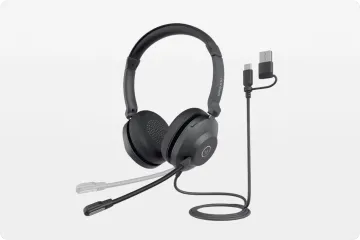
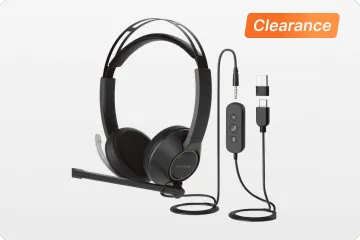
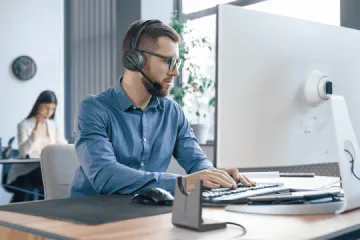
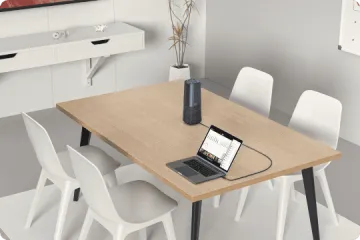



In the CX world, a headset is an agent’s most vital tool. Choosing the best customer service headset in 2026 is no longer just about audio—it’s about preventing burnout and securing customer trust.
This guide reviews 10 top-tier models that balance elite noise cancellation, all-day ergonomics, and cost-efficiency to help your team perform at their peak.
Why Choosing the Right Customer Service Headset Matters?
Impact on Agent Productivity and Comfort
For agents on 8-hour shifts, comfort equals productivity. "Headset fatigue" from heavy or tight gear leads to distraction and headaches. Professional, lightweight designs with memory foam ear cushions allow agents to stay focused on the solution, not the physical discomfort, significantly reducing error rates.
Improving Customer Experience with Crystal Clear Audio
Clarity is the foundation of trust. If a customer has to repeat information, frustration spikes. High-definition (HD) voice ensures seamless communication, shortens average wrap-up times, and makes your brand sound more authoritative and reliable.
Noise Cancellation: A Must-Have in Loud Call Centers
Noise is the enemy of concentration. Whether in a buzzing office or a home environment, investing in high-quality noise cancelling headphones for call center use is a non-negotiable for two reasons:
- For the Agent (ANC): Blocks out ambient chatter, keeping the agent calm and focused.
- For the Customer (Noise-Canceling Mic): Filters out background chaos so the customer only hears the agent’s voice, creating a professional one-on-one atmosphere.
Quick Comparison: Top 10 Best Customer Service Headsets at a Glance
To help you cut through the noise, we’ve compared the leading models based on their battery life, AI noise-canceling capabilities, and price—including our top picks for affordable wireless freedom.
| Rank | Model | Connectivity | Price (Est.) | Key Selling Point | Best For |
| 1 | Jabra Evolve2 75 | Wireless (BT/USB) | $350 - $390 | 8-Mic ANC Technology | Premium Enterprise |
| 2 | Poly Voyager Focus 2 | Wireless (BT/USB) | $160 - $250 | Acoustic Fence ANC | Extreme Noise Blocking |
| 3 | Nuroum HP31D | Wireless (BT/USB) | $90-$100 | AI Noise-Reduction & 45H Battery | Focus & Wireless Value |
| 4 | Logitech Zone Wireless 2 | Wireless (BT/USB) | $230 - $250 | AI-Powered Voice Clarity | Modern Tech Teams |
| 5 | Nuroum HP31S | Wireless (BT/USB) | $80 - $95 | Ultralight Mono / 45H Battery | Busy Multitaskers |
| 6 | Sennheiser SC 660 | Wired (USB) | $230 - $330 | Rugged Stainless Steel | Heavy-duty Longevity |
| 7 | Bose QC 45 (Work Ed.) | Wireless (BT/USB) | $290 - $360 | Legendary Silence/Comfort | VIP/Executive Support |
| 8 | Poly Blackwire 5220 | Wired (USB/3.5) | $80 - $90 | Ergonomic Wired Reliability | Large Scale Deployment |
| 9 | Yealink WH66 | Wireless (DECT) | $180 - $300 | Touchscreen Workstation | Desk-bound Power Users |
| 10 | Shokz OpenComm 2 | Wireless (BT) | $160 - $180 | Bone Conduction Design | Ear Health & Safety |
Deep Dive: The 10 Best Customer Service Headsets of 2026
Jabra Evolve2 75 – Best Overall for Hybrid Teams
The gold standard for modern professionals. It combines elite noise cancellation with a fold-away mic boom that makes it perfect for both the office and the commute.
- Pros: Outstanding 8-microphone technology; hidden mic arm for casual use; superior comfort.
- Cons: Premium price point; software updates can be frequent.
- Why We Recommend It: It’s the most versatile headset on the market, offering a "no-compromise" experience for high-performing agents.
Poly Voyager Focus 2 – Best for Extreme Noise Blocking
Poly’s "Acoustic Fence" technology creates a virtual quiet bubble around the agent, making it ideal for the loudest contact centers.
- Pros: Best-in-class microphone noise cancellation; ultra-cushioned headband; "slap-on" charging stand.
- Cons: Design feels slightly bulkier than competitors.
- Why We Recommend It: If your office sounds like a stock exchange, this is the only headset that will keep your calls sounding private.
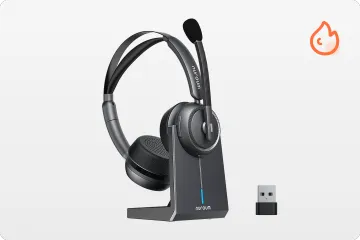
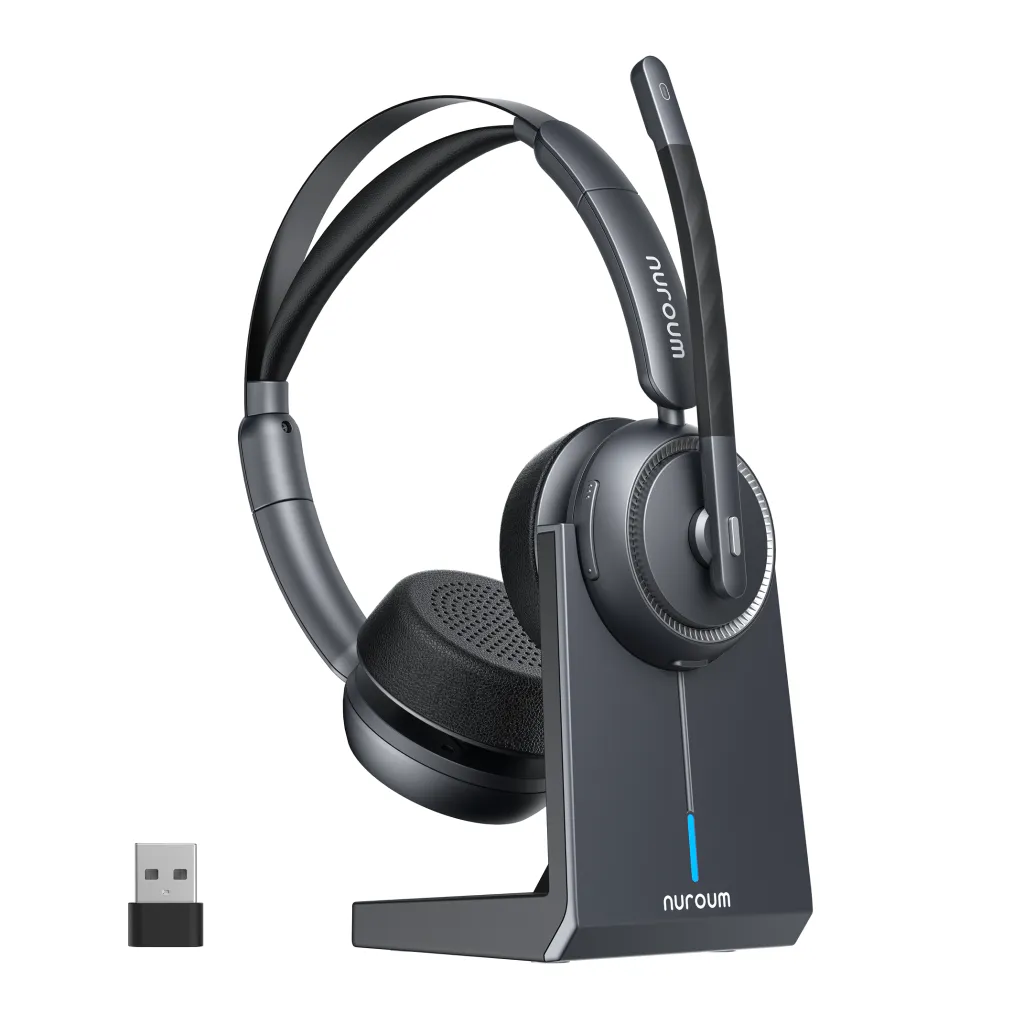
Nuroum HP31D – Best Value for Wireless Focus
A game-changer for budget-conscious managers. This dual-ear bluetooth noise cancelling headset with mic delivers AI-powered noise reduction that rivals brands triple its price.
- Pros: Superior Dual-Microphone ENC that filters out 99% of background noise; exceptional price-to-performance ratio; 45+ hours of battery life.
- Cons: Minimalist aesthetic might feel too simple for some.
- Why We Recommend It: The standout feature is its Advanced ENC (Environmental Noise Cancellation). Even in a dense call center, the AI algorithm isolates your voice and suppresses ambient chaos, providing a "premium" quiet experience for the caller at a fraction of the cost.
Logitech Zone Wireless 2 – Best for Smart AI Features
Logitech leverages AI to suppress noise on both ends of the call, ensuring the agent hears clearly even if the customer is in a noisy area.
- Pros: Intuitive "flip-to-mute" function; excellent integration with Microsoft Teams and Zoom.
- Cons: Battery life is slightly shorter when all AI features are active.
- Why We Recommend It: Perfect for tech-forward teams who rely heavily on video conferencing and softphone apps.
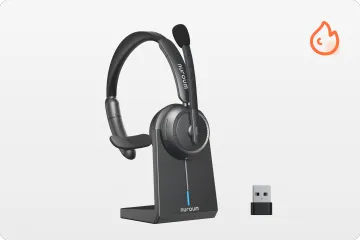
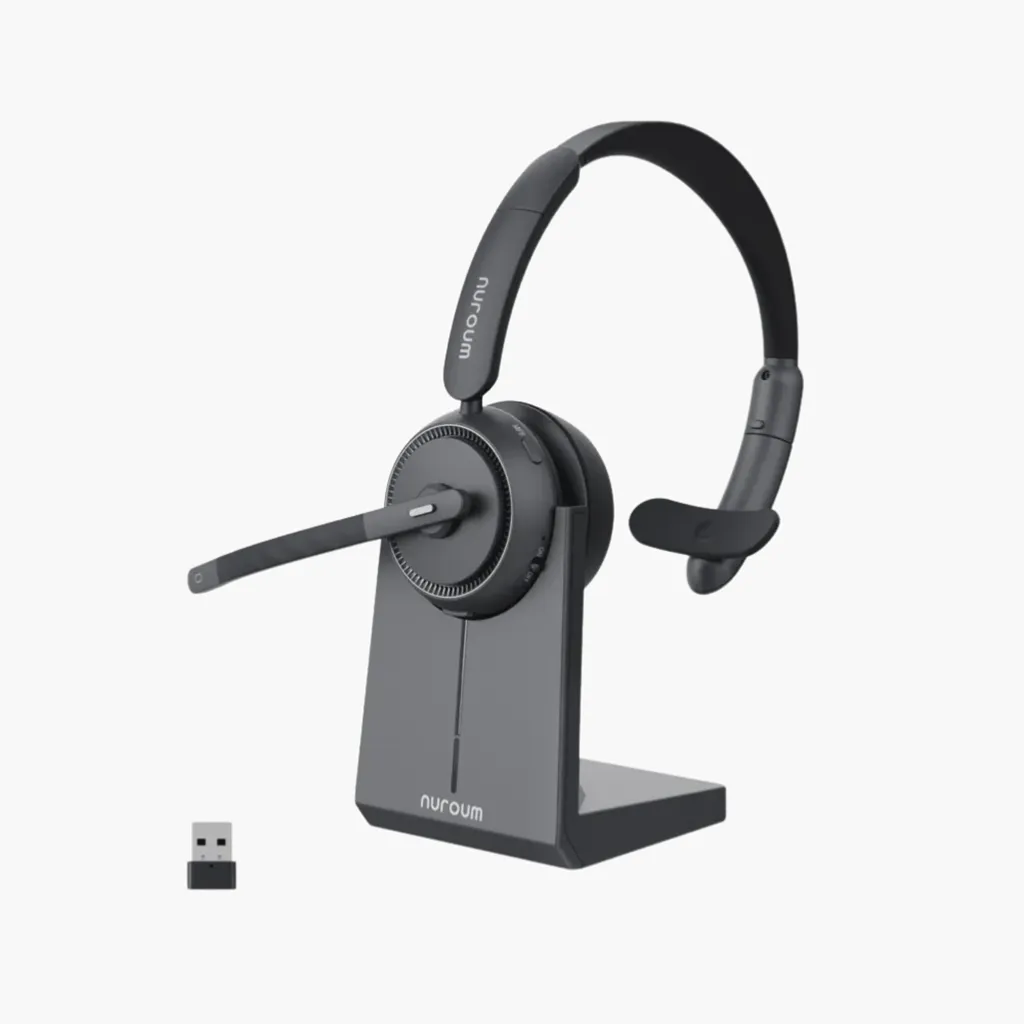
Nuroum HP31S – Best for Lightweight Multitasking
For agents who need to keep one ear on the office environment while enjoying wireless freedom, the HP31S is the ultimate lightweight solution. As a professional-grade mono bluetooth headset, it strikes the perfect balance between high-quality call performance and situational awareness.
- Pros: Featherlight design reduces neck strain; clear voice pickup; ultra-fast charging.
- Cons: Single-ear design isn't suited for high-concentration deep work in loud rooms.
- Why We Recommend It: It’s the best "all-day" mono headset for receptionists and supervisors who are constantly moving and communicating with team members.
EPOS Impact SC 660 – Most Durable Wired Choice
While wireless is trending, this wired legend remains a staple for its indestructible build quality using stainless steel and brushed aluminum.
- Pros: Virtually unbreakable; no battery anxiety; 3-year warranty often included.
- Cons: Wired connection limits movement; higher price for a non-wireless model.
- Why We Recommend It: Ideal for 24/7 call centers where headsets are passed between shifts and need to survive heavy abuse.
Bose QuietComfort 45 (Work Edition) – Ultimate Comfort for 8-Hour Shifts
Bose brings its legendary noise-canceling heritage to the workplace. This is arguably the most comfortable headset for sensitive ears.
- Pros: Unrivaled "cloud-like" comfort; world-leading ANC; premium brand prestige.
- Cons: Microphone isn't as specialized for voice isolation as Jabra or Poly.
- Why We Recommend It: A great "retention tool" for VIP support agents who spend their entire day in high-stakes conversations.
Poly Blackwire 5220 – Best Ergonomic Budget Wired
The go-to choice for massive office rollouts where reliability and ergonomics are prioritized over wireless features.
- Pros: Very affordable; 3.5mm and USB-A/C versatility; intuitive inline controls.
- Cons: The cable can be cumbersome; basic aesthetics.
- Why We Recommend It: It’s the "Old Reliable" of the industry—it works every time you plug it in.
Yealink WH66 – Best for Desk-Bound Power Users
More than a headset—it’s a workstation. The base includes a 4-inch touchscreen that acts as a speakerphone and USB hub.
- Pros: DECT wireless provides 3x the range of Bluetooth; massive touchscreen control.
- Cons: Expensive; base takes up significant desk space.
- Why We Recommend It: Best for executives or power users who manage multiple devices (PC, Desk Phone, Mobile) from one spot.
Shokz OpenComm 2 – Best for Ear Health & Safety
Using bone conduction technology, this headset leaves the ear canal completely open, preventing infections and keeping agents aware of their surroundings.
- Pros: Zero ear fatigue or sweat; great for situational awareness; very lightweight.
- Cons: Bass quality is lower; sound can leak at high volumes.
- Why We Recommend It: A specialized solution for agents with ear sensitivity or those working in environments where hearing ambient sound is a safety requirement.
Buying Guide: How to Choose the Best Customer Service Headset
Selecting the right headset is a balance between your office environment, budget, and agent needs. Here are the three critical factors to consider before hitting "buy":
Wired vs. Wireless: Which is Better for Your Office?
- Wireless (Bluetooth/DECT): Best for modern offices and hybrid setups. It offers "wireless freedom," allowing agents to stand up, stretch, or grab a file without disconnecting. With models like the Nuroum HP31 series offering 45+ hours of battery, the old fear of headsets "dying mid-call" is officially a thing of the past.
- Wired: Best for fixed-desk environments where reliability is the only priority. They are plug-and-play and never require charging, but they limit movement.
Understanding Noise-Canceling Microphone Technologies (ENC vs. ANC)
Don’t get confused by the jargon.
- ENC (Environmental Noise Cancellation): This is for the customer. It uses multiple mics and AI algorithms to filter out your office background noise so the customer only hears your voice. This is a standout feature in the Nuroum HP31D/S.
- ANC (Active Noise Cancellation): This is for the agent. It silences the "hum" of the office in the agent's ears, helping them stay focused.
Comfort & Compatibility
An agent wears a headset for 2,000 hours a year. Look for breathable ear cushions and lightweight headbands (under 150g is ideal). Also, ensure the headset is "Plug-and-Play" with your software, whether you use Zoom, Microsoft Teams, or a specialized VoIP system.
Summary: Which Headset Should You Pick?
Ultimately, the best bluetooth headset for call center is the one that aligns with your specific workflow and environment. Whether you prioritize the premium features of a flagship model or the high-value performance of an emerging leader, the goal remains the same: enhancing agent efficiency and ensuring customer satisfaction.
Investing in the right tool—like the Nuroum HP31 series for affordable wireless freedom or the Jabra Evolve2 for elite features—allows your team to focus on what truly matters: the conversation. By reducing physical fatigue and technical distractions, you empower your agents to deliver their best work, one clear call at a time.
FAQs
Can I use consumer Bluetooth headphones for professional customer service?
While possible, it is not recommended. Consumer headphones are tuned for music, whereas professional headsets are tuned for voice frequency. Professional models also include specialized noise-canceling microphones (like those found in Poly or Nuroum) that filter out human speech in the background—something most consumer headphones struggle with.
Is a wired or wireless headset better for a home office?
Wireless is generally better for home offices as it allows you to move freely (e.g., answering the door or grabbing a coffee) without dropping the call. However, if you have a poor Bluetooth environment or don't want to manage charging, a reliable wired model like the Nuroum HP11DU is a great "set it and forget it" option.
How long should a wireless customer service headset battery last?
For a standard 8-hour shift, you should look for a headset with at least 15–20 hours of talk time to avoid mid-day charging. Modern premium options and high-value models like the Nuroum HP31 series now offer up to 45+ hours of battery life, meaning you only need to charge them once or twice a week.
What is the difference between a Binaural and a Mono bluetooth headset?
- Binaural (Dual-ear): Covers both ears to help agents stay focused by blocking out office distractions. It’s best for high-concentration roles.
- Monaural (Single-ear): A mono bluetooth headset allows agents to hear their surroundings and communicate with colleagues while on a call. It is the preferred choice for supervisors and multi-tasking receptionists.