








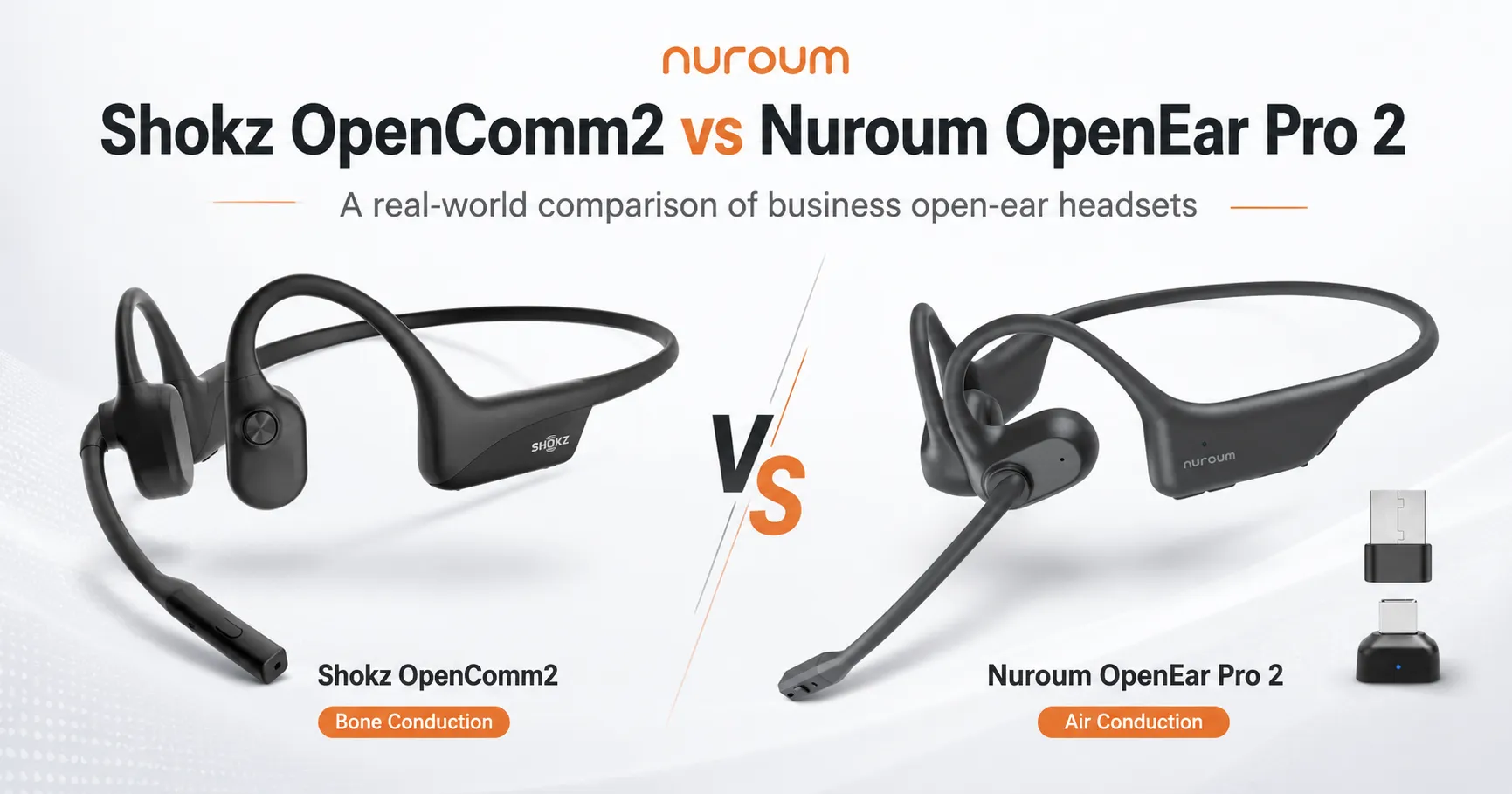
When remote workers and hybrid office professionals search for the perfect open-ear headset, two names consistently rise to the top: the Shokz OpenComm2 UC and the Nuroum OpenEar Pro 2. On the surface, both devices share a strikingly similar silhouette — a wraparound frame, a boom microphone, and an open-ear design that keeps users aware of their surroundings. But as tech reviewer Detroit Love demonstrated in his January 2026 real-world comparison video, the similarities end there. Underneath those nearly identical exteriors lie two fundamentally different technologies, two different philosophies, and two very different user experiences.
This breakdown examines every major dimension — sound technology, comfort, microphone quality, connectivity, and price — to help anyone shopping for a wireless headset with mic for work make a fully informed decision, whether they're a remote worker, enterprise buyer, or tech enthusiast.

What Is an Open-Ear Headset — And Why Does It Matter for Remote Workers?
Open-ear headsets have surged in popularity for one simple reason: they let users stay aware of their surroundings without sacrificing call clarity. For remote workers juggling home environments, hybrid professionals navigating open offices, and anyone on back-to-back Zoom or Teams meetings, a headset that doesn't seal off the ear canal dramatically reduces fatigue over a full workday.
Both the Shokz OpenComm2 UC and the Nuroum OpenEar Pro 2 promise this experience — but they achieve it in completely different ways, a distinction that Detroit Love pointed out early in his review as the single most important factor buyers need to understand before spending their money.
Bone Conduction vs. Air Conduction: The Core Technology Difference
This is where the two headsets diverge most significantly — and where the Nuroum OpenEar Pro 2 holds a meaningful technical advantage for professional communication.
The Shokz OpenComm2 UC is built on the brand's patented 7th-generation bone conduction technology. Rather than directing sound into the ear canal, its transducers rest against the cheekbones and send vibrations directly to the inner ear, bypassing the eardrum entirely. Shokz's PremiumPitch 2.0 system equalizes mid and high frequencies to compensate for the inherent limitations of this approach. The result is adequate clarity for voice calls, but bone conduction comes with a ceiling: audio quality, particularly for music and richer sound, is noticeably thinner compared to conventional speaker-based designs.
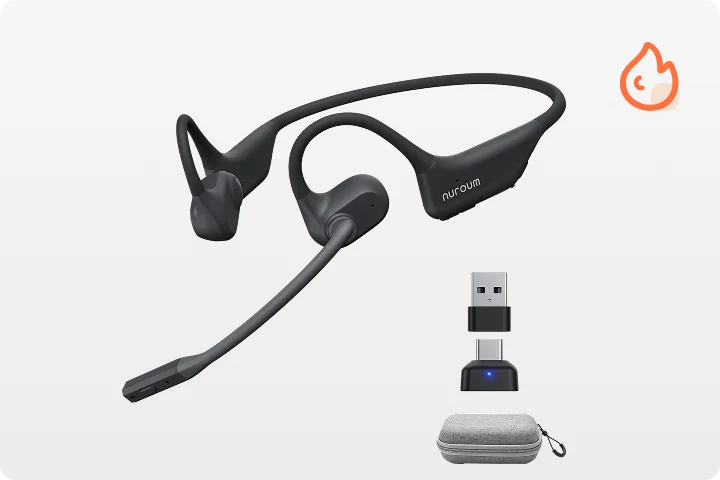
The Nuroum OpenEar Pro 2 takes a different approach with air conduction technology — open speakers that sit just in front of the ear canal, directing sound in without blocking it. Detroit Love pointed out in his review that this distinction matters more than most buyers realize: air conduction produces a noticeably fuller, more natural sound profile. Research from 2024 cited by Nuroum supports this, indicating that air conduction delivers clearer speech reproduction than bone conduction. For professionals who spend hours on calls and occasionally use their headset for content consumption, the difference is perceptible.
Design & Comfort: Built for All-Day Wear
Both headsets are engineered for long wearing sessions, and both succeed — but in slightly different ways.
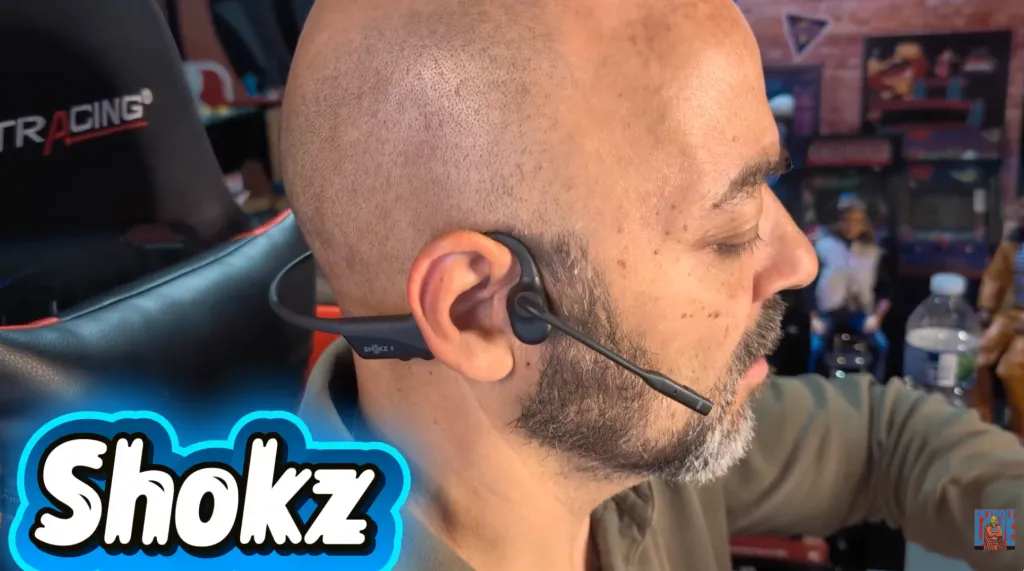
The Shokz OpenComm2 UC weighs just 35 grams (approximately 1.2 oz), making it one of the lightest professional headsets on the market. Its flexible wraparound titanium frame with a soft silicone finish sits comfortably on the skull without clamping pressure. Detroit Love noted that the design feels familiar to anyone who has worn athletic Shokz headphones — it's minimal, unobtrusive, and barely noticeable after a few minutes of wear.
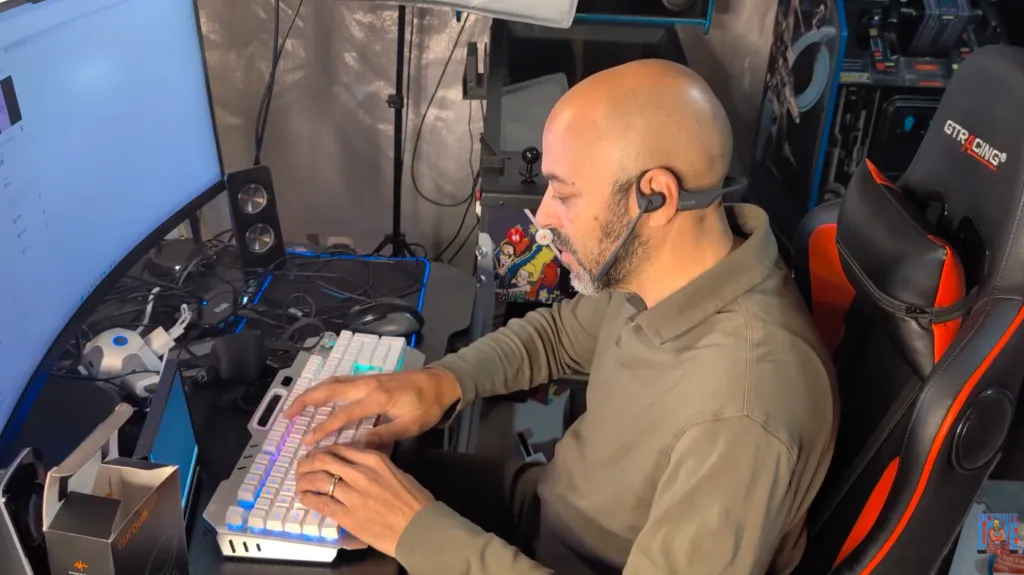
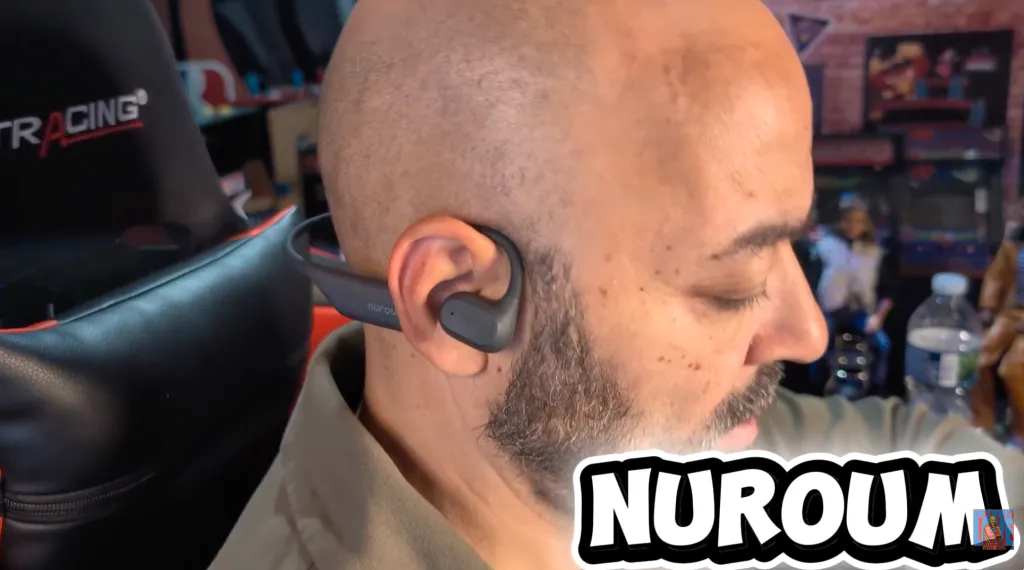
The Nuroum OpenEar Pro 2 uses a neckband structure with soft silicone ear hooks, distributing weight differently across the head and neck. The speakers rest gently in front of the ear without any insertion, and the open design keeps ears cool and pressure-free during extended sessions. Detroit Love mentioned during the review that the headset remained comfortable throughout hours of continuous use — a critical consideration for professionals on all-day call schedules.
Microphone & Call Quality: Zoom and Microsoft Teams Performance
For a professional headset, microphone quality is arguably the most important specification. Both devices feature a physical boom microphone — a significant advantage over headsets that rely on built-in mics — but their noise-cancellation approaches differ substantially.
The Shokz OpenComm2 UC employs Qualcomm cVc (Clear Voice Capture) noise-reduction technology combined with DSP processing. It performed reliably in Detroit Love's real-world Teams and Zoom tests, producing clean voice pickup in controlled environments.
The Nuroum OpenEar Pro 2 goes further with a more advanced noise-cancellation stack: HiFi 4 DSP paired with dual-microphone ENC (Environmental Noise Cancellation) — a neural network compressed and trained on millions of hours of ambient noise.
Detroit Love indicated in his review that the microphone pickup was strong and consistent across both Zoom and Microsoft Teams sessions. Independent testing by another reviewer, Lola, involved deliberately noisy conditions — a guitar playing in the background and loud clapping near the mic — with the person on the other end of the call unable to detect any of it. For noisy home offices, open-plan workspaces, or mobile professionals on the go, the Nuroum's microphone system offers a meaningful real-world edge.
USB Dongle Connectivity: Stability, Latency, and Plug-and-Play Experience
For enterprise and hybrid professionals, USB dongle connectivity—often delivered through a headset with a USB dongle—is frequently non-negotiable, as native Bluetooth through a laptop introduces latency, audio artifacts, and compatibility headaches that a dedicated wireless adapter resolves.
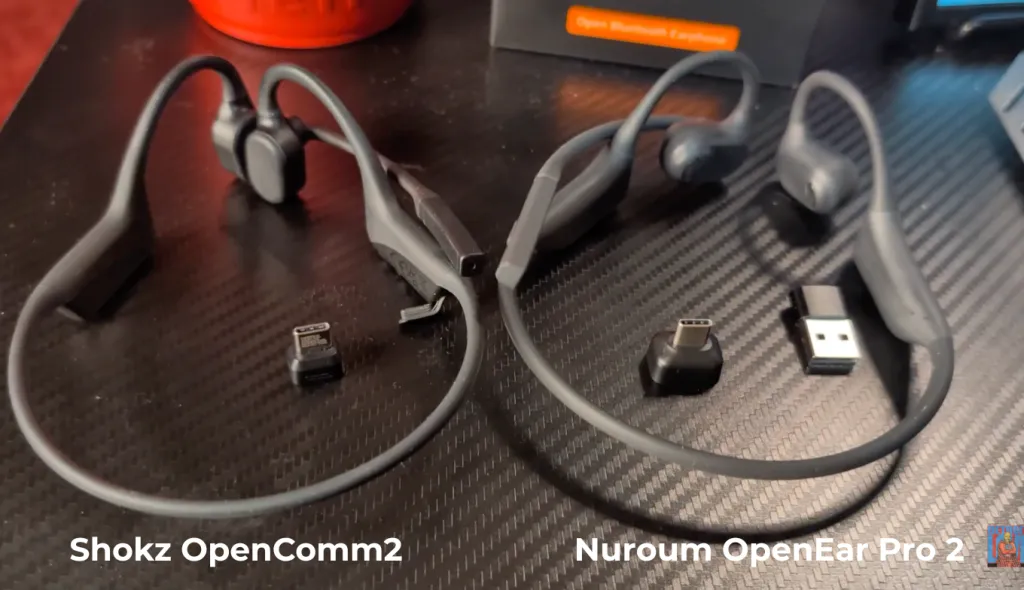
The Shokz OpenComm2 UC includes the Shokz Loop120 wireless adapter, available in either USB-A or USB-C (buyers must specify at checkout — only one port type is included). Detroit Love pointed out during his review that the dongle performed consistently in Teams sessions, with stable latency throughout.
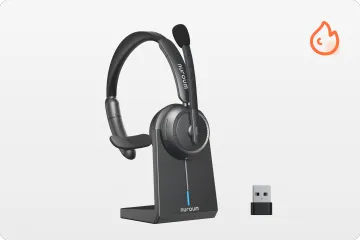
The Nuroum OpenEar Pro 2 ships with a 2-in-1 USB-A/C dongle included in the box — a practical detail that eliminates the port-selection anxiety that Shokz buyers face. Detroit Love tested both headsets in real Zoom and Microsoft Teams meetings and found the Nuroum's dongle connection to be stable and responsive. The headset also supports Bluetooth 5.4 multi-point connection, allowing simultaneous pairing with two devices — enabling smooth transitions between a laptop and a smartphone without reconnecting.
Shokz OpenComm2 UC vs Nuroum OpenEar Pro 2: Head-to-Head Comparison
| Feature | Shokz OpenComm2 UC (2025) | Nuroum OpenEar Pro 2 |
| Price | $199.95 | $129.99 |
| Sound Technology | Bone Conduction (7th Gen) | Air Conduction |
| Noise Cancellation | DSP + cVc (Qualcomm) | HiFi 4 DSP + Dual-Mic ENC |
| Talk Time | 16 hours | 15 hours |
| Weight | 35g | Lightweight neckband |
| USB Dongle | Loop120 (USB-A or USB-C, choose one) | 2-in-1 USB-A/C (both included) |
| Bluetooth | 5.1 | 5.4 |
| Multi-Point | Yes (2 devices) | Yes (2 devices) |
| Water Resistance | IP55 | IPX6 |
| Zoom Certified | Yes | Compatible |
| Boom Mic | Yes (rotating) | Yes (adjustable) |
Who Should Buy the Shokz OpenComm2 UC — And Who Should Choose the Nuroum OpenEar Pro 2?
The Shokz OpenComm2 UC is the right choice for:
- Users who are already invested in the Shokz ecosystem and value brand continuity
- Professionals who prioritize bone conduction for hearing accessibility reasons, as the technology bypasses the eardrum entirely
- Teams standardizing on Zoom-certified hardware with an established track record
- Those who value Shokz's 2-year warranty and established service network
The Nuroum OpenEar Pro 2 is the better choice for:
- Remote workers and hybrid professionals who want richer, fuller audio quality for both calls and casual listening
- Budget-conscious buyers who don't want to compromise on features — at $129.99, it undercuts the Shokz by $70 while delivering competitive or superior specs
- Professionals in noisy environments who need maximum microphone noise cancellation
- Users who want true port flexibility without choosing between USB-A and USB-C at checkout
- Anyone prioritizing the latest Bluetooth 5.4 standard for lower latency and improved multi-device stability
Detroit Love's assessment — after several weeks of real-world testing — was that while both headsets perform well in their intended roles, the Nuroum OpenEar Pro 2 and the Shokz OpenComm2 UC represent fundamentally different products that simply happen to share a visual aesthetic. The comparison is less about which is "better" in the abstract and more about which technology fits a specific user's workflow.
Final Verdict
The Shokz OpenComm2 UC remains a capable, battle-tested professional headset with genuine brand equity — but it carries a premium price tag that its bone conduction technology doesn't always justify in a pure audio-quality comparison.
The Nuroum OpenEar Pro 2 quietly outperforms expectations. At $129.99, it delivers air conduction audio that sounds noticeably fuller, a more advanced ENC microphone system, a more versatile 2-in-1 dongle, and the latest Bluetooth 5.4 standard — all for $70 less than its better-known competitor.
For the majority of remote workers, hybrid professionals, and call-center users who prioritize clear communication, all-day comfort, and practical connectivity, the Nuroum OpenEar Pro 2 represents the stronger value proposition in 2026. Detroit Love's real-world tests confirmed what the specs suggest: this is a headset that punches well above its price point.
FAQs
- What is the main difference between the Shokz OpenComm2 and the Nuroum OpenEar Pro 2?
The most fundamental difference is sound technology. The Shokz OpenComm2 UC uses bone conduction — transducers that send vibrations through the cheekbones directly to the inner ear, bypassing the eardrum. The Nuroum OpenEar Pro 2 uses air conduction — open speakers positioned in front of the ear canal that deliver sound in a more conventional way without blocking the ear. In practice, air conduction produces fuller, more natural audio, while bone conduction offers a unique listening pathway that some users, particularly those with certain hearing needs, may prefer.
- Can the Nuroum OpenEar Pro 2 and Shokz OpenComm2 UC both be used with Zoom and Microsoft Teams?
Yes, both headsets are compatible with Zoom and Microsoft Teams. The Shokz OpenComm2 UC holds official Zoom certification, which enables direct hardware button control of Zoom functions (mute, answer/end calls). The Nuroum OpenEar Pro 2 is fully compatible with both platforms via its USB dongle and Bluetooth connection, and Detroit Love confirmed stable, low-latency performance in real-world Zoom and Teams sessions throughout his multi-week review.
- Which headset is better for noisy environments?
The Nuroum OpenEar Pro 2 has the edge in noisy environments, primarily due to its more advanced microphone system. Its dual-microphone ENC setup, powered by a neural network trained on millions of hours of ambient noise and processed through a HiFi 4 DSP chip, is specifically engineered to isolate the speaker's voice from background noise. Independent testing confirmed that even significant ambient noise — music, clapping, household activity — was inaudible to call participants on the other end. For open-plan offices, home environments with background activity, or mobile professionals, this is a meaningful practical advantage.
- Does the Nuroum OpenEar Pro 2 come with a USB dongle?
Yes. The Nuroum OpenEar Pro 2 includes a 2-in-1 USB-A/C dongle in the box, meaning it works with both USB-A and USB-C ports without requiring buyers to choose one or purchase an adapter separately. This is a notable contrast to the Shokz OpenComm2 UC, which ships with a single-port Loop120 adapter — either USB-A or USB-C depending on the version ordered at checkout.
- How long is the battery life on each headset?
The Shokz OpenComm2 UC offers up to 16 hours of talk time and 8 hours of listening time per charge, with a quick-charge feature that delivers 2 hours of talk time from just 5 minutes of charging. The Nuroum OpenEar Pro 2 provides up to 15 hours of battery life. Both headsets offer sufficient battery for a full professional workday; the Shokz holds a slight advantage in raw talk-time numbers, though the difference of one hour is unlikely to be a deciding factor for most users.