



















Do you feel like you’re constantly juggling two different professional lives? One day you are in deep focus mode at your home desk, and the next you are navigating the buzz of the corporate office, trying to make the commute "worth it." You aren't alone. As we move deeper into the latter half of the decade, the "new normal" has simply become "normal," yet many organizations are still relying on outdated playbooks.
This is exactly what is a hybrid workplace strategy and why does it matter? It is no longer enough to simply let employees work from home on Fridays. A successful hybrid work approach in 2026 requires a deliberate, data-backed ecosystem that blends physical spaces with digital efficiency to maximize human potential. In this comprehensive guide, we will dismantle the meaning of hybrid work, explore the tools keeping us connected, and define the best practices for a sustainable future.
Key Takeaways
- A hybrid workplace strategy is a long term operating model that blends remote and in office work with clear intent.
- Different hybrid work models suit different teams and choosing the right one is critical to success.
- The right tools including collaboration software and reliable audio hardware are essential for effective hybrid work.
- Sustainable hybrid strategies rely on clear rules async first workflows and continuous iteration.
What Is a Hybrid Workplace Strategy?

To understand where we are going, we have to understand the core definitions that have evolved over the last six years.
Defining the Concept in 2026
A hybrid workplace strategy is a comprehensive organizational plan that empowers employees to blend in-office and remote work. However, unlike the chaotic "remote triage" of the early 2020s, the 2026 definition focuses on intentionality. It is not just about where you work; it is about how work gets done effectively across different environments.
It integrates three critical pillars:
- People: Addressing culture, equity, and well-being.
- Process: Redefining workflows to support asynchronous collaboration.
- Technology: Utilizing hardware and software that bridges the physical-digital divide.
The True Meaning of Hybrid Work
The meaning of hybrid work has shifted from a "perk" to a fundamental business operational model. It is the recognition that work is something you do, not a place you go.
In a robust strategy, the office serves a specific purpose—usually collaboration, innovation, and socialization—while remote locations are utilized for deep work and administrative processing. A strategy that lacks this distinction usually fails, leading to what experts call the "worst of both worlds" scenario: the isolation of remote work combined with the commuting fatigue of office work.
Why It Matters More Now Than Ever
Why should a company care about formalizing this strategy in 2026?
- Talent Retention: Top-tier talent expects flexibility as a baseline, not a bonus.
- Real Estate Optimization: Companies are shrinking footprints but upgrading quality.
- Resilience: A distributed workforce is more resilient to local disruptions.
Common Hybrid Working Models Used by Modern Teams

There is no "one size fits all" approach. By 2026, most successful organizations have settled into one of four distinct archetypes. Choosing the right one depends heavily on your industry, company culture, and the nature of your roles.
A. The Remote-First Model
In this model, the default mode of operation is remote. Offices may exist, but they are treated as "hubs" or coworking spaces rather than headquarters.
- How it works: All processes are designed for someone who is not in the room. Even if 5 people are in the office and 1 is remote, everyone logs into Zoom on their own laptops to level the playing field.
- Best for: Tech startups, digital agencies, and globally distributed teams.
B. The Office-Occasional Model
Employees are expected to come in, but frequency is low. The office is reserved for specific rituals: monthly all-hands, quarterly planning, or team-building retreats.
- How it works: The company creates "anchor days" where attendance is mandatory, ensuring that when people commute, their colleagues are actually there.
- Best for: Creative consultancies and project-based teams.
C. The Split-Week Schedule (Fixed Hybrid)
This is the most rigid but predictable model, often called the "3-2" or "2-3" model. Management designates specific days (e.g., Tuesday, Wednesday, Thursday) as in-office days.
- How it works: It removes the guesswork. You know exactly where your boss is on a Wednesday.
- Best for: Traditional corporate structures, banks, and large operational teams.
D. The Flex-Hybrid (At-Will) Model
Employees have complete autonomy to choose where they work on any given day, often coordinated at the team level rather than the corporate level.
- How it works: This requires high trust and sophisticated desk-booking software (hot desking) to manage capacity.
- Best for: Results-oriented cultures and senior-heavy organizations.
Comparison of Models
| Model Type | Primary Benefit | Primary Challenge | Ideal Company Profile |
|---|---|---|---|
| Remote-First | Massive talent pool access (global hiring). | Hardest to build initial culture/trust. | SaaS, Digital Media, Dev Shops. |
| Office-Occasional | High flexibility with high-impact social time. | Can feel disjointed; requires travel budget. | Consultancies, Event Planners. |
| Split-Week (Fixed) | Predictability and routine. | Inflexible; "empty office" syndrome on Fridays. | Finance, Law, Operations. |
| Flex-Hybrid | Highest employee satisfaction/autonomy. | Nightmare to manage real estate capacity. | Tech Giants, R&D focused firms. |
Benefits and Challenges of a Hybrid Workplace Strategy

Implementing a hybrid work approach is a balancing act. For every massive gain in productivity, there is a potential pitfall in culture. Let's analyze the landscape as it stands in 2026.
The Major Benefits
1. Enhanced Productivity and Deep Work
Without the constant shoulder-tapping of the open-plan office, employees report higher rates of "deep work" completion. The ability to control one's environment allows for hyper-focus. In fact, a landmark study by Stanford University found that remote workers experienced a 13% performance increase, attributed largely to a quieter working environment and fewer distractions.
2. Expanded Talent Acquisition
When you are not tethered to a 30-mile radius of a city center, you can hire the best person for the job, not just the best person who lives in the zip code. This has been a game-changer for diversity and inclusion efforts.
3. Cost Efficiency
Companies are shedding unused square footage. That capital is being reinvested into better technology, offsite retreats, and employee stipends.
The Significant Challenges
1. Proximity Bias
This remains the silent killer of hybrid strategies. Proximity bias is the unconscious tendency for leaders to favor the people they see physically every day. In 2026, combating this requires rigorous management training to ensure remote workers are not passed over for promotions.
2. The "Always-On" Culture
When your office is your living room, when does the work day end? Digital burnout is high. A strategy must include "right to disconnect" policies to prevent employees from burning the candle at both ends.
3. Collaboration Friction & Audio Fatigue
We have all been there: a meeting where three people are in a conference room and two are at home. The audio cuts out, the people in the room start a side conversation, and the remote workers tune out. This friction destroys morale.
Furthermore, wearing heavy over-ear headsets for 8 hours a day leads to physical discomfort and "isolation fatigue." This is why hardware choices have become just as important as software choices (more on this in the next section).
Essential Hybrid Work Tools That Support Effective Collaboration
A strategy is only as good as the toolkit that supports it. In 2026, the tech stack for hybrid teams has matured significantly.
A. The Digital HQ (Software)
You need a central nervous system for your company.
- Communication: Slack, Microsoft Teams, or Discord for enterprise. These replace the "water cooler."
- Project Management: Asana, Monday.com, or Linear. These replace the "whiteboard."
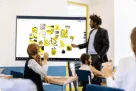
- Visual Collaboration: Miro or Mural. These are essential for brainstorming sessions where half the room is virtual.
B. The Physical Hardware: Audio and Clarity
Hardware is often overlooked in strategy documents, but it is the physical interface of your hybrid experience. If you cannot hear or be heard, you cannot participate.
The Rise of Open Ear Technology
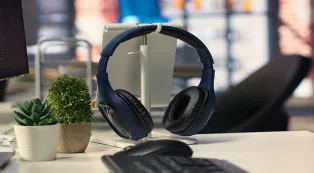
In the past few years, we have seen a massive shift away from bulky, noise-isolating cans toward open ear headphones bluetooth devices. Why? Because situational awareness is vital for the hybrid worker.
When you are working from home, you need to hear the doorbell or your children. When you are in the office, you need to hear a colleague asking a question without taking your headset off 50 times a day.
Why Audio Matters:
- Comfort: Wearing heavy headsets for Zoom marathons causes headaches.
- Hygiene: In-ear buds can be fatiguing and unhygienic over long periods.
- Safety: Commuting with noise-canceling headphones can be dangerous; bluetooth headphones open ear allow you to stay connected to your calls while remaining aware of traffic and your surroundings.
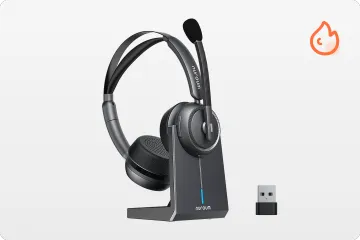
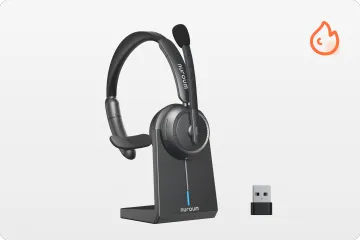
Brand Spotlight: Nuroum OpenEar Pro 2
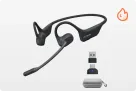
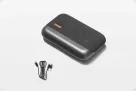
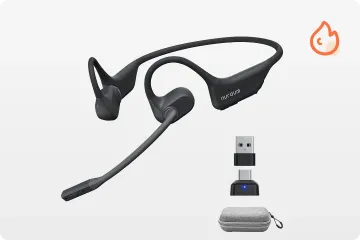
For professionals seeking the best open ear headphones for phone calls, the Nuroum OpenEar Pro 2 has emerged as a top contender in the 2026 market.
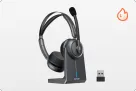
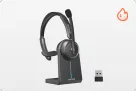
Unlike standard consumer bone-conduction headphones which often suffer from "sound leakage" (where people near you can hear your call), the Nuroum OpenEar Pro 2 utilizes directional audio technology to keep conversations private. It combines the comfort of an open-ear design with a high-fidelity boom microphone, ensuring that whether you are in a coffee shop or a busy huddle room, your voice is crystal clear. Integrating tools like the Nuroum OpenEar Pro 2 into your employee equipment stipend is a low-cost, high-reward move for boosting daily meeting quality.
C. Resource Management Tools
- Desk Booking: Tools like Robin or Envoy are mandatory for Flex-Hybrid models to prevent the "musical chairs" chaos.
- Time Zone Converters: Simple utilities like World Time Buddy are essential for global teams.
Best Practices for Building a Sustainable Hybrid Workplace Strategy
You have the definition, the model, and the tools. Now, how do you execute? Based on data from successful 2026 enterprises, here are the actionable best practices.
1. Establish the "Rules of Engagement"
Ambiguity breeds anxiety. Your strategy must explicitly answer:
- What are the core collaboration hours? (e.g., 10:00 AM – 2:00 PM EST).
- Which meetings must be video-on vs. video-off?
- What is the expected response time for an email vs. a Slack message?
2. Design the Office for "We," Not "Me"
If an employee commutes 45 minutes just to sit in a cubicle and answer emails—something they could have done faster at home—they will resent the company.
- Redesign Spaces: Reduce individual desks. Increase huddle rooms, social lounges, and collaborative whiteboard areas.
- The Commute Value Proposition: The office must offer something home cannot: social connection, mentorship, and high-energy collaboration.
3. Adopt an "Async-First" Mindset
Synchronous meetings are expensive. They consume the time of everyone invited simultaneously. A mature hybrid work approach prioritizes asynchronous communication.
- Record Updates: Instead of a status meeting, record a 2-minute Loom video.
- Document Everything: If a decision is made in a hallway conversation at the office, it must be documented in the digital HQ. If it isn't written down, it didn't happen.
4. Upgrade Your Audio-Visual Culture
We mentioned the importance of hardware like the Nuroum OpenEar Pro 2, but this also applies to conference rooms.
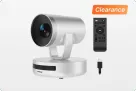
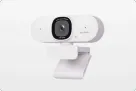
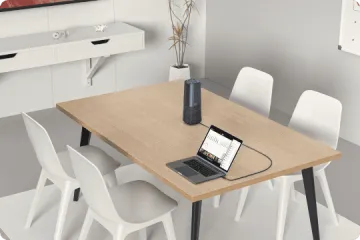
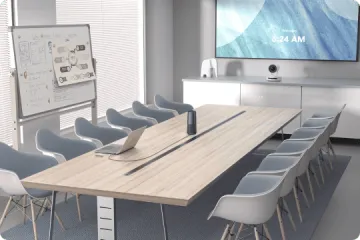
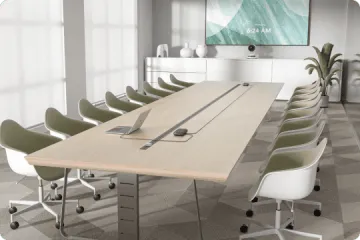
- Equality of Presence: Every conference room must be equipped with intelligent cameras that zoom in on active speakers.
- One Person, One Screen: Even if 5 people are in a room, they should all join the Teams/Zoom call individually (muted) so remote participants can see their faces close up.
5. Continuously Measure and Iterate
The strategy you write today will be obsolete in 12 months. You must create feedback loops.
- Pulse Surveys: Ask employees monthly: "Do you feel connected?" "Do you have the tools you need?"
- Utilization Data: Look at badge-swipe data. Are people actually using the office on Fridays? If not, stop forcing it and save the electricity.
According to a recent 2025 report by Harvard Business Review , organizations that iterate their hybrid policies quarterly see a 22% higher retention rate than those who set a rigid policy and forget it.
Conclusion
The hybrid workplace strategy of 2026 is far more than a scheduling agreement; it is a holistic approach to how we live and work. We have moved past the emergency response phase of the early 20s and into an era of sophisticated, technology-enabled flexibility.
By focusing on intentional collaboration, equipping your team with the right tools—from project management software to high-performance hardware like the Nuroum OpenEar Pro 2—and committing to continuous iteration, you can build a workplace that is not just a location, but a community. The future of work is not fully remote, and it is not fully in-person. It is hybrid, and it is here to stay.
FAQs
1: Is the hybrid work approach dying in 2026?
Absolutely not. While some high-profile CEOs demanded a "full return to office" in 2024 and 2025, the market data in 2026 shows that hybrid is the dominant standard for knowledge work. Companies that offer flexibility continue to outperform rigid competitors in recruitment.
2: How do you measure productivity in a hybrid model?
You must shift from measuring inputs (hours sat in a chair) to measuring outputs (deliverables and impact). If you need to see someone to know they are working, you are not managing; you are babysitting. Use OKRs (Objectives and Key Results) to track progress transparently.
3: What is the ideal ratio for office vs. home days?
While it varies, the "Golden Ratio" in 2026 appears to be 2 days in office, 3 days remote. This provides enough social anchoring to maintain culture while offering enough flexibility to reduce burnout.
4: How do I handle "FOMO" (Fear Of Missing Out) for remote employees?
Intentionality is the cure. Ensure that career-defining projects are distributed fairly, not just to those visible in the office. Additionally, invest in high-quality hybrid meeting tech so remote staff feel physically present in conversations.