









Story: A Law Firm's Conference Room Crossroads
A mid-size law firm in Chicago recently faced a familiar dilemma. Their aging Polycom speakerphone had served them faithfully through hundreds of client calls, depositions, and partner meetings. The IT director's first instinct was straightforward: buy another Polycom. It's what they'd always used. The devices were reliable. Everyone knew how to operate them. Why change?
But when he started comparing options, he discovered that the conference phone landscape had fundamentally shifted.
His younger associates were increasingly joining calls from laptops with built-in webcams. Clients expected to see faces, not just hear voices. The firm's largest deposition room had a separate camera, a separate microphone system, and a separate speaker — a tangle of cables, remote controls, and compatibility headaches that required a fifteen-minute pre-call setup ritual. His sennheiser speakerphone in the medium conference room delivered pristine audio but forced participants to huddle around a laptop camera when video was needed.
The audio-only brands he'd trusted for years — Poly, plantronics speakerphone models, the konftel unit in the small huddle room — were now competing with all-in-one devices that did everything those units did, plus intelligent video, for a comparable price. Some options had moved even further, incorporating AI-driven features that his legacy devices couldn't match.
His question evolved from "Which speakerphone should I buy?" to "Do I even need a speakerphone anymore?"
This article walks through exactly what that IT director discovered — and what every organization evaluating conference room upgrades should know before committing to legacy audio brands. If you're searching for alternatives to Polycom, Sennheiser, Bose, Konftel, yamaha speakerphone products, or any of the established names in conference audio, understanding the full conference room equipment upgrade landscape is the essential first step.
The Shift from Audio-Only to All-in-One Conferencing
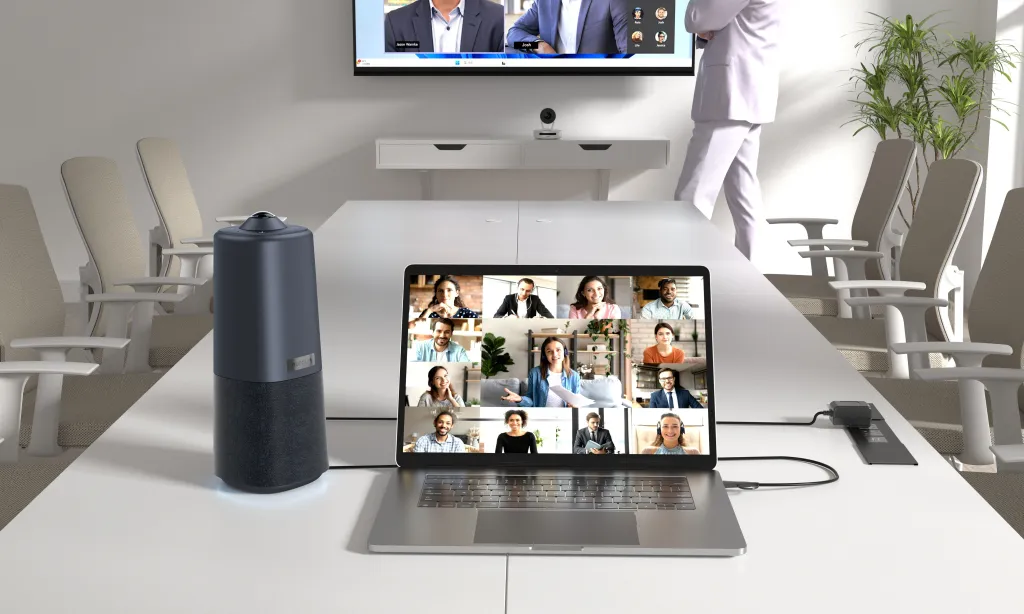
The conference room technology market has undergone a quiet but decisive transformation. For decades, the choice was binary: a speakerphone for audio or a complex, expensive video system for boardrooms. That middle ground no longer exists — it has been overtaken by all-in-one devices.
What Changed?
Three converging trends reshaped the landscape:
- Ubiquitous video expectations. Remote and hybrid work made video the default. Over 70% of internal meetings and nearly 85% of client-facing calls now include video. An audio-only device in 2026 is a half-solution.
- Hardware consolidation. Major UC platforms — Zoom, Teams, Google Meet — natively support USB peripherals. A single USB-C connection replaces proprietary cables and platform-specific configurations.
- AI-powered intelligence. Modern devices identify active speakers, auto-frame participants, suppress noise in real time, and adjust audio dynamically. These capabilities require computational power that audio-first architectures weren't designed to accommodate.
What This Means for Buyers
If you're searching for a Polycom speakerphone replacement, a bose conference solution, or an alternative to revolabs or audiocodes devices, you're no longer limited to audio-only. The question isn't "which audio brand is best?" — it's "which form factor serves my meeting rooms most effectively?" The answer increasingly points toward devices that integrate a camera, a microphone array, and a speaker into one intelligent package.
First Principles: Why Audio-First Companies Struggle with Integrated Video
To understand the alternatives landscape, it helps to start from first principles. Why do companies with decades of audio engineering excellence find it difficult to build compelling integrated video products?
Different Engineering DNA
Audio engineering and video engineering optimize for fundamentally different things:
- Audio prioritizes signal-to-noise ratio, frequency response, echo cancellation, and acoustic design — capturing clean sound in difficult environments.
- Video prioritizes image processing, lens optics, facial detection, auto-framing, and low-light performance — delivering clear, well-composed video regardless of room conditions.
A company that spent 30 years perfecting acoustic echo cancellation doesn't automatically have the talent or IP to build competitive auto-framing algorithms. These require completely different engineering teams, testing protocols, and supply chains.
The Architectural Problem
Audio-first devices were designed around a single pipeline: microphone input → DSP processing → speaker output. Video requires a parallel pipeline — camera sensor → ISP → encoding → transmission — synchronized with audio to avoid lip-sync issues, bandwidth contention, and thermal problems.
When an audio company adds a camera to an existing speakerphone architecture, the result is often technically functional but compromised: the camera feels added rather than integrated, thermal design wasn't optimized for the additional heat, and USB bandwidth wasn't provisioned for simultaneous high-quality streams. Video-native companies design from the ground up with both pipelines as co-equal concerns — which is why the best all-in-one devices come from companies that started with video.
The Cultural Inertia Problem
Beyond engineering, there's a cultural dimension. Audio-first companies spent decades building brand equity around sound quality. Their internal reward systems, marketing narratives, and customer relationships all reinforce the primacy of audio. Pivoting to "audio is just one of several equally important features" requires a cultural transformation few organizations execute successfully.
This isn't a criticism — their audio expertise is genuine. But it explains a pattern buyers consistently observe: legacy audio brands produce excellent speakerphones and mediocre integrated devices, while video-native brands produce excellent integrated devices with audio that's increasingly competitive.
For a deeper look at how these dynamics play out in real-world upgrades, see our guide on replacing traditional conference microphones and phones with modern alternatives.
Brand-by-Brand Analysis: Who's Who in Conference Audio
What follows is a frank assessment of each major brand in the conference audio space. We mention brand names freely — these are well-known companies with established reputations — but we do not state their specific product specifications, prices, or detailed feature lists. The focus is on what each brand represents, where they excel, and what buyers should watch out for.
Polycom Speakerphone: The Industry Standard Faces Uncertainty
Polycom defined the conference phone category. For years, the triangular speakerphone was as synonymous with conference calls as Kleenex is with tissues.
What Polycom gets right: Battle-tested audio processing across millions of rooms. Excellent echo cancellation, noise suppression, and full-duplex performance. Enormous trust among IT buyers who value reliability.
What to watch for: Polycom was acquired by Plantronics (2018), then by HP (2022). Three brands — Poly, Plantronics, HP — now coexist with overlapping product lines and uncertain roadmaps. Enterprise buyers report confusion about which lines receive continued investment. The brand's core expertise remains audio; their video-integrated products are competent but not category-leading.
If your organization has standardized on Polycom speakerphone devices for years, the familiarity is comforting, but the ecosystem uncertainty warrants a hard look at alternatives before making your next purchase cycle commitment.
Sennheiser Speakerphone: Premium Audio at a Premium Price
Sennheiser brings legitimate audiophile credibility to the conference room, benefiting from the same acoustic research that powers their professional audio divisions.
What Sennheiser gets right: If pure audio fidelity is your only criterion, Sennheiser is hard to beat — remarkable voice clarity, sophisticated noise suppression, exceptional build quality.
What to watch for: Premium pricing can be hard to justify when alternatives deliver audio that's 90% as good for less. Sennheiser doesn't offer integrated video at the level of video-native competitors. A sennheiser speakerphone paired with a separate camera creates the exact multi-device complexity that all-in-one alternatives eliminate.
For organizations with dedicated AV budgets and rooms where audio quality is paramount, Sennheiser remains compelling. For most general-purpose meeting rooms, the premium may exceed the practical benefit.
Plantronics Speakerphone: Navigating the HP Poly Merger
Plantronics built its reputation on headsets before expanding into speakerphones and UC. Post-acquisition, the brand is increasingly subsumed under HP Poly.
What the Plantronics legacy brings: Solid UC integration, particularly with Teams. Broad portfolio from personal speakerphones to room devices. Familiarity among IT buyers with existing Plantronics deployments.
What to watch for: The HP-Poly-Plantronics consolidation creates brand confusion. If you buy a plantronics speakerphone today, will support come under Plantronics, Poly, or HP in three years? Product line rationalization is inevitable after a three-way merger. This uncertainty matters for multi-year conference room investments.
Bose Conference Audio: Consumer Brand in a Professional Space
Bose is an iconic audio brand, but conference rooms are not their primary market focus.
What Bose brings: Brand recognition and trust. Excellent noise cancellation. Consistently well-engineered audio products.
What to watch for: Bose conference products occupy a small niche within a consumer-focused company. Product refreshes are infrequent. The ecosystem is limited — no broader Bose UC platform exists. For organizations searching for bose conference solutions, the brand appeals, but limited product depth and uncertain enterprise commitment are real considerations.
Konftel: Niche European Excellence, Limited Reach
Konftel, based in Sweden, has a loyal European following for well-built, thoughtfully designed conference phones.
What Konftel gets right: Clean industrial design. Strong Teams and Zoom certifications on many models. A focused product line that doesn't overreach.
What to watch for: Konftel distribution and support are stronger in Europe than North America or Asia-Pacific. Warranty service and technical support involve longer lead times outside core markets. Their portfolio remains audio-focused — they don't offer the integrated video solutions becoming standard.
Yamaha Speakerphone & Revolabs: Acoustic Heritage Meets Brand Confusion
Revolabs was an independent conferencing audio company acquired by Yamaha in 2014. Yamaha integrated Revolabs technology into its UC division, phasing out the Revolabs brand.
What Yamaha brings: Deep acoustic engineering from one of the world's most respected audio companies. Microphone array technology benefiting from Yamaha's music and pro audio divisions. Comprehensive room audio spanning ceiling mics, DSPs, and speakers.
What to watch for: The Revolabs-to-Yamaha transition created confusion that persists. If you search for revolabs products, they're now sold as Yamaha, and product lines don't map one-to-one. A yamaha speakerphone remains audio-only; Yamaha's video offerings come through separate product lines.
AudioCodes: Telecom DNA in a Collaboration World
AudioCodes comes from telecommunications — session border controllers, VoIP gateways, carrier-grade infrastructure.
What AudioCodes brings: Deep VoIP and SIP expertise. Strong Teams integration with certified devices. Relevance for organizations with complex telephony environments.
What to watch for: AudioCodes products reflect their telecom heritage — highly capable for voice-first deployments but less focused on integrated video. Their value proposition is strongest for organizations maintaining significant on-premises or hybrid telephony, a shrinking segment as cloud UC adoption accelerates.
Grandstream Speakerphone: Budget-Friendly but Feature-Limited
Grandstream has carved out a position as the value alternative in UC, with conference phones consistently priced below competitors.
What Grandstream gets right: Affordability. Broad SIP and UC compatibility. A growing ecosystem including phones, gateways, and basic video endpoints.
What to watch for: A grandstream speakerphone competes on price, not feature depth or build quality. Audio refinement and noise cancellation don't match premium competitors. Their video-integrated devices exist but aren't category-leading. For secondary rooms or tight budgets, Grandstream fills a need — but compare long-term capability costs against upfront savings.
Huddly Camera: Video-First, Audio-Last
Huddly sits at the opposite end of the spectrum from the audio-first brands. They make intelligent USB cameras known for AI-powered features and sleek design — but they don't make audio products at all.
What Huddly gets right: Excellent AI-driven framing, people counting, and room analytics. Compact, design-forward industrial design. Software-defined cameras that improve through firmware updates.
What to watch for: A huddly camera requires separate audio — a speakerphone, microphone array, or ceiling microphone system. This means Huddly isn't an all-in-one solution. It's a video component that must be paired with audio from another brand, reintroducing the multi-vendor complexity that all-in-one devices eliminate. For organizations that want a single device on the table, Huddly alone doesn't solve the problem.
Trade-off Matrix: Audio Specialist vs. All-in-One
With the brand landscape understood, let's map the trade-offs systematically. When you choose between an audio-specialist brand and an all-in-one video-native device, you're making implicit trade-offs across multiple dimensions.
| Dimension | Audio Specialist (Polycom, Sennheiser, Yamaha, etc.) | All-in-One (Video-Native Design) |
|---|---|---|
| Audio Refinement | Often superior — decades of acoustic R&D, fine-tuned DSP, premium transducers | Good to very good — competitive in most room scenarios; may not match premium audio brands in critical listening tests |
| Video Capability | Limited or absent — may require separate camera purchase and integration | Integrated and intelligent — auto-framing, speaker tracking, multi-participant views |
| Deployment Simplicity | Medium complexity — single device for audio, but may need camera, cables, and configuration | Low complexity — single USB connection, one device, no integration required |
| Ecosystem Stability | Mixed — some brands face consolidation uncertainty (Poly/HP/Plantronics); others are niche (Konftel) | Generally stable — video-native companies have clearer product roadmaps in the integrated space |
| Future-Proofing | Lower — audio-only devices can't add video through firmware; upgrade requires additional hardware | Higher — software-definable features, AI improvements through updates, all capabilities in one device |
| Support Infrastructure | Varies widely — strong for Poly and Yamaha; limited for Konftel and Grandstream in some regions | Depends on manufacturer; video-native companies built support around integrated products from day one |
| Total Cost of Ownership | Potentially higher — device cost plus separate camera plus integration time plus ongoing management of multiple devices | Potentially lower — single purchase, single deployment, single point of management |
| Room Flexibility | Good — speakerphones work in various room sizes; audio-only works for voice-first rooms | Excellent — covers both audio and video needs regardless of room configuration |
Key Insight from the Matrix
The matrix reveals a pattern that drives most upgrade decisions: audio specialists win on one dimension (audio refinement) and lose or tie on every other dimension that matters to a modern meeting room. The question isn't whether a polycom speakerphone or sennheiser speakerphone produces good audio — it's whether the incremental audio advantage justifies the absence of integrated video, ecosystem uncertainty, and higher deployment complexity. For most organizations, the all-in-one advantage is decisive.
Devil's Advocate: When a Dedicated Audio Brand IS the Right Choice
It's important to acknowledge where the audio-first brands still make compelling sense. The shift toward all-in-one devices doesn't mean traditional speakerphones and dedicated audio systems are obsolete. They're the right choice in specific scenarios:
Scenario 1: Audiophile Environments
Boardrooms designed for critical listening — legal depositions, financial earnings calls, executive briefings where vocal nuance matters — may genuinely benefit from the superior audio refinement of a premium Sennheiser or Yamaha system. When every vocal inflection carries meaning and the room's primary purpose is audio fidelity, investing in dedicated audio hardware is defensible.
Scenario 2: Rooms That Are Already Video-Equipped
If your conference room already has a high-quality camera system — perhaps a PTZ camera with a dedicated control system — adding a premium speakerphone for audio complements the existing setup rather than competing with it. In these cases, a bose conference device or yamaha speakerphone can improve the audio experience without disrupting the video infrastructure.
Scenario 3: Voice-Only Cultures
Some organizations, industries, and regions maintain a strong voice-first culture. Internal stand-up meetings conducted over audio, regulatory environments where video recording is restricted, or organizations where bandwidth constraints make video impractical — in these contexts, an audio-only device is not a compromise but a deliberate and appropriate choice.
Scenario 4: Large-Scale Deployments with Established Vendor Relationships
Enterprise organizations with thousands of rooms and deep Poly or Yamaha relationships may find switching costs outweigh feature advantages. Standardized procurement, support contracts, spare parts inventory, and trained staff around a single vendor represent real friction that must factor into alternative evaluations.
The Common Thread
In each of these scenarios, the audio-first choice is contextually rational. But they're the exceptions, not the rule. The broad trend is unmistakable: most meeting rooms benefit from the integration, simplicity, and future-proofing of all-in-one devices. If none of the four scenarios above describes your situation, you're likely better served by an alternative that combines audio and video in a single device.
For a parallel perspective on how this same dynamic plays out with other established brands, see our analysis of Logitech MeetUp and Rally alternatives, where similar "legacy hardware vs. integrated intelligence" trade-offs apply.
A Video-Native Alternative: Nuroum 360 Pro
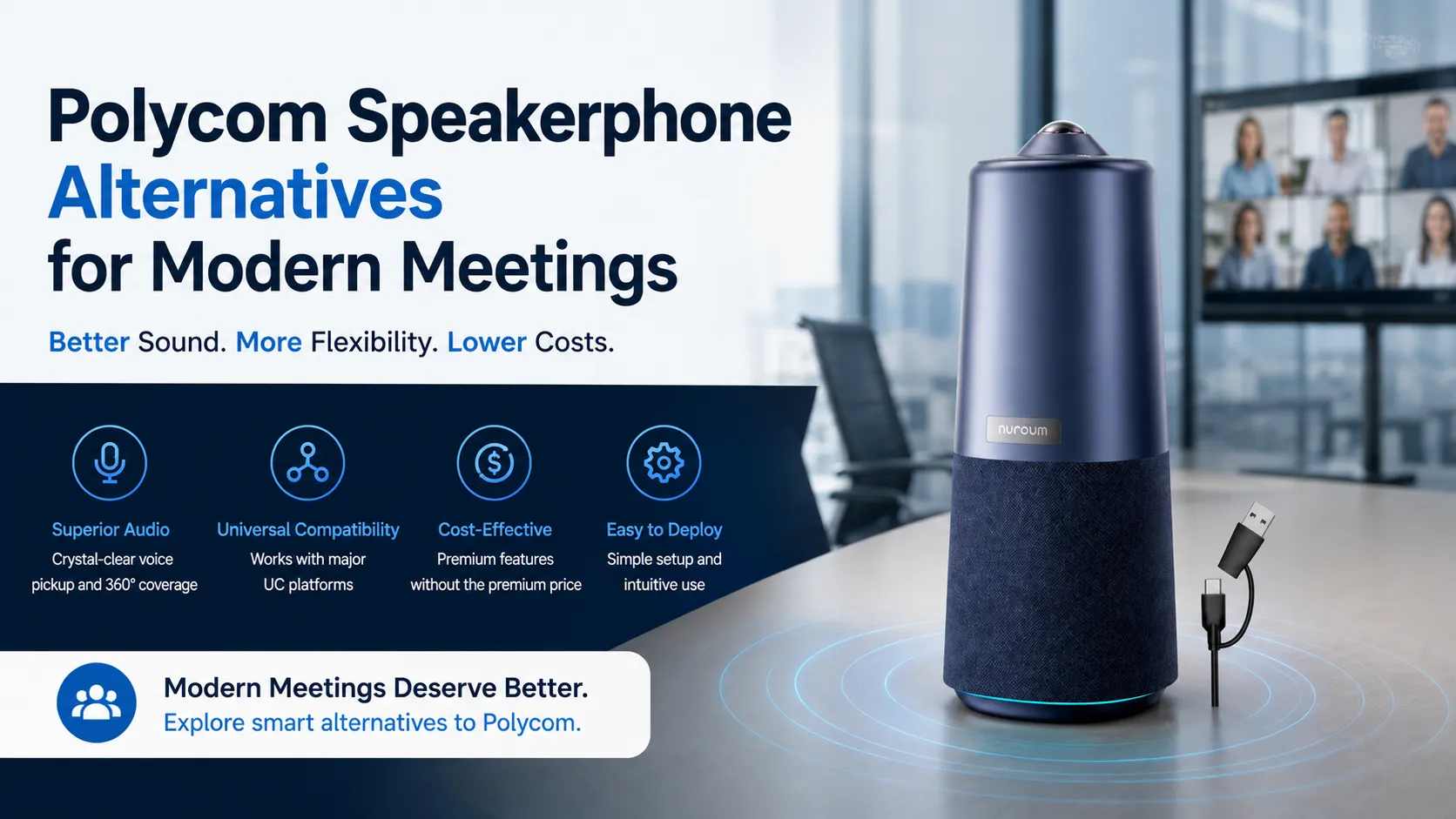
The analysis above points toward a clear conclusion: most organizations replacing a polycom speakerphone, sennheiser speakerphone, konftel device, or any audio-only conference phone should seriously evaluate all-in-one alternatives. The Nuroum 360 Pro represents exactly this category — a device built from the ground up with both video and audio as co-equal priorities.
What the Nuroum 360 Pro Delivers
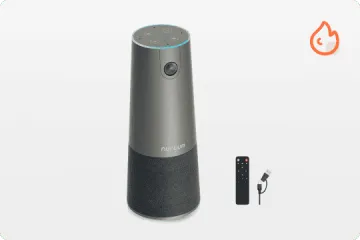
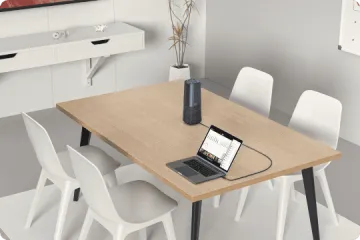
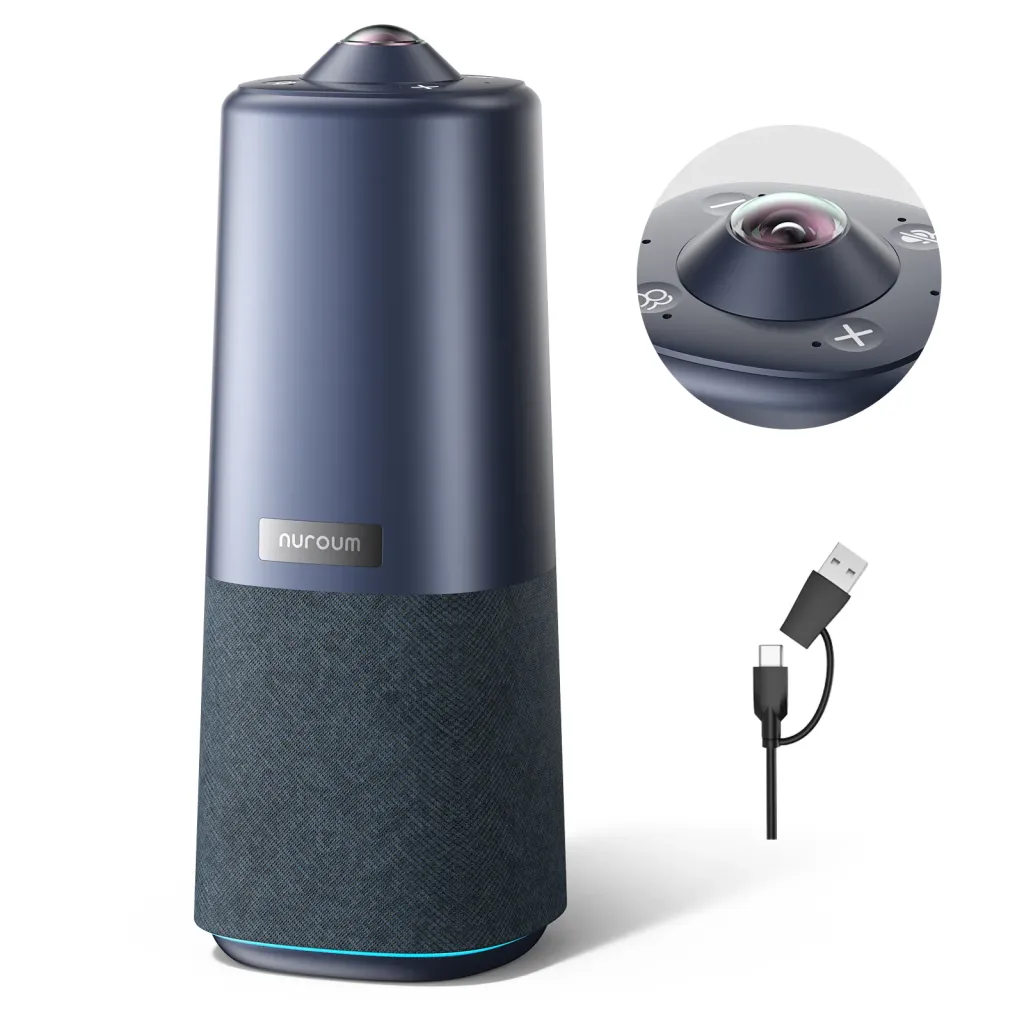
The Nuroum 360 Pro is an all-in-one video conference camera designed to handle entire meeting rooms with a single USB device. Instead of pairing a camera with a separate speakerphone, it integrates everything — 360-degree video, multi-microphone audio, and a speaker — into one plug-and-play unit.
Video. A 360-degree 1080P fish-eye lens captures the entire room at 1080P resolution and 30 frames per second. Three AI-powered viewing modes adapt to different meeting types:
- Discussion Mode intelligently identifies and highlights up to three active participants, automatically switching between them as the conversation flows. This is ideal for collaborative meetings where multiple people contribute.
- Global Mode provides a 115° field of view showing the entire participant group — perfect for team stand-ups, all-hands, or situations where you want remote participants to see everyone.
- Presentation Mode tracks and frames the active speaker, keeping the focus on whoever is presenting or leading the discussion.
Audio. Six omnidirectional microphones with noise cancellation provide 16-foot (6-meter) audio pickup radius — covering medium and large conference rooms without requiring participants to lean toward a device. A Hi-Fi speaker with a full-duplex audio system means natural, interruption-free conversation where both sides can speak and be heard simultaneously.
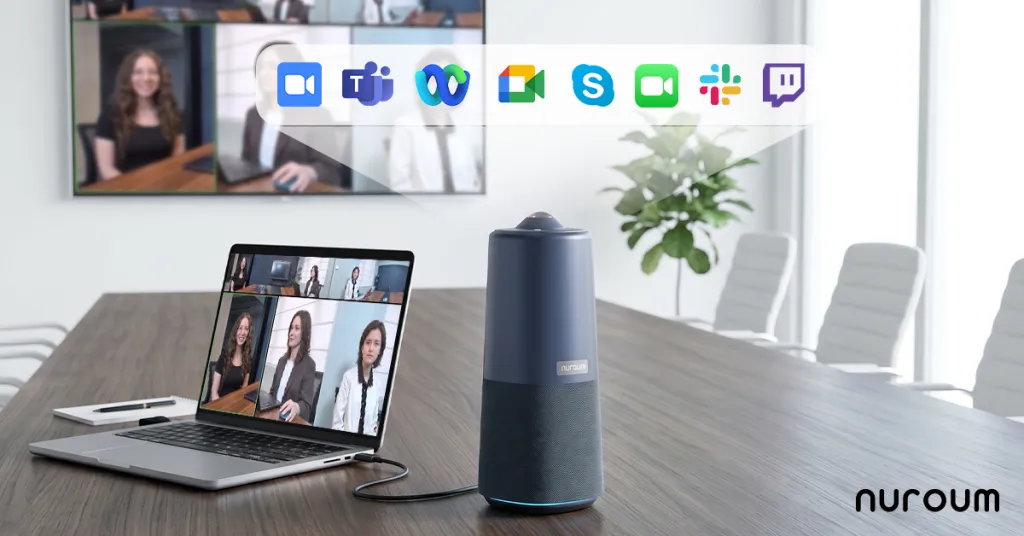
Deployment. USB plug-and-play — no drivers, no software installation, no IT configuration. Compatible with Zoom, Microsoft Teams, Google Meet, GoToMeeting, and Webex across Windows, macOS, and Linux. Priced at $630.00, the device eliminates the need for separate camera and audio purchases.
How It Compares to the Audio-First Approach
When you evaluate the Nuroum 360 Pro against the traditional approach of deploying a high-end speakerphone plus a separate camera, several contrasts emerge:
| Aspect | Audio Specialist + Separate Camera | Nuroum 360 Pro |
|---|---|---|
| Devices on Table | 2+ (speakerphone, camera, cables) | 1 |
| Setup Time | 5-15 minutes (multiple connections, configuration) | Under 1 minute (single USB) |
| Video Intelligence | Depends on camera — typically basic or manual | AI-powered: auto-framing, speaker tracking, multi-participant views |
| Audio Pickup | Brand-dependent; 8-20 ft typical | 16 ft / 6 m omnidirectional with noise cancellation |
| Management | Two devices to update, troubleshoot, replace | One device, one firmware, one support contact |
| Total Cost | Speakerphone + camera cost (typically $400-800 + $300-700) | $630.00 |
The comparison illustrates why the shift toward all-in-one devices is happening: you're not simply choosing between audio brands — you're choosing between a multi-device, multi-vendor setup and a unified solution that handles the entire meeting experience.
For organizations specifically looking at medium-sized conference room solutions, the 360 Pro's 16-foot audio pickup and 360-degree video coverage make it a natural fit. Browse the full conference camera category to explore additional options across different room sizes and use cases.
Decision Framework: Choosing Your Next Conference Room Upgrade
With the brand landscape analyzed and trade-offs mapped, here's a framework for your own evaluation.
Step 1: Assess Your Meeting Reality
Document what actually happens in your rooms: What percentage of meetings include remote participants who use video? How many people sit at the table? What UC platforms do you use? What's the average setup time? If video is the norm and setup friction is a recurring complaint, you have a strong case for an all-in-one device.
Step 2: Set Your Must-Have Criteria
- Audio fidelity is your only priority, video is irrelevant: Premium audio brands (Sennheiser, Yamaha) remain strong choices.
- Video is essential, you want a single device: All-in-one cameras with integrated audio are the clear direction.
- Established enterprise relationship with Poly or Yamaha, switching costs are high: The status quo may be defensible — but negotiate hard on ecosystem stability.
- Cost-constrained, need basic functionality: Budget brands like Grandstream suffice for secondary rooms; all-in-one devices offer better value for primary rooms.
Step 3: Evaluate Across All Dimensions
Don't decide on a single criterion. Brands differ across audio quality, video capability, brand stability, support availability, ecosystem compatibility, and price. The conference room equipment upgrade guide provides a structured methodology.
Step 4: Test Before You Commit
Deploy a candidate device in one room for two weeks. Measure actual setup time, user feedback on audio and video quality, and IT support tickets. The data will validate or challenge assumptions in ways spec sheets cannot.
Frequently Asked Questions
Are Polycom speakerphones still the best choice for conference rooms?
Polycom speakerphones remain strong performers for audio-only conference calls, but modern meeting rooms increasingly benefit from all-in-one devices that combine speakerphone-quality audio with integrated video capabilities, eliminating the need for separate camera and audio equipment in a single deployment. If your meetings are predominantly video-based, alternatives that handle both audio and video in one device often deliver better overall value and user experience than a standalone polycom speakerphone.
What should I consider when replacing a Sennheiser speakerphone?
Key factors include whether your team needs integrated video, room size coverage, microphone pickup range, UC platform compatibility, and total cost. Sennheiser excels in pure audio quality, but if your meetings increasingly involve video collaboration, an all-in-one device may offer better overall value and simpler deployment. Also consider that Sennheiser's conference products operate in a premium price tier; alternatives may deliver comparable practical performance at lower cost.
Is a Konftel conference phone compatible with Microsoft Teams?
Many Konftel devices offer broad UC platform compatibility, including Microsoft Teams certification on select models. However, as a niche European brand, distribution and support availability vary by region, and their product line focuses primarily on audio rather than integrated video solutions. Organizations outside Europe should verify local support infrastructure before committing to a konftel deployment.
How do Yamaha speakerphones compare to all-in-one conference cameras?
Yamaha speakerphones (including the former Revolabs line) deliver excellent audio engineering backed by decades of acoustic expertise, but they remain audio-only devices. All-in-one conference cameras add video capability, AI-powered speaker tracking, and multi-participant framing that audio-only devices fundamentally cannot provide. For rooms where video is important, the comparison favors all-in-one solutions.
Are Plantronics speakerphones still reliable after the HP acquisition?
Plantronics (now part of HP Poly) speakerphones continue to be supported, but the consolidation of Poly, Plantronics, and HP product lines has created legitimate ecosystem uncertainty. Existing Plantronics users may want to evaluate whether long-term support continuity and product roadmap stability meet their organization's future needs before making additional plantronics speakerphone investments. The three-way merger introduces questions about which product lines will receive ongoing development.
Conclusion: The Future of Meeting Room Technology
The conference room technology landscape has changed. The brands that defined the category — Polycom, Plantronics, Sennheiser, Bose, Konftel, Yamaha, AudioCodes — built their reputations in an era of audio-only calls, proprietary hardware, and specialized AV expertise.
That era is ending. Today's meeting rooms need devices that handle video and audio as co-equal priorities, work with any UC platform through USB, and leverage AI to improve the meeting experience. Audio-first brands aren't disappearing, but they're being repositioned from "the default" to "the specialized choice" for scenarios where audio excellence is the overriding priority.
For everyone else — law firms, consulting practices, tech companies, distributed teams — the shift toward all-in-one devices is the logical response to how meetings actually happen in 2026: with video, with remote participants, with an expectation of simplicity and intelligence.
If you're evaluating huddly camera options against audiocodes devices against grandstream speakerphone products, start by clarifying what your rooms actually need. For most organizations, the answer points toward integration, intelligence, and simplicity — the hallmarks of the all-in-one approach.
For further reading, our conference room equipment upgrade guide covers the full journey, and our UC platform alternatives analysis examines how hardware choices intersect with broader communications strategy.