





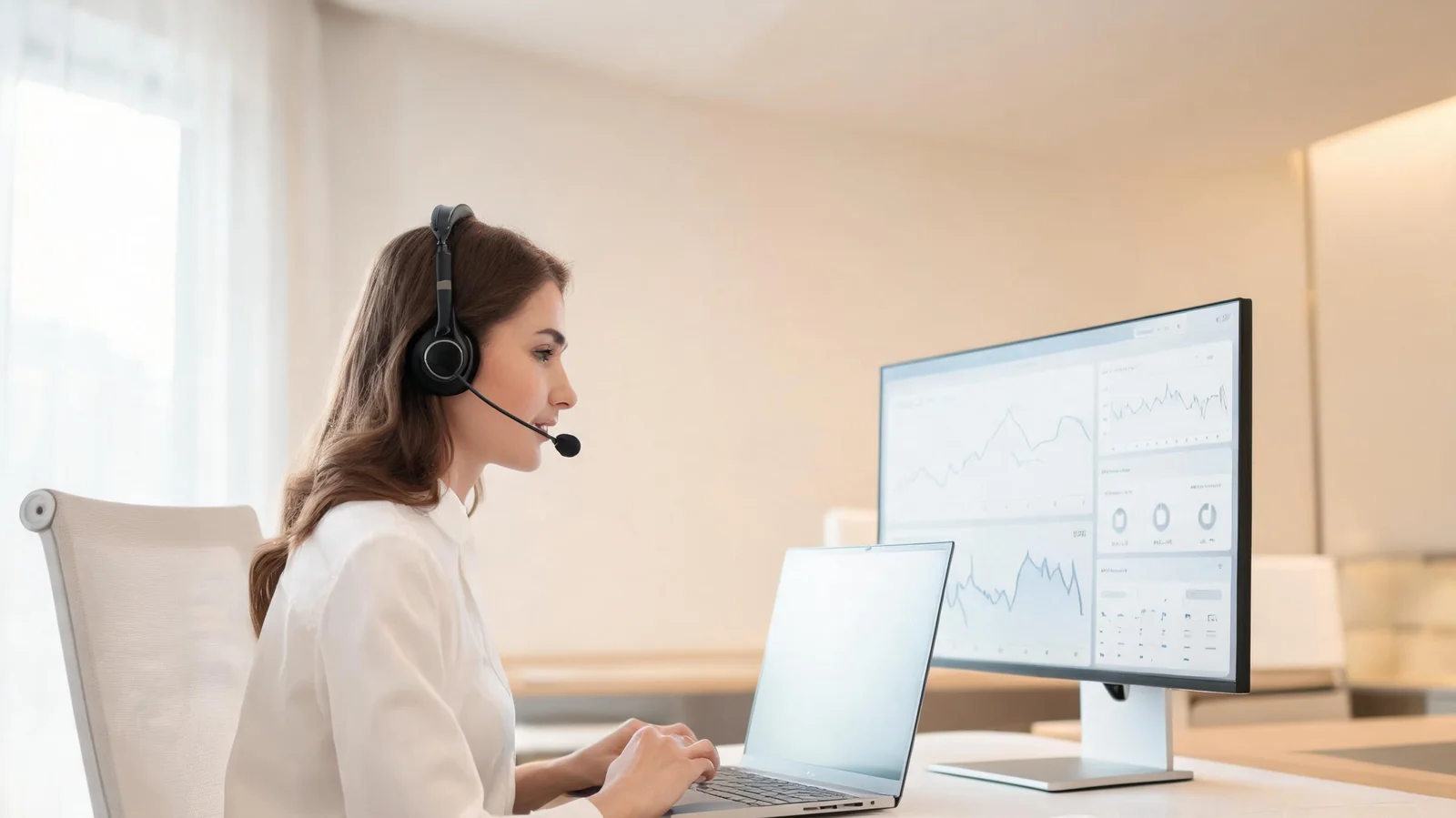
In 2026, successful telemarketing depends on more than making more calls — it requires clearer communication, smarter workflows, and reliable equipment. This guide explores the essential telemarketing skills for the AI-driven sales era and explains how choosing the right telemarketer headset can improve call quality, reduce fatigue, and help sales teams perform at their best.
A telemarketing headset is no longer just hardware strapped to your ear for eight hours a day. In 2026, it is the most important tool connecting a sales rep to every prospect, every CRM note, and every AI-generated coaching cue that shapes the conversation. The reps winning deals are not necessarily making the most calls — they are the ones whose calls sound clear, feel comfortable, and run on equipment that keeps pace with an AI-augmented sales workflow.
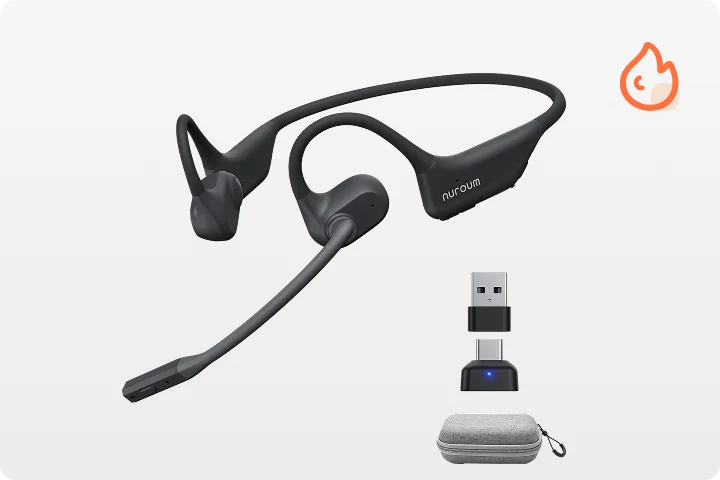
This guide covers the telemarketing skills that move the needle in 2026 and how to choose a telemarketer headset that supports them — with recommendations for two headsets built for high-volume calling: the Nuroum HP31D and the Nuroum OpenEar Pro 2.
The Telemarketing Landscape in 2026
The global B2B telemarketing services market sits at roughly USD 28.6 billion and is projected to reach USD 45.3 billion by 2033, while the U.S. call center industry alone is valued at USD 28.5 billion in 2026. Telemarketing is not dying — it is being rebuilt around AI, remote work, and tighter compliance. Gartner predicts 40% of B2B sales interactions will be AI-mediated by 2027, and 73% of call center leaders now plan to offer long-term remote or hybrid options. Meanwhile, the FCC imposed USD 208 million in telemarketing-related fines in 2024, and AI-generated voices now fall under TCPA robocall rules.

Cold-calling success rates have dropped from 4.8% in 2024 to roughly 2.3% in 2025 — meaning every call that connects has to count. That starts with the skills a rep brings to the call, and it ends with the headset that delivers their voice.
Essential Telemarketing Skills for 2026
The 2026 telemarketer is part salesperson, part data interpreter, part compliance officer. Five skills separate top performers from the rest of the dialing pool.
- AI-Assisted Selling. The most successful reps treat AI as a co-pilot, not a replacement. Modern platforms surface real-time sentiment analysis, objection-handling suggestions, and CRM-pulled context the moment a prospect picks up. The skill is synthesis: combining AI-driven intelligence with human rapport to make each call feel bespoke.
- Personalization at Scale. Profile-aware openers draw on CRM fields, past touchpoints, and firmographics to match language and tone to the prospect's role and region. The winner in 2026 is the rep making the most resonant calls, not the most calls.
- Multi-Channel Communication. Smart cadence coordinates voice with email and SMS. With 9 out of 10 consumers expecting an omnichannel experience, the headset becomes the anchor: the one device that stays on through every channel switch.
- Compliance Awareness. With complaint volumes reaching 4.3 million, compliance is now a core selling skill. Reps must enforce calling-time restrictions, honor Do-Not-Call requests instantly, and align with STIR/SHAKEN caller authentication. A single slip can cost more than a quarter's commissions.
- Emotional Intelligence. 61% of contact centers report more emotionally charged customer interactions in 2025-2026, yet many do not train agents to handle them. AI can detect sentiment but cannot manage a frustrated prospect. The 2026 rep reads the room — adjusting tone, pacing, and empathy in real time.
Why Your Headset Is Your Most Important Tool
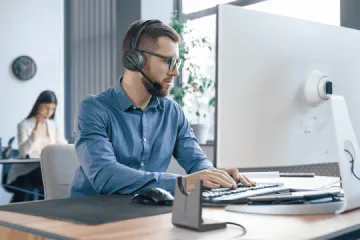
Every skill above depends on one thing: clear, reliable audio. If a prospect sounds muffled, the rep misses buying signals. If the rep's voice is garbled by background noise, trust evaporates before the pitch lands. A headset for telemarketing is not an accessory — it is the bottleneck or the breakthrough for every conversation in the workday.
A rep using a consumer music headset picks up keyboard clatter, HVAC hum, and the conversation two desks over. A rep wearing a heavy headset develops jaw pressure by hour three. Comfort, microphone clarity, and noise isolation rank as the top three features telemarketers value because they directly determine call quality, stamina, and conversion rates.
In 2026, a fourth factor matters: AI-voice-input accuracy. As calls are transcribed and analyzed in real time, a microphone that captures 99% of words accurately feeds clean data to speech-to-text engines and coaching analytics.
What to Look for in a Telemarketing Headset
- All-Day Comfort. Discomfort spikes above 140 grams for shifts of six hours or more — targets are under 120 grams for mono and under 180 grams for stereo. Memory foam and protein leather ear cushions outperform PVC, and clamping force should stay under 2.5 newtons.
- AI-Powered Noise Cancellation. AI-powered Environmental Noise Cancellation (ENC) uses neural networks trained on real noise data to isolate the wearer's voice from complex backgrounds, hitting suppression rates up to 99.9%.
- Speech-Tuned Microphone. A USD 45 wired headset tuned for speech often outperforms a USD 199 consumer Bluetooth headset in voice-pickup consistency, because the mic is engineered for near-field talking rather than music. Look for noise-rejecting boom microphones with cardioid patterns.
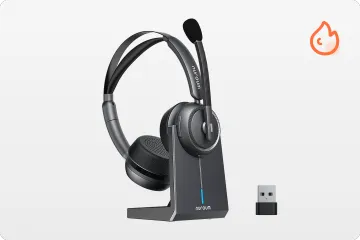
- Wireless Connectivity and Range. A wireless call center headset should offer Bluetooth 5.3 or higher, plus a USB dongle for computers without native Bluetooth. Multipoint connectivity lets a rep switch between a laptop softphone and a mobile call without re-pairing.
- Battery Life. Advertised talk times of 24-plus hours rarely hold up in real-world testing. For telemarketing, target at least 30 hours of rated talk time to cover a full shift plus buffer.
- Platform Certification. Insist on headsets certified for — not merely compatible with — your UC platform. Certification ensures hardware-level mute, answer, and volume controls work without software interference.
Wired vs. Wireless: Matching the Headset to the Work
The wired-versus-wireless debate is about operational reality. Deployment data from mid-sized contact centers tracked over 18 months paints a clear picture.
| Factor | Wired USB | Wireless (Bluetooth/DECT) |
|---|---|---|
| Audio latency | Sub-5ms, no perceptible delay | 20-250ms depending on protocol |
| Mic consistency | Excellent, DSP-tuned | Firmware-dependent |
| Battery management | None | Nightly charging required |
| 3-year TCO | USD 75-150/unit, near-zero failures | USD 300-450/unit, battery degradation |
| Mobility | Fixed desk only | Up to 300 ft line-of-sight |
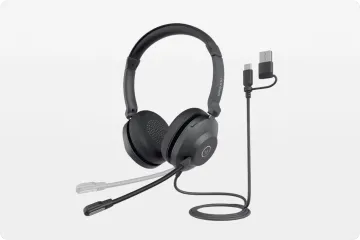
Choose wired if your agents use shared workstations, handle 120-plus calls daily from a fixed PC, or your IT team lacks bandwidth for firmware rollouts. Choose wireless if your agents work hybrid or fully remote, need one device that works identically on PC and phone, or require mobility during long shifts. The 2026 consensus is purpose-built selection: match the headset to how people actually work.
Top Telemarketing Headset Recommendations
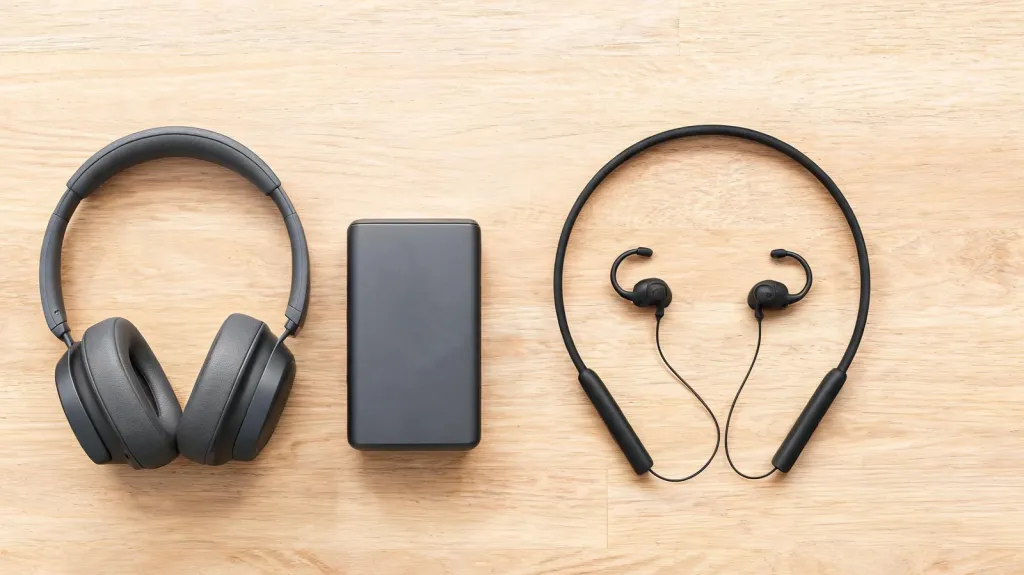
Two headsets from Nuroum cover the two most common telemarketing profiles: the all-day desk agent who wants maximum battery and noise isolation, and the mobile, hybrid rep who prioritizes situational awareness and featherlight comfort.
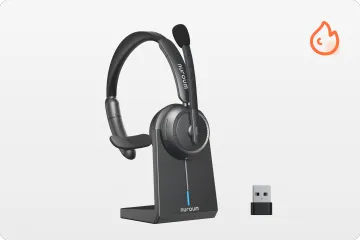
Nuroum HP31D: The All-Day Workhorse
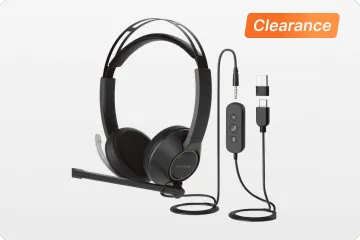
The Nuroum HP31D (2nd Gen) is built for the rep who lives on the phone. It is a wireless, on-ear headset that pairs AI-powered noise cancellation with battery life that outlasts the competition at its price point.
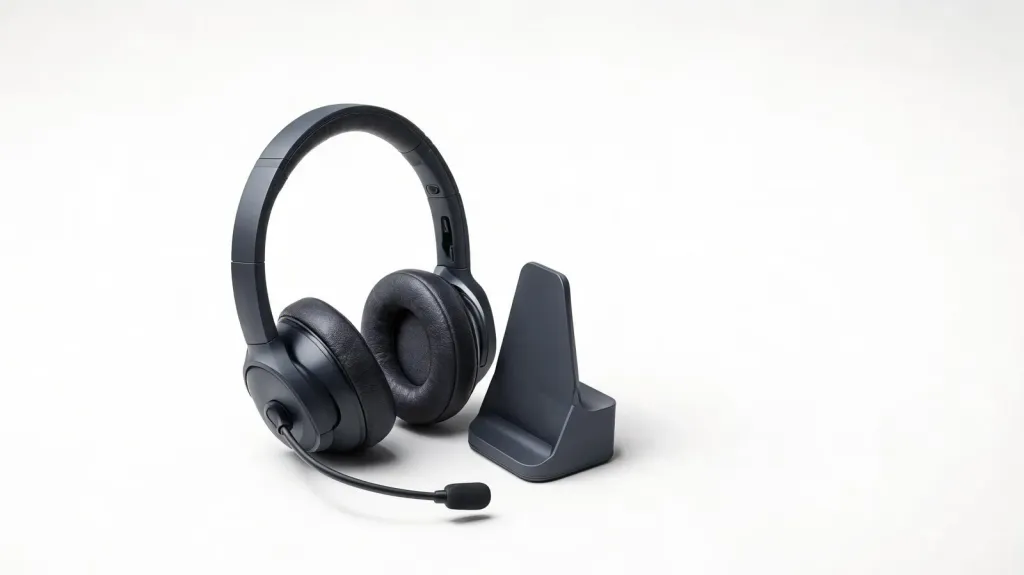
Key specifications:
- Weight: 184g with protein leather ear cushions and memory foam
- Connectivity: Bluetooth 5.4 with 30ms ultra-low latency, multipoint dual-device connection, included USB-A dongle, plus USB-A and USB-C wired options
- Microphone: Dual omnidirectional ECM mics with 250-degree rotatable boom, wearable left or right
- Noise cancellation: AI-powered ENC with HiFi4 DSP processor and neural network, up to 99.9% background noise suppression via ProperClean 2.0 technology
- Battery: Up to 35 hours talk time, 45 hours music playback, 2-hour charge time, included charging base
- Compatibility: Windows, Mac, Linux, Android, iOS; certified for Zoom, Microsoft Teams, Webex, and Google Meet
- Price: USD 90.00 (sale, regularly USD 99.99) with volume discounts starting at 5 units
The HP31D shines in high-volume telemarketing where reps need to block out a busy office or noisy home. The 35-hour talk time means a rep can work a full shift, forget to charge overnight, and still have buffer the next morning. The AI-powered ENC handles air conditioners, keyboard clatter, pets, and street bustle so the prospect hears only the rep's voice. For teams standardizing on one headset for telemarketing, the included dongle and multipoint connectivity eliminate compatibility headaches.
Key specifications:
- Weight: 31g — among the lightest noise-cancelling open-ear headsets available
- Connectivity: Bluetooth 5.4 with dual-device multipoint, included 2-in-1 USB-A/C dongle
- Microphone: Dual noise-cancelling microphones with ENC powered by HiFi4 DSP chip
- Battery: Up to 12 hours talk time, 15 hours music playback, USB-C charging
- Water resistance: IPX6 rated for sweat and splash protection
- Audio features: Anti-sound-leakage technology for call privacy, large drivers for deep bass
- Controls: Dedicated discreet mute button with voice prompts heard only by the wearer
- Price: USD 129.00 (sale, regularly USD 149.99) with volume discounts at 5-plus units
The OpenEar Pro 2 is for reps who cannot afford to tune out the world entirely. Team leads taking calls while fielding in-person questions, remote reps sharing a home office, or agents who need to hear a doorbell all benefit from the open-ear design. At 31 grams, it eliminates the fatigue heavier headsets impose by hour six. Anti-sound-leakage technology keeps calls private in shared spaces, and the discreet mute with ear-only voice prompts prevents jarring beeps. For anyone exploring an open ear headphone with mic that doubles as a wireless open ear headphone for work and daily life, the OpenEar Pro 2 bridges both worlds.
How to Choose Between the Two
The decision comes down to one question: do you need to block the world out, or stay tuned in?
Pick the HP31D if you work in a noisy environment where concentration is king. The on-ear seal, 35-hour battery, and 99.9% noise suppression make it ideal for fixed-desk agents and remote reps who need to disappear into a quiet bubble for eight hours. At USD 90, it is the default for team bulk purchases.
Pick the OpenEar Pro 2 if situational awareness matters as much as call quality. Hybrid workers, team leads, and anyone who finds traditional headsets claustrophobic will appreciate the 31-gram weight. The 12-hour battery is the trade-off, but sufficient for most shifts.
Common Mistakes to Avoid
- Chasing music headsets for call work. A consumer Bluetooth headset tuned for bass will underperform a USD 90 speech-tuned business headset on mic clarity and all-day comfort.
- Ignoring weight. A 220-gram headset feels fine for 20 minutes and miserable by hour four. Trust the 180-gram ceiling.
- Assuming noise cancellation means silence. No headset cancels human voices at conversational distance. Physical barriers are still necessary for close-seated agents.
- Skipping platform certification. "Compatible with" Teams is not "certified for" Teams. The former makes sound; the latter means the mute button works mid-call.
FAQ
- What makes a good telemarketing headset in 2026?
All-day comfort, AI-powered noise cancellation, a speech-tuned microphone, and reliable wireless connectivity. Battery life of at least 30 hours and multipoint Bluetooth are now baseline features.
- Is a wireless call center headset better than a wired one?
It depends on your work style. Wireless suits hybrid and remote agents needing mobility, while wired offers zero latency and lower total cost for fixed-desk, high-volume agents. Purpose-built selection matters more than the wireless-versus-wired debate itself.
- How long should a telemarketing headset battery last?
Look for at least 30 hours of talk time. This covers a standard 8-hour workday with buffer for back-to-back calls, coaching, and follow-ups without mid-shift charging anxiety.
- Are open-ear headsets suitable for telemarketing?
Yes. Open-ear headsets suit agents who need situational awareness — those in shared offices or multitasking between calls and in-person interactions. They reduce ear fatigue while delivering clear microphone pickup when paired with AI noise cancellation.
- How much should I spend on a headset for telemarketing?
A quality telemarketing headset costs between USD 90 and USD 150, delivering AI noise cancellation, dual-device connectivity, and all-day comfort. For teams, look for volume discounts of 12 percent or more when buying five or more units.