

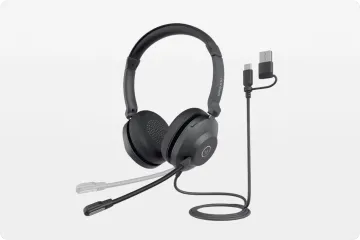
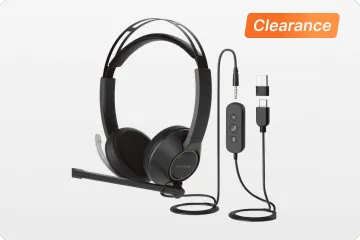
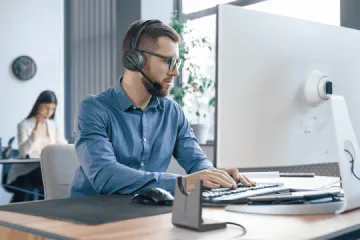
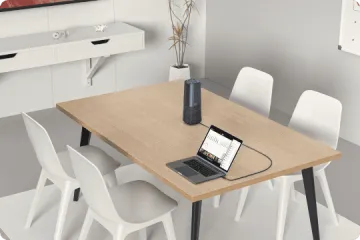




The wireless usb headset for call center has evolved beyond basic Bluetooth earpieces. In 2026, AI-powered noise cancellation and dedicated 2.4GHz USB dongles separate professional equipment from consumer audio gear. But why does a wireless headset with usb dongle matter so much for call center work?
USB Dongle vs. Standard Bluetooth: What Call Centers Need to Know
Standard Bluetooth operates in the crowded 2.4GHz spectrum shared by Wi-Fi, microwaves, and dozens of nearby devices. In a call center where fifty agents sit within thirty feet of each other, Bluetooth signals interfere with one another—causing dropouts, audio lag, and failed pairing.
A wireless headset with usb adapter for pc uses a dedicated 2.4GHz protocol that pairs exclusively with its USB dongle. The result is lower latency (under 30ms versus 100-300ms for Bluetooth), rock-solid stability even in high-density environments, and true plug-and-play connectivity—agents simply plug in the dongle and start working. No IT configuration, no pairing menus, no mid-call disconnections.
This guide rounds up ten standout wireless usb headset for call center performance, evaluated based on connection stability, long-term battery life, mic clarity, and overall cost-effectiveness.
What to Look For in a Call Center Headset
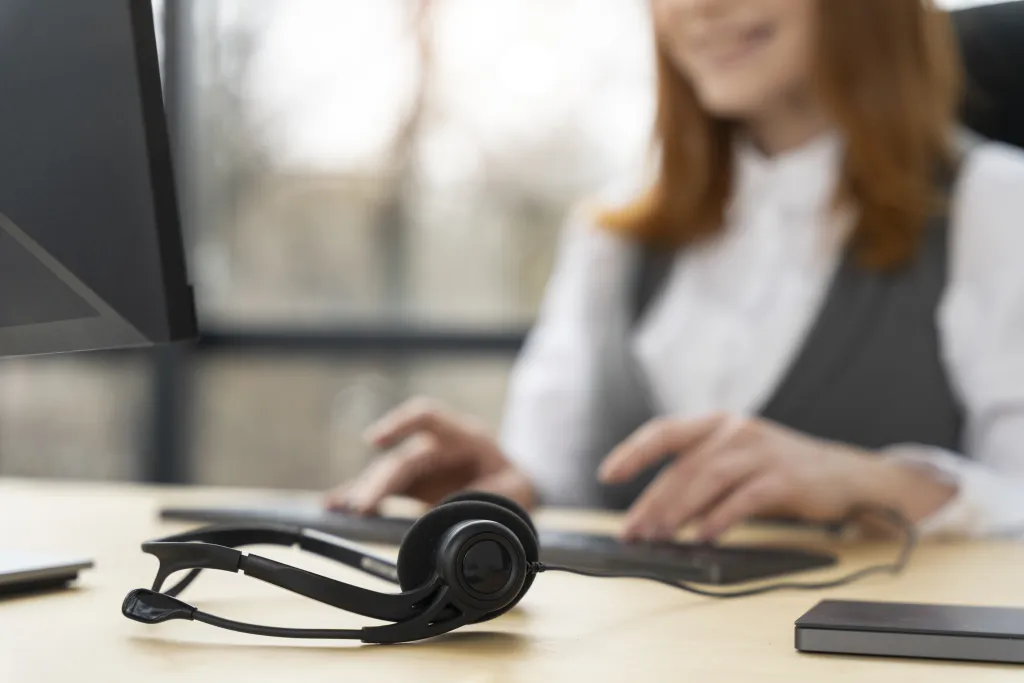
Three criteria matter when selecting a wireless headset with usb dongle for professional use:
- Connection Stability. A dedicated USB dongle on 2.4GHz delivers lower latency and more stable connections than standard Bluetooth. In high-density environments where dozens of wireless devices compete for bandwidth, this eliminates dropouts and interference.
- Noise Cancellation Technology. Not all noise cancellation is the same. Active Noise Cancellation (ANC) uses microphones to detect ambient sound and generates inverse sound waves to cancel it out—ideal for agents who need to focus in noisy environments by blocking external sound. Environmental Noise Cancellation (ENC) uses AI-powered algorithms to identify and strip background noise from the microphone signal before it reaches the caller—ensuring customers hear only the agent's voice, not keyboard clicks or office chatter.
- Comfort and Battery. Call center agents wear headsets 8+ hours daily. Lightweight designs under 200g, cushioned ear pads, and 10+ hour battery life are essential. Charging stands simplify multi-shift operations.
1. Jabra Evolve2 75 — Best Overall
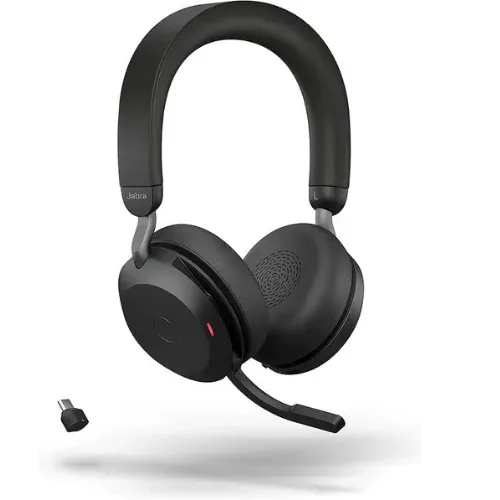
Price: $388 | Form Factor: Over-ear | Battery: 36h | Connection: Bluetooth + USB dongle
Specs: 8-mic array, hybrid ANC, 197g, UC-certified, busy light
- + Outstanding 8-microphone array
- + 36-hour battery
- + UC-certified + Busy light indicator
- – Expensive for large deployments
- – Can get warm
The Evolve2 75 is Jabra's flagship. Eight mics with beamforming deliver exceptional clarity. In a comprehensive microphone and ANC test by YouTuber "Simply Headsets", the Evolve2 75 demonstrates why its 8-mic array is the industry standard for voice isolation. The busy light signals when an agent is on a call, and its hybrid ANC is powerful enough to silence a bustling room.
2. Poly Voyager Focus 2 UC — Best for Noise Cancellation
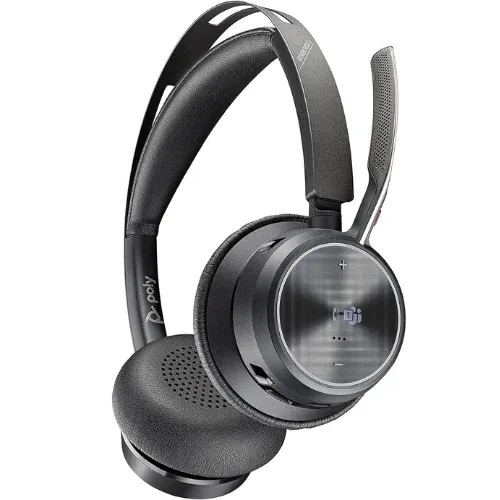
Price: $189.99 | Form Factor: Over-ear | Battery: 19h | Connection: Bluetooth + USB dongle
Specs: Acoustic Fence tech, 175g, 164ft range, hybrid ANC, dynamic mute alert
- + Acoustic Fence blocks surrounding noise
- + Lightweight at 175g
- + 164-foot range
- + Dynamic mute alert
- – 19-hour battery
- – Premium price
The Voyager Focus 2 UC uses Acoustic Fence technology to create a virtual sound barrier. Tech reviewer Tic Tech Toe highlights that this headset offers the best microphone quality he has ever tested, making it a top-tier choice for noisy call centers. At 175g, it is lightweight and designed for long-shift comfort.
3. EPOS Sennheiser Impact SDW 5066 — Best Premium DECT
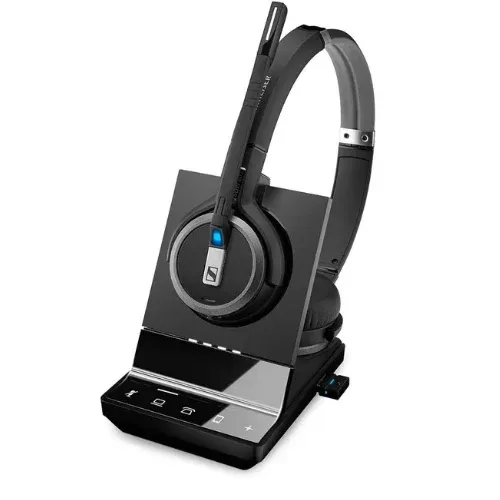
Price: $485 | Form Factor: Over-ear | Battery: 14h | Connection: DECT base + USB dongle
Specs: Dual MEMS mics, 136g, 590ft range, triple connectivity, conference mode
- + 590-foot range
- + Triple connectivity
- + Ultra-lightweight at 136g
- + Conference mode (4 headsets)
- – Most expensive
- – Requires base station
- – 14-hour battery
The SDW 5066 is the enterprise standard for range and security. In a professional performance review, the SDW 5066 was praised for its "Super Wideband" audio mode, providing a clear signal up to 590 feet from the base station. At 136g, it remains one of the lightest dual-ear headsets on the market.
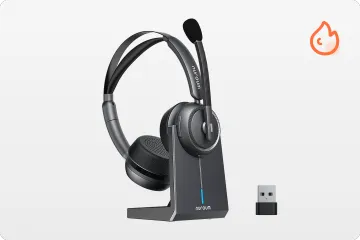
4. Nuroum HP31D — Best Value Business Headset
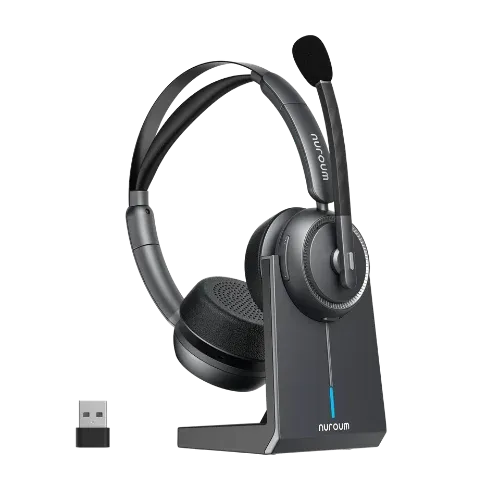
Price: $90 | Form Factor: Over-ear dual | Battery: 35h | Connection: BT 5.4 + USB-A dongle
Specs: Dual ECM mic, AI-ENC (99.9% noise blocking), rotatable boom, charging stand
- + AI-ENC blocks 99.9% background noise
- + Directional boom mic for clear calls
- + 35-hour talk time
- + Dedicated mute button
- + Charging stand included
The HP31D is built for high-volume call centers. According to tech reviewer Reviewing Playing & More, the HP31D's AI-voice isolation is so precise that background noise becomes almost non-existent. At $90 with a charging stand included, it delivers professional-grade clarity that matches premium rivals.
5. Yealink WH66 Dual — Best Workstation Hub
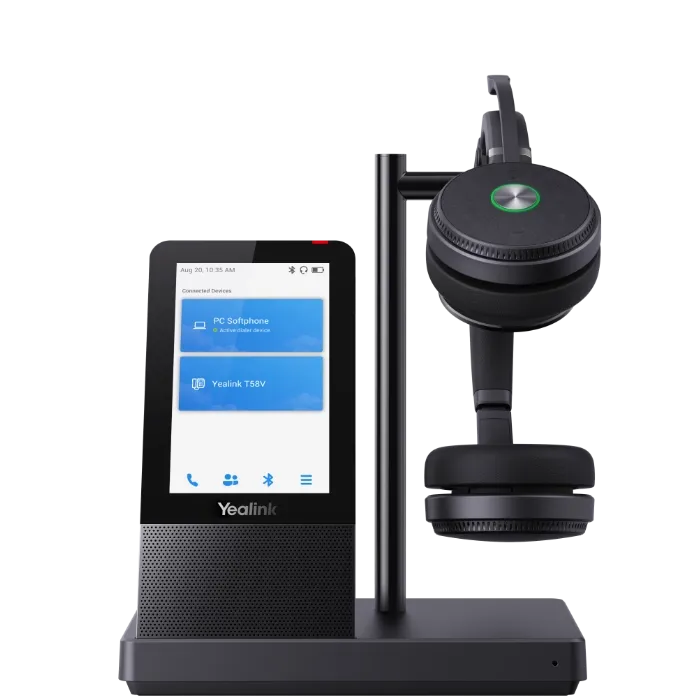
Price: $239 | Form Factor: Over-ear | Battery: 13h | Connection: DECT + Bluetooth
Specs: Noise-cancelling boom, 127g, 525ft range, touchscreen base, wireless charging
- + Touchscreen control hub
- + 525-foot range
- + Wireless phone charging
- + Ultra-lightweight at 127g
- – Base station required
- – 13-hour battery
- – Teams-focused
The WH66 Dual is a desktop collaboration hub. Reviewer I.M.H.O calls it a 'serious business workstation' due to its integrated touchscreen and wireless charging capabilities. The base manages calls and wirelessly charges your mobile device simultaneously, streamlining the agent's desk.
6. Jabra Evolve2 65 — Best Mid-Range Value
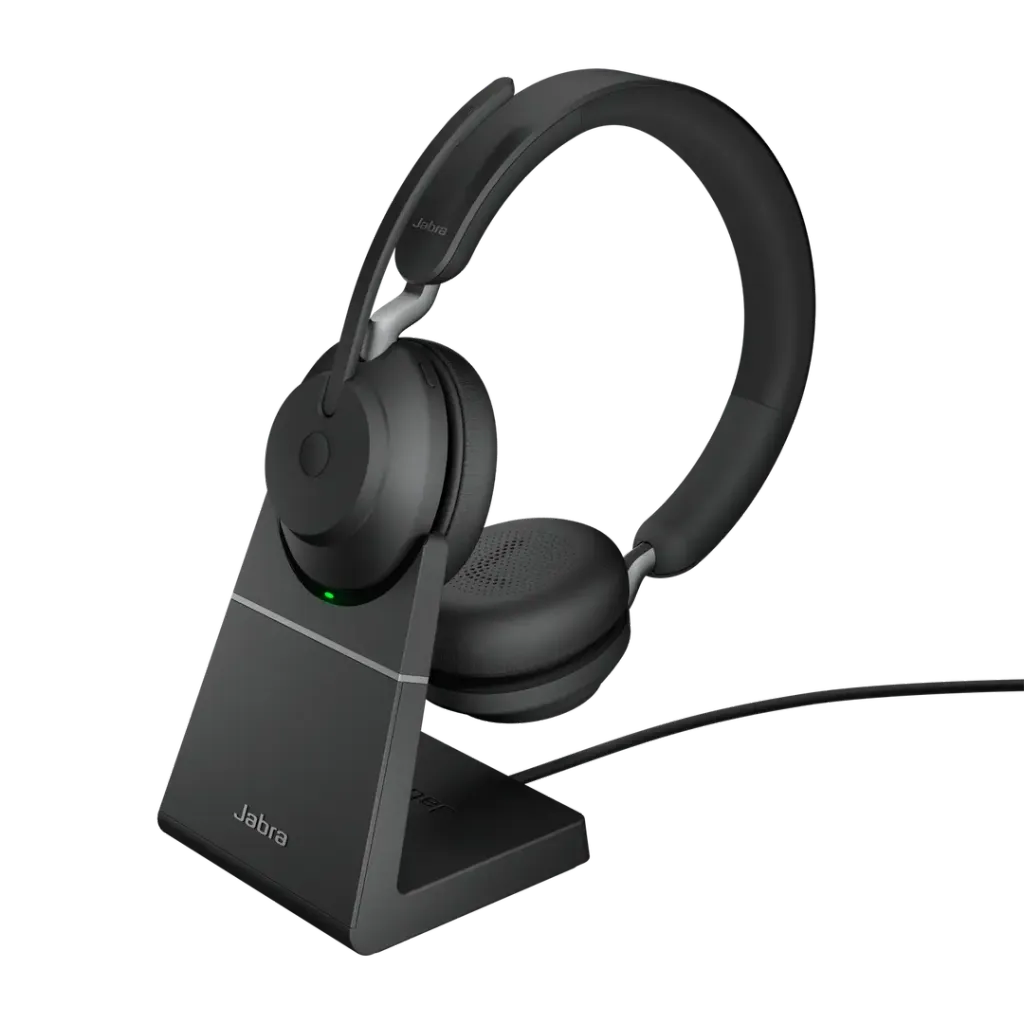
Price: $345 | Form Factor: Over-ear | Battery: 37h | Connection: BT 5.0 + USB dongle
Specs: 3-mic call tech, 175g, hybrid ANC, UC-certified, busy light
- + 37-hour battery
- + UC-certified
- – ANC weaker than Evolve2 75
- – Bluetooth 5.0
The Evolve2 65 delivers 90% of the flagship's performance at a more accessible price point. Reviewer "Headset Advisor" performs a live noise-blocking test on the Evolve2 65, showcasing its 37-hour battery life and reliable performance. It’s a reliable, UC-certified choice for high-volume deployments, balancing cost and professional features.
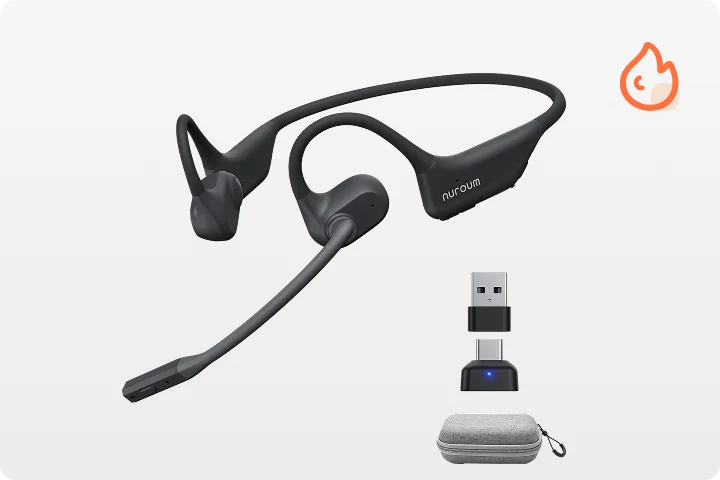
7. Nuroum OpenEar Pro 2 — Best for Ear Fatigue Relief
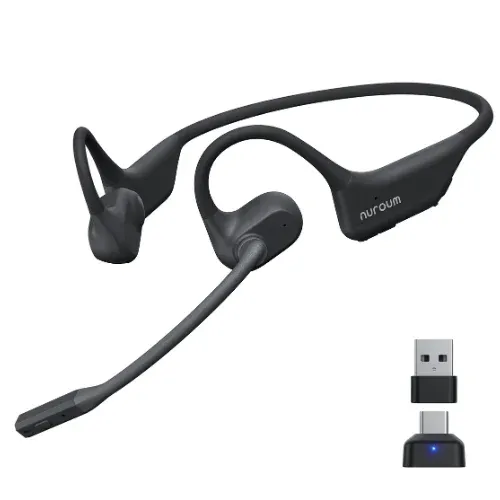
Price: $129 | Form Factor: Open-ear neckband | Battery: 12h | Connection: BT 5.4 + USB-A/C dongle
Specs: Dual ECM directional mic, HiFi4 DSP ENC, 31g, IPX6, anti-sound-leakage
- + Ultra-lightweight at 31g
- + No ear canal pressure
- + HiFi4 DSP environmental noise cancellation
- + IPX6 water resistance
- + Anti-sound-leakage
- – 12-hour battery
- – No passive isolation
The OpenEar Pro 2 solves ear fatigue by resting outside the ear canal. Tech4Dads's hands-on review confirms that the OpenEar Pro 2 provides exceptional vocal clarity while keeping you completely aware of your surroundings. For agents working long shifts, this is a revolutionary alternative to traditional ear cups.
8. Logitech Zone 305 — Best Budget Option
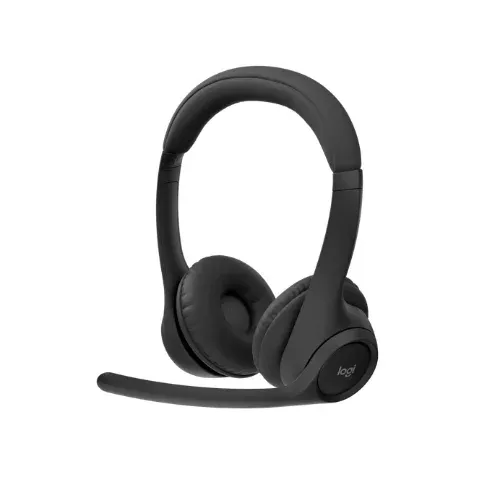
Price: $69.99 | Form Factor: On-ear | Battery: 16h | Connection: USB receiver (2.4GHz)
Specs: Beamforming mic, 122g, Teams/Zoom certified, USB-C
- + Extremely lightweight at 122g
- + Plug-and-play USB receiver
- + Teams certified
- + Excellent value under $80
- – No ANC – 16-hour battery
- – On-ear design
The Zone 305 proves pro call center audio does not require a massive budget. Evaluating its business utility, the tech channel "Headset Advisor" confirms that the Zone 305 provides a much more stable connection via its USB receiver compared to standard Bluetooth. It is an excellent, lightweight value for large-scale deployments under $80.
9. Corsair HS80 RGB Wireless — Best for PC-Only Centers
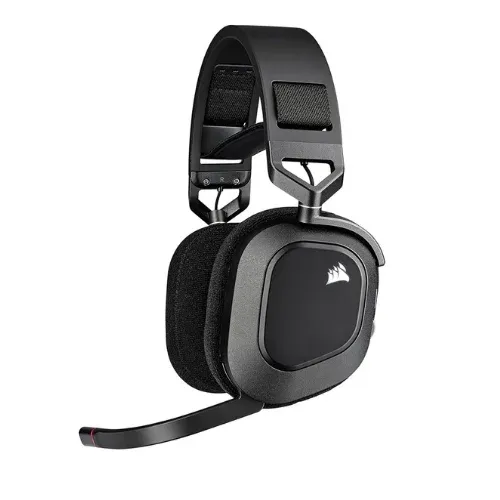
Price: $119.99 | Form Factor: Over-ear | Battery: 20h | Connection: 2.4GHz USB dongle
Specs: 50mm driver, broadcast mic, 367g, Dolby Atmos, flip-to-mute
- + Broadcast-quality microphone
- + 24-bit/48kHz wireless audio
- + Flip-to-mute mic
- – Heavy at 367g
- – Gaming aesthetics
- – No Bluetooth
The HS80 RGB Wireless brings gaming-grade stability to the office. Hardware Canucks' microphone shootout shows the HS80’s broadcast-quality mic outperforming many dedicated business headsets. Its Slipstream 2.4GHz technology provides the low latency needed for high-speed digital communication, making it a surprise hit for PC-based agents.
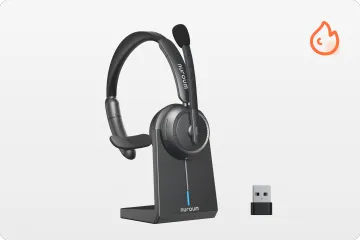
10. Nuroum HP31S — Best for Agent Awareness
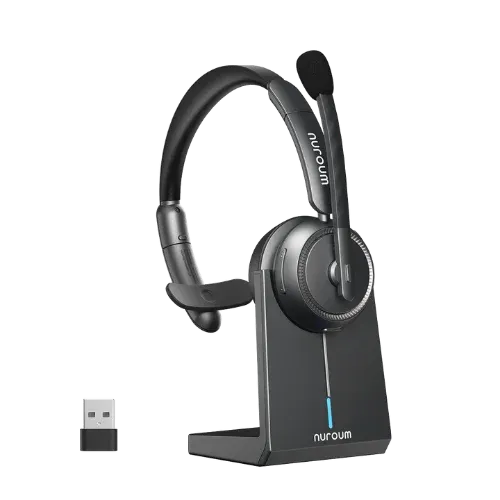
Price: $85.50 | Form Factor: Single-ear on-ear | Battery: 35h | Connection: BT 5.4 + USB-A dongle
Specs: Dual ECM mic, AI-ENC (99.9% noise blocking), charging stand
- + AI-ENC blocks 99.9% background noise
- + One ear free for colleagues
- + 35-hour talk time
- + Most affordable here
- – Single-ear, less isolation
The HP31S delivers the HP31D's audio DNA in a single-ear format. Singapore-based reviewer Gray demonstrates that the HP31S suppresses loud traffic and wind noise effectively, making it a powerful choice for both indoor and outdoor professional calls. It allows supervisors to stay on calls while hearing what's happening on the floor.
Comparison at a Glance
| # | Product | Price | Connection | Noise Cancellation | Battery | Weight | Best For |
|---|---|---|---|---|---|---|---|
| 1 | Jabra Evolve2 75 | $259 | BT + USB dongle | Hybrid ANC | 36h | 197g | Overall performance |
| 2 | Poly Voyager Focus 2 | $216 | BT + USB dongle | Acoustic Fence | 19h | 175g | Noise cancellation |
| 3 | EPOS SDW 5066 | $485 | DECT + USB | Adaptive ANC | 14h | 136g | Premium DECT range |
| 4 | Nuroum HP31D | $90 | BT 5.4 + USB | AI-ENC | 35h | 184g | Business calls |
| 5 | Yealink WH66 Dual | $239 | DECT + BT | Noise-cancelling boom | 13h | 127g | Workstation hub |
| 6 | Jabra Evolve2 65 | $345 | BT + USB dongle | Digital hybrid ANC | 37h | 175g | Mid-range value |
| 7 | Nuroum OpenEar Pro 2 | $129 | BT 5.4 + USB A/C | HiFi4 DSP ENC | 15h | 31g | Ear fatigue relief |
| 8 | Logitech Zone 305 | $69.99 | USB receiver | Passive only | 16h | 122g | Budget deployment |
| 9 | Corsair HS80 RGB | $119.99 | 2.4GHz USB | None | 20h | 367g | PC-only centers |
| 10 | Nuroum HP31S | $85.50 | BT 5.4 + USB | AI-ENC (99.9%) | 35h | 128g | Agent awareness |
Scenario-Based Recommendations
Best for Loud Offices: The Poly Voyager Focus 2 UC with Acoustic Fence creates a virtual sound barrier. The Nuroum HP31D with AI-ENC is a strong budget alternative.
Best for All-Day Comfort: The EPOS SDW 5066 at 136g disappears during wear. The Nuroum OpenEar Pro 2 at 31g eliminates ear pressure for 10+ hour shifts.
Best for Budget Deployments: The Logitech Zone 305 ($69.99) and Nuroum HP31S ($85.50) deliver pro call quality with USB dongles for plug-and-play deployment.
Best for Large-Scale Deployments: The Jabra Evolve2 65 ($345) balances performance and cost. The Nuroum HP31D ($90) with charging stand minimizes per-agent setup.
Final Thoughts
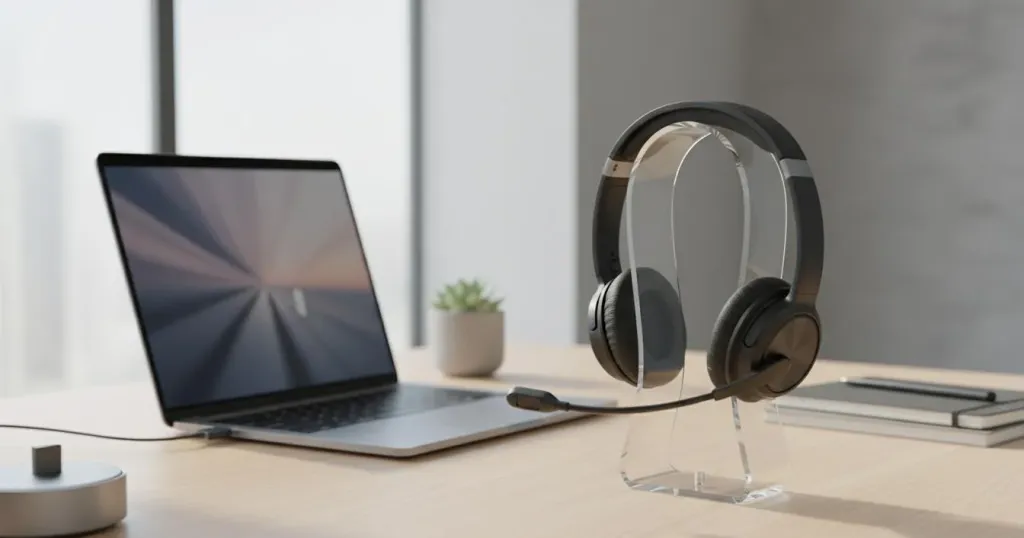
The wireless usb headset for call center market in 2026 offers options for every need. Premium DECT solutions like the EPOS SDW 5066 justify their price in enterprises. Mid-range options like the Jabra Evolve2 65 and Nuroum HP31D deliver professional performance at scalable prices. Budget options like the Logitech Zone 305 prove cost-conscious deployments need not sacrifice quality.
The right choice depends on noise level, shift length, connectivity needs, and budget. A $90 wireless headset with usb dongle that matches your environment outperforms a $500 headset that does not.
FAQs
1.Why is a wireless headset with USB dongle better than Bluetooth for call centers?
A wireless headset with usb dongle uses a dedicated 2.4GHz protocol with lower latency and more stable connections than Bluetooth. In high-density environments, USB dongles eliminate dropouts and interference.
2.What is AI noise cancellation in call center headsets?
AI noise cancellation uses machine learning to distinguish voice from background noise. It removes keyboard clicks and HVAC sounds while preserving speech clarity. ENC focuses on cleaning the microphone signal for callers; ANC blocks external noise for the wearer.
3.How long should a call center headset battery last?
Minimum 8-10 hours per shift. Premium models offer 13-37 hours. The Nuroum HP31D provides 35 hours; the Jabra Evolve2 65 offers 37 hours.
4.What is the difference between DECT and Bluetooth USB dongle headsets?
DECT headsets use a base station with longer range (up to 590 feet). Bluetooth USB dongle headsets connect via a small USB adapter, offering lower cost and simpler setup.
5.Are budget wireless headsets suitable for professional call centers?
Yes. The Nuroum HP31D ($90) and Logitech Zone 305 ($79) deliver professional microphone clarity, AI noise cancellation, and USB dongle connectivity.