







The Fragmented Landscape of Niche Conference Brands
The conference room equipment market has never been a tidy oligarchy. Alongside the dominant players — Cisco, Poly, Logitech — dozens of smaller brands served specific niches, regions, and use cases. Konftel built a loyal following in European markets with Scandinavian design aesthetics. Revolabs pioneered wireless microphone systems for conference rooms before wireless was standard. Grandstream offered budget-friendly IP communications equipment for cost-sensitive deployments. AudioCodes powered voice infrastructure behind the scenes. RingCentral and 8x8 built their brands on cloud communications and extended into room hardware through partnerships.
These brands were not inferior. They were specialized. Each solved specific problems for specific customers. But the market's consolidation around all-in-one, platform-agnostic, video-first devices has reshaped where each fits — or whether they fit at all.
This article addresses the practical question facing IT managers: if your conference rooms run on equipment from these niche or legacy brands, what replaces it when refresh time arrives?
Brand-by-Brand Transition Guidance
Konftel
What they offered: Conference phones and, more recently, video collaboration devices with distinctive Scandinavian design. Strong in European markets. Known for build quality and audio clarity in the speakerphone category.
Current state: Still active with a product line that includes both audio and video devices. The video products represent adaptation to market trends, though they remain relatively niche compared to dominant players.
Transition path: For organizations using Konftel speakerphones, the migration path is identical to Polycom replacements: an all-in-one camera replaces the audio-only device while adding video. For those using Konftel video products, evaluate whether the specific device meets current needs or whether a more widely supported alternative offers better platform compatibility.
Revolabs
What they offered: Wireless microphone systems for conference rooms. The brand eliminated cable clutter in meeting spaces before wireless audio became standard in all-in-one devices.
Current state: Acquired by Yamaha. Products integrated into Yamaha's unified communications portfolio. The standalone Revolabs brand has effectively sunset.
Transition path: Organizations using Revolabs wireless microphone systems need to evaluate whether the wireless capability remains necessary. Modern all-in-one cameras integrate microphones into the device itself, eliminating the need for separate wireless mics in most standard rooms. For large rooms where wireless table microphones are still necessary, Yamaha's current offerings or professional AV solutions are the natural successors.
AudioCodes
What they offered: Voice infrastructure, media gateways, and endpoints for enterprise communications. Primarily a behind-the-scenes technology provider rather than a visible endpoint brand.
Current state: Active in the voice infrastructure and Microsoft Teams ecosystem. Endpoint products exist but are not the strategic focus.
Transition path: AudioCodes devices that function as USB endpoints can be replaced with modern all-in-one cameras on a device-by-device basis. Infrastructure-level AudioCodes equipment (gateways, session border controllers) is a separate category and not affected by conference room hardware decisions.
Grandstream
What they offered: Budget-friendly IP phones, speakerphones, and video conferencing equipment. Popular in cost-sensitive deployments, educational institutions, and small businesses.
Current state: Active with an expanded product line including video conferencing devices. Remains positioned as a value alternative to premium brands.
Transition path: Grandstream's value proposition was always price-driven. Modern all-in-one cameras in the $300-$700 range compete directly with Grandstream's pricing while offering more advanced features. For organizations that chose Grandstream primarily on cost, current all-in-one alternatives often deliver better capability at comparable or lower prices.
RingCentral Rooms and 8x8 Video Conferencing
What they offered: These are primarily software platforms that extended into room hardware through partnerships and certifications. RingCentral Rooms uses hardware from partner manufacturers. 8x8 similarly certifies compatible equipment.
Current state: Both platforms remain active, though the hardware ecosystem has evolved. Both support standard USB audio and video devices.
Transition path: The key insight is that RingCentral and 8x8 are software platforms, not hardware manufacturers. The camera and speaker devices in your RingCentral or 8x8 room can typically be replaced with any USB-compatible all-in-one camera. The platform does not require specific hardware. This flexibility means you can choose the best device for your room regardless of which platform you use.
BlueJeans Room and GoToMeeting Room
What they offered: Room hardware integrations for their respective video conferencing platforms. BlueJeans Rooms used certified partner hardware. GoToMeeting similarly offered room solutions.
Current state: BlueJeans was acquired by Verizon in 2020 and the Rooms product has seen reduced investment. GoToMeeting remains active but with reduced emphasis on dedicated room hardware.
Transition path: Both platforms work with standard USB audio and video devices. Replacing dedicated room hardware with a generic all-in-one camera is typically straightforward — the platform recognizes the device as a standard USB camera and microphone. For BlueJeans specifically, the declining investment in the Rooms product makes proactive replacement advisable.
Cross-Cutting Transition Principles
Regardless of which legacy brand you are replacing, these principles apply:
Audit before replacing. Document what you have, how it connects, and what it is used for. A Konftel speakerphone on an analog line requires different transition planning than a Grandstream IP phone connected to a VoIP system.
Platform compatibility is key. If your organization uses multiple video conferencing platforms, prioritize platform-agnostic USB devices over ecosystem-locked alternatives.
Room size drives device selection. Huddle rooms need different capabilities than boardrooms. Match the device to the space rather than choosing based on brand reputation.
Total cost of ownership matters more than purchase price. Include installation, management time, support burden, and any required licensing in your comparison. A cheaper device that creates more IT overhead is not actually cheaper.
Pilot before scaling. Replace one room, run it for a month, collect feedback, and refine your approach before rolling out to all rooms.
Where the Nuroum 360 Pro Fits
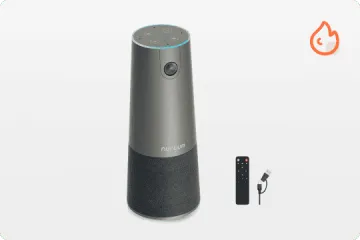
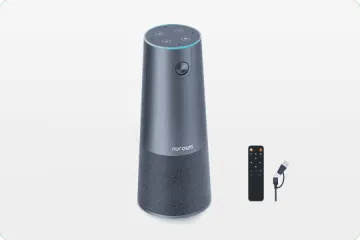
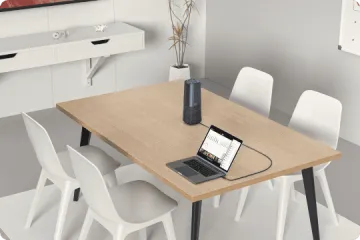
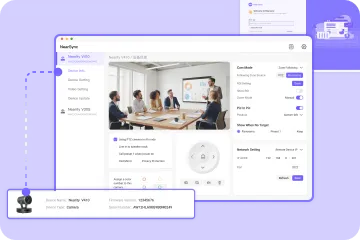
The Nuroum 360 Pro serves as a standard replacement option across all the legacy brand categories described above. Its platform-agnostic USB connectivity works with RingCentral, 8x8, BlueJeans, GoToMeeting, Zoom, Teams, Google Meet, and any other platform that recognizes standard USB audio and video devices.
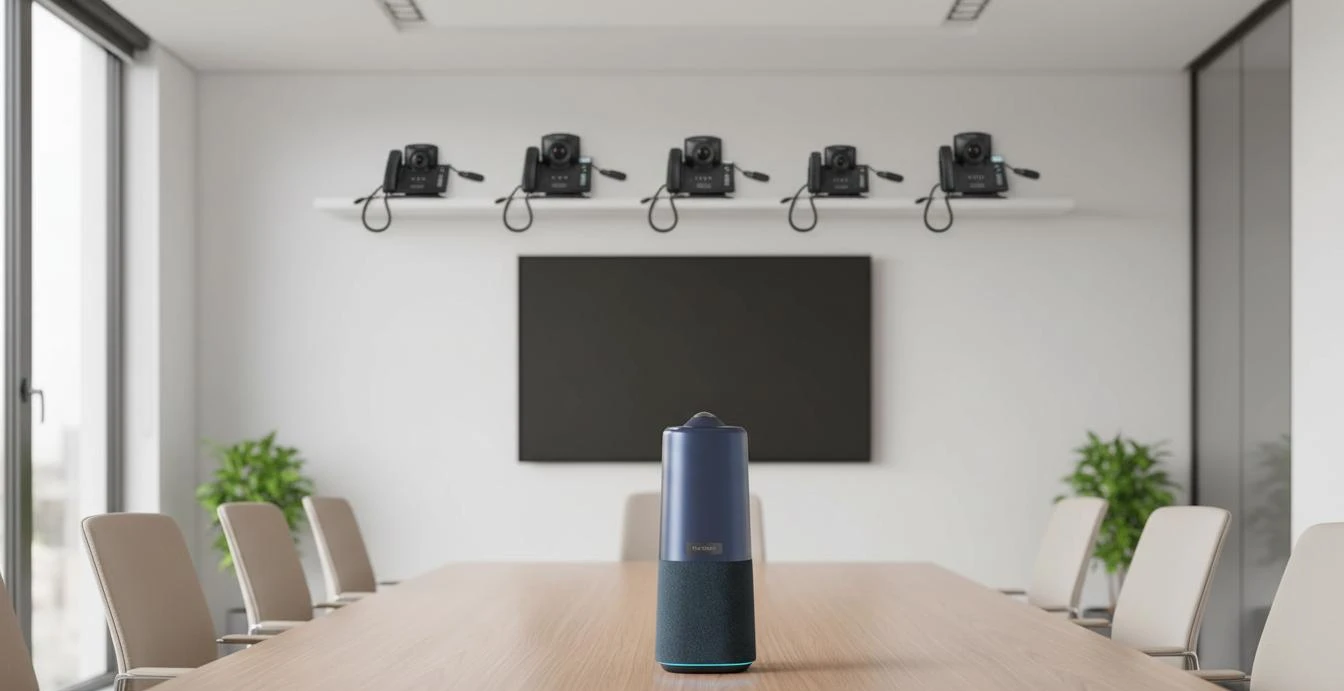
For Konftel and Grandstream speakerphone replacements, it adds 360° video to rooms that previously had audio only. For Revolabs wireless microphone users, it eliminates the need for separate wireless components in standard rooms. For RingCentral and 8x8 room hardware, it offers a certified-compatible alternative that does not lock you into a specific hardware ecosystem.
Six omnidirectional microphones, 16-foot pickup range, integrated Hi-Fi speaker, and 360° panoramic video cover the functional requirements that most legacy brand equipment was meeting — while adding the video dimension that audio-only devices cannot provide.
FAQs
Q: Are Konftel and Revolabs still in business?
A: Konftel remains active in the conference phone and video collaboration space, offering both audio and video products. Revolabs (once known for wireless microphone systems) was acquired by Yamaha, and its products have been integrated into Yamaha's unified communications portfolio. While some legacy products from both brands remain available, the broader trend is toward integrated all-in-one devices that combine audio and video rather than separate component systems.
Q: Can I replace a RingCentral Room or 8x8 video system with a generic all-in-one camera?
A: Yes. RingCentral Rooms and 8x8 video conferencing systems typically use hardware from partner manufacturers. If you are using a generic USB camera and speaker setup, replacing it with a modern all-in-one camera is straightforward — both appear as USB audio and video devices to the platform. However, if you are using a RingCentral-specific or 8x8-certified room kit with custom integration, check compatibility before switching.
Q: What happened to BlueJeans Room and GoToMeeting Room systems?
A: BlueJeans was acquired by Verizon in 2020, and the BlueJeans Rooms product line has seen reduced investment. GoToMeeting remains active, but the company has shifted focus away from dedicated room hardware toward software and cloud solutions. Both platforms work with standard USB audio and video devices, so replacing their dedicated room hardware with generic all-in-one cameras is typically seamless.
Q: How do I choose a replacement for my legacy conference equipment?
A: Start with your room size and usage patterns rather than brand comparisons. For standard conference rooms (6-12 people) with hybrid meetings, a 360° all-in-one camera with USB connectivity works across all platforms. For huddle rooms, a wide-angle all-in-one device suffices. For large boardrooms, you may need multiple devices or a professional AV system. Focus on platform compatibility, ease of setup, and total cost of ownership rather than matching your previous brand.
Related Guides
- Speakerphone vs. All-in-One Conference Camera: Why Hybrid Teams Are Making the Switch
- Best Polycom & Plantronics Speakerphone Alternative in 2026
- Life After Poly: Replacing Your Polycom or Plantronics Speakerphone
The Nuroum 360 Pro replaces legacy conference equipment from any brand — USB plug-and-play compatibility across all platforms, 360° video, and professional audio in one device.