










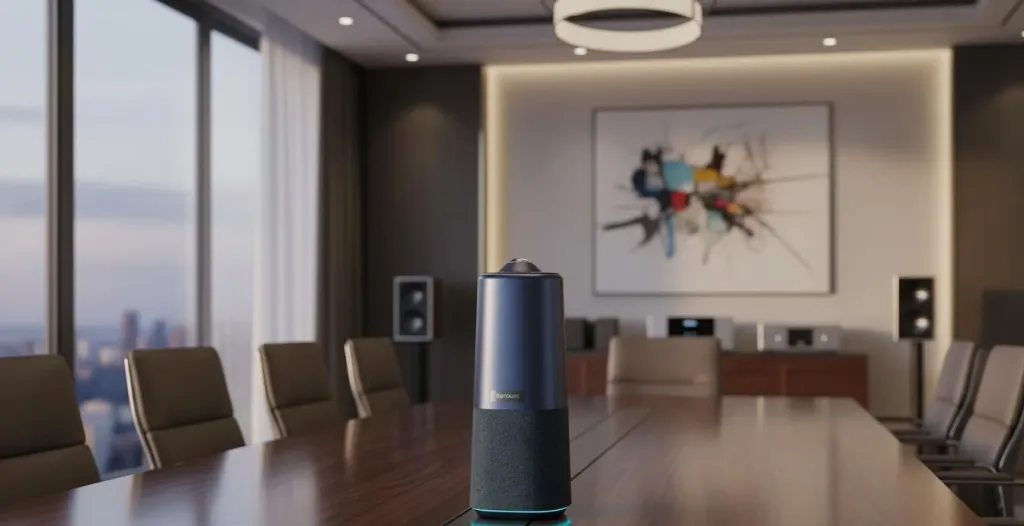
Audio Excellence in a Video World
Sennheiser, Bose, and Yamaha share a defining characteristic: they built legendary reputations in sound before video conferencing existed as a category. Sennheiser's microphones captured concerts and broadcasts. Bose's acoustic engineering filled theaters and aircraft cabins. Yamaha's audio systems powered everything from recording studios to concert halls. When each entered the conference room market, they brought that audio heritage to speakerphones and conference audio systems.
The products were consistently good. A Sennheiser speakerphone delivered the clarity and build quality that recording engineers expected from the brand. A Bose conference system brought the acoustic optimization that made their consumer speakers famous. A Yamaha conferencing solution reflected the reliability that musicians trusted on stage.
But the market shifted underneath them. The conference room evolved from an audio space to a video-first collaboration environment. And these brands — masters of sound — found themselves in a category where audio alone was no longer sufficient.
The Audio-First Limitation
The fundamental constraint is not product quality. It is category definition. A Sennheiser speakerphone captures audio as well as any device in its class. But it captures only audio. The same limitation applies to Bose conference systems and Yamaha speakerphones. When half your meeting participants join remotely and need to see the room, audio excellence — however impressive — solves only half the problem.
The brands have responded in different ways. Some launched video bars that combine cameras with their audio technology. Others partnered with camera manufacturers for bundled solutions. But the core reality persists: their strategic center of gravity remains audio, and the conference room market has moved decisively toward integrated video-audio devices where neither function is secondary.
Why the Shift Happened
The transition from audio-only to video-first conference rooms was not sudden, but its drivers were persistent:
Hybrid work normalized visual meetings. The pandemic accelerated a trend that was already emerging: remote participants expect to see the meeting room, not just hear it. A speakerphone, however excellent, cannot meet this expectation.
AI made integrated devices smarter. When all-in-one cameras could offer auto-framing, speaker tracking, and intelligent discussion modes, the value proposition expanded beyond "camera plus microphone" to "intelligent meeting participant." This is a capability layer that audio-only devices cannot access.
Simplicity became a strategic advantage. IT teams managing dozens of conference rooms prioritized devices that reduced component count and support overhead. One device replacing three (camera, microphone, speaker) won against three premium components from respected audio brands.
Platform flexibility mattered more than deep integration. Organizations using multiple video conferencing platforms needed devices that worked everywhere. Audio brands' platform-specific optimizations became less valuable than universal compatibility.
What Alternatives Offer
All-in-one conference cameras that replace Sennheiser, Bose, or Yamaha speakerphones do not claim superior audio engineering. They claim adequate audio plus essential video in a simpler package.
Comparable Audio for Standard Rooms
In typical conference rooms — huddle spaces to medium-size meeting rooms — the microphone arrays and speakers in quality all-in-one devices perform comparably to speakerphone-class audio products. Six to eight omnidirectional microphones with beamforming, echo cancellation, and noise suppression deliver voice clarity that meets the same standard. The difference is inaudible to most users in most rooms.
Where premium audio brands still lead is in specialized acoustic environments: very large rooms, spaces with challenging acoustics (glass walls, high ceilings), and installations requiring professional sound engineering. For standard conference rooms, the audio performance gap is negligible.
The Video Addition
This is the decisive difference. All-in-one cameras add 360° or wide-angle video capture, AI-powered framing, and visual presence for remote participants. No speakerphone — regardless of audio brand — can provide this. The question is not whether Sennheiser audio is better than an all-in-one camera's audio. It is whether the marginal audio improvement justifies the absence of video.
Simplified Ownership
One device, one vendor, one support channel. For IT teams, this consolidation reduces management complexity. For users, it creates consistent meeting experiences across rooms. For procurement, it simplifies vendor management and standardization.
When Premium Audio Still Matters
There are legitimate reasons to maintain premium audio brand equipment:
Acoustically challenging spaces: Rooms with glass walls, high ceilings, hard surfaces, or open floor plan adjacency benefit from professional-grade acoustic engineering that consumer-oriented all-in-one devices may not match.
Large installations: Event spaces, training rooms, and auditoriums requiring distributed microphone systems and professional sound tuning need the expertise that audio specialist brands provide.
Audio-critical applications: Podcast recording, broadcast-quality meeting capture, and legal proceedings where audio fidelity has evidentiary importance justify premium audio investment.
Brand standards: Some organizations have established vendor relationships, support contracts, and institutional knowledge around specific audio brands. The switching cost may exceed the benefit of consolidation.
Where the Nuroum 360 Pro Fits
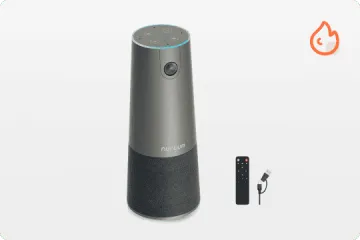
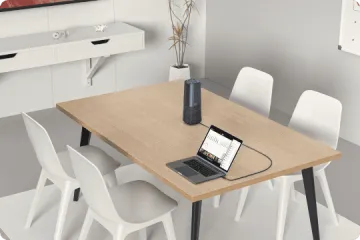
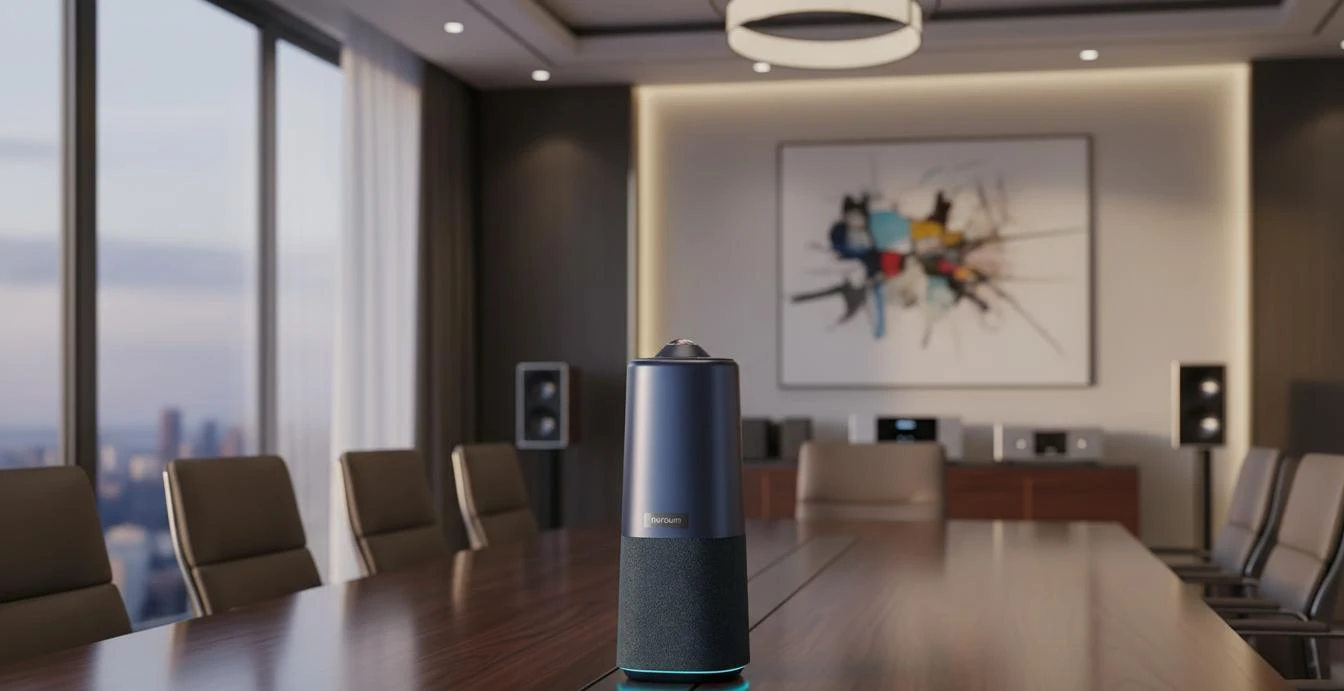
The Nuroum 360 Pro provides an alternative for conference rooms currently using Sennheiser, Bose, or Yamaha speakerphones where the audio quality is adequate but video is missing.
Six omnidirectional microphones with full-duplex audio and echo cancellation deliver conference room audio performance comparable to mid-range speakerphones. The integrated Hi-Fi speaker delivers room-filling audio. The audio engineering prioritizes voice clarity and noise suppression over audiophile fidelity — which is the correct optimization for conference room use.
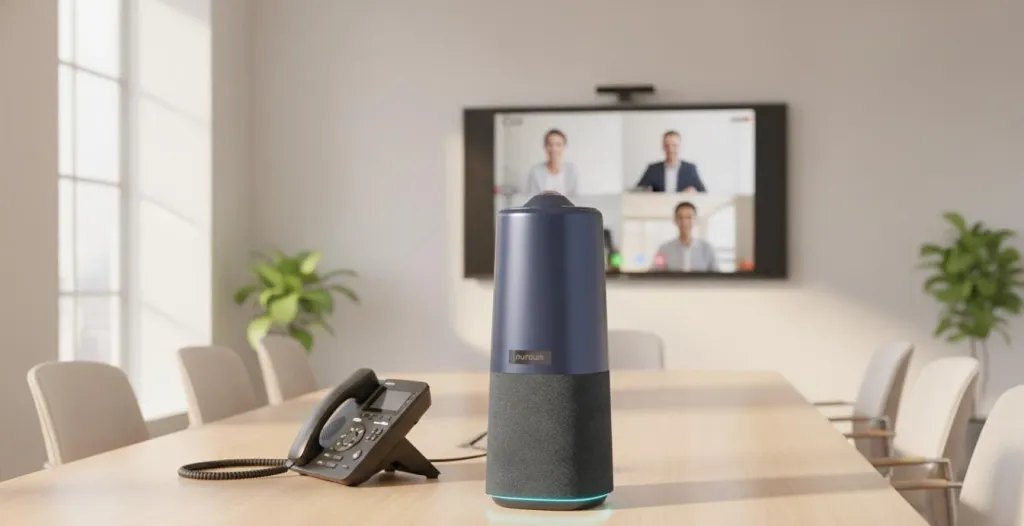
The addition is 360° panoramic video with AI-powered discussion mode, global mode, and speaker tracking. USB plug-and-play connection works across all platforms without ecosystem dependencies.
For rooms where premium audio brand speakerphones create audio-video asymmetry, the 360 Pro offers a single-device replacement that maintains audio adequacy while adding essential video capability.
FAQs
Q: Do Sennheiser, Bose, or Yamaha make conference cameras?
A: These brands have historically focused on audio products for conference rooms — speakerphones, microphone systems, and soundbars. While some have expanded into video bars or camera-adjacent products, their core expertise and strategic focus remains audio-first. None offer the integrated 360° all-in-one camera category that has emerged as the standard for hybrid meeting rooms.
Q: Will I lose audio quality switching from Sennheiser/Bose/Yamaha to an all-in-one camera?
A: Premium audio brands still lead in specialized acoustic applications — large event spaces, recording studios, broadcast environments. However, for standard conference room pickup and reproduction, modern all-in-one cameras match or exceed the audio performance of most speakerphone-class devices. The microphone arrays, echo cancellation, and full-duplex audio in quality all-in-one devices are engineered specifically for conference room acoustics and perform comparably to dedicated speakerphones in the same room size category.
Q: Why did these audio brands not dominate conference room video?
A: Sennheiser, Bose, and Yamaha built their reputations in professional audio — concerts, studios, installations. Video conferencing was a peripheral market for them, and the camera/optics expertise required for leadership in that category was outside their core competency. As the market shifted from audio-only speakerphones to video-first collaboration, technology companies with camera and AI expertise captured the emerging category while audio brands remained focused on their traditional strengths.
Related Guides
- Speakerphone vs. All-in-One Conference Camera: Why Hybrid Teams Are Making the Switch
- Best Polycom & Plantronics Speakerphone Alternative in 2026
- Cisco Webex Room Alternative: All-in-One Camera Buyer's Guide
The Nuroum 360 Pro maintains professional audio quality while adding 360° video — a single-device replacement for audio-only speakerphones from any brand.