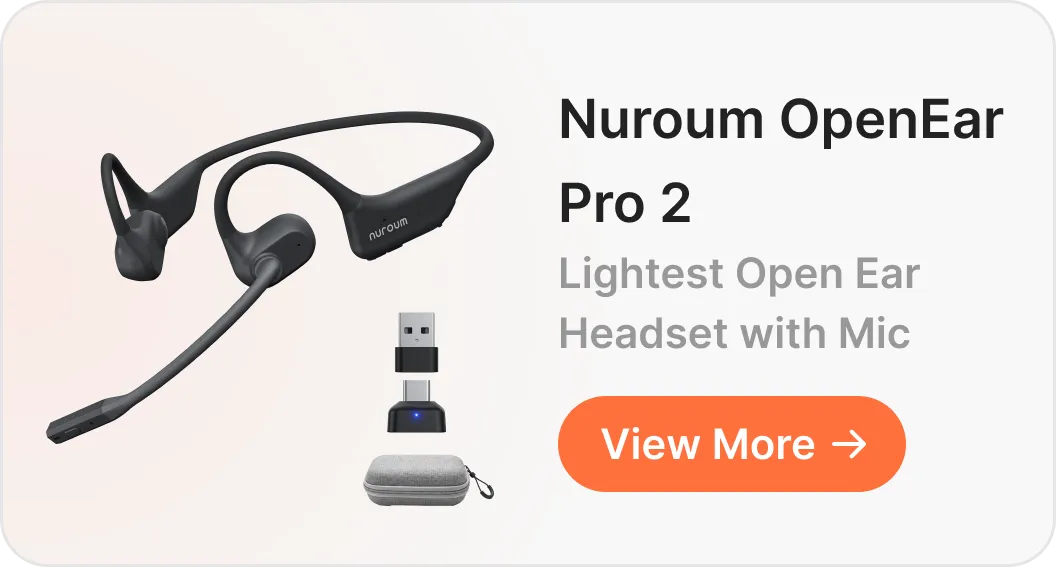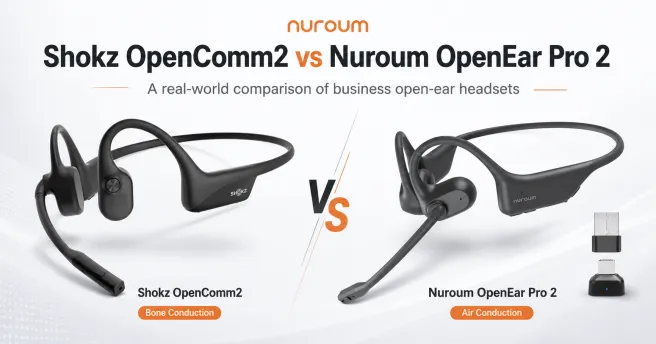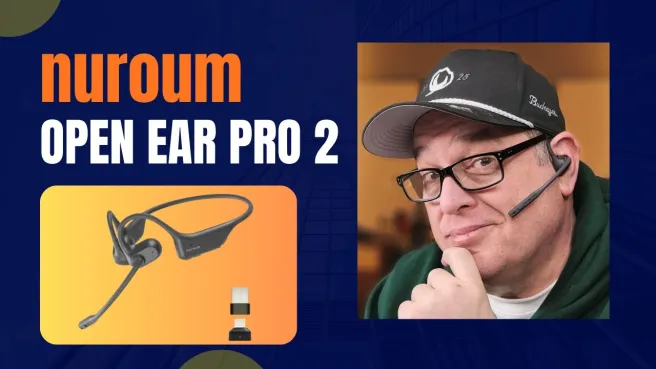

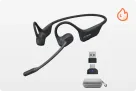
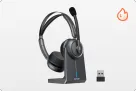
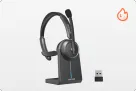




















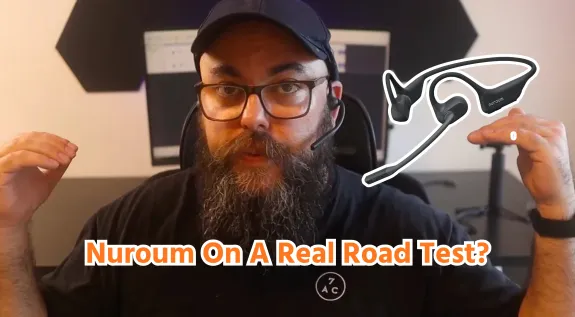
From highway noise to back-to-back meetings, that's a lot to ask of one headset. YouTuber Miklos from Things I Buy put the Nuroum OpenEar Pro 2 through a genuine road test — windows down, highway overpass, wind included — and the results are worth a closer look.
Key Takeaways
- Clear calls in noisy driving conditions: In the creator's windows-down road test, the headset mic filtered out most traffic noise from the transmitted voice.
- Lightweight comfort for long meetings: Its 31g open-ear design reduces heat and ear fatigue while keeping the ear canal unobstructed.
- Stay aware of your surroundings: The mic's noise cancellation reduces background noise for your caller, while the open-ear design lets you hear what's happening around you.
- Flexible phone-and-laptop connectivity: Bluetooth 5.4 dual-device pairing and the included USB-A/C dongle support different work setups, with up to 12 hours of talk time.
Why an Open-Ear Bluetooth Headset for Calling Makes Sense for Driving and WFH
Miklos usually wears over-ear headsets, and his complaint will sound familiar:
My ears get really tired, sweaty, and sometimes even hurt after just a few hours.
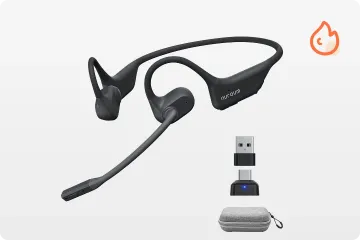
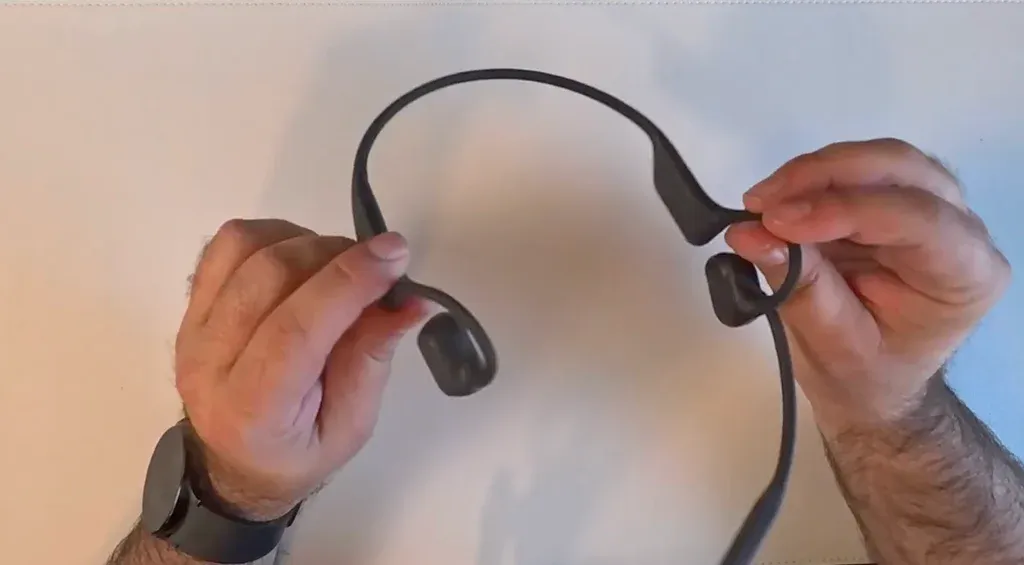
At roughly 31 grams, the OpenEar Pro 2 rests outside the ear canal on a flexible silicone frame. Miklos said this headset made him rethink what type of headphones he should be using for work.
One clarification matters here: this headset's noise cancellation works on the microphone (ENC), reducing what your caller hears — not speaker ANC blocking sound from your own ears. For drivers and WFH parents, that is usually the right trade: you stay aware of traffic, kids, and doorbells while your voice stays clean on the other end.
Is the Nuroum OpenEar Pro 2 a Good Headset for Driving?
1. Clearer Hands-Free Calls in Traffic and Wind
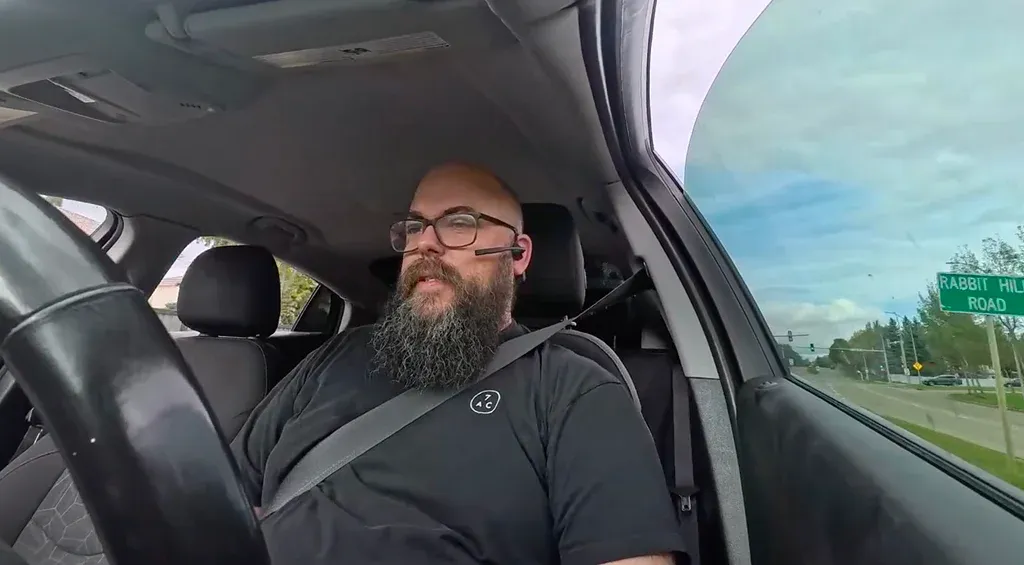
Instead of a quiet-room demo, Miklos tested the mic in genuinely harsh conditions:
- Car windows down: he switched between his camera's raw audio and the headset mic so viewers could hear the difference in wind and passing traffic.
- Highway overpass: cars flying by, grass visibly whipping in the wind.
His verdict:
It's really good at cutting out the extra noise in the background.
The dual-microphone AI ENC (backed by a HiFi 4 DSP chip and ProperClean 2.0 processing) stripped out most road noise from the transmitted voice. If you are comparing the best bluetooth headset for driving, this real-world test carries more weight than lab claims. You can also check out our other test result for bluetooth headsets for noisy environments
2. A Flexible Mic for Calls on the Go
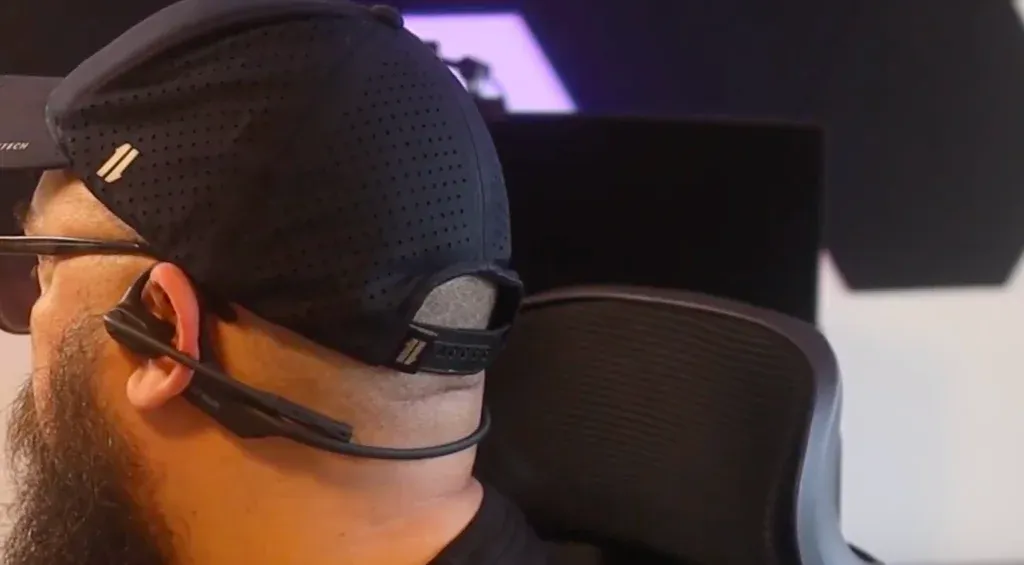
The boom mic rotates 210 degrees, so it flips back and out of sight when you are off the clock.
You can just kind of put it right behind your ears and it's pretty much unnoticeable.
Miklos notes. A physical mute button rounds out the call controls.
3. Keep Your Ears Open While Staying Connected
Because nothing enters the ear canal, Miklos said:
You can really hear your outside environment when you're on a phone call.
Small-print reminder: an open-ear design does not make driving distraction-free, and hands-free rules vary by location.
Is the Nuroum OpenEar Pro 2 a Good WFH Headset?
1. Handle Background Noise During Work Calls
As a noise cancelling headphone for work from home — again, on the microphone side — the same ENC tech targets household chaos: dogs barking, kids crying. Miklos also mentions Reddit posts he came across where users said their managers could not hear a crying child during meetings. For more picks, see our guide to the best noise cancelling headphones for working from home.
2. Stay Comfortable Through Back-to-Back Meetings
The 31g open-ear fit is the whole story here: no clamping headband, no hot ear cushions, no in-ear pressure. According to Miklos,
It's so lightweight so can easily wear it for hours and hours and not get ear fatigue.
Practical touches support long days too: Bluetooth 5.4 with dual-device connection, an included USB-A/C dongle for computers where Bluetooth is restricted, up to 12 hours of talk time (15 hours of music playback, ~2-hour charge), and IPX6 water resistance. It compares well against the other best wireless headsets for work we have tested.

What Should You Know Before Buying?
| Strengths | Limitations |
|---|---|
| Mic ENC cuts most traffic and household noise | Slight wind "warble" in harsh gusts (reviewed by Miklos) |
| 31g open-ear comfort for long meetings | Rear frame does not adjust; loose on some heads (reviewed by Miklos) |
| Bluetooth 5.4 dual-device + USB dongle | Flimsy charging port cover (reviewed by Miklos) |
| Rotatable boom mic, physical mute | Sound leakage at max volume; not built for audiophiles (reviewed by Miklos) |
Who should choose it:
- Remote and hybrid workers with call-heavy days
- WFH parents who must hear the household
- Professionals who take hands-free calls on the road where legal
Who should look elsewhere:
- Audiophiles wanting immersive sound and EQ control
- Anyone needing passive isolation
- Buyers who require a highly adjustable fit (If you are looking for headphones for small heads, our guide may help.)

FAQ
1. Is the Nuroum OpenEar Pro 2 a good bluetooth headset for calling while driving?
Yes, with caveats. In the windows-down and overpass tests, the mic removed most traffic noise from your transmitted voice. Strong wind adds a slight warble, and no headset makes driving distraction-free — follow local laws.
2. Can people nearby hear my calls or music?
At medium volume or lower, generally no. At full blast in a quiet room, yes — the anti-leakage tech reduces but does not eliminate leakage.
3. Is Nuroum OpenEar Pro 2 comfortable for a 6–10 hour work-from-home shift?
That‘s the strongest suit of this bluetooth headset for calling. Built as a work from home headset with noise cancelling microphone, its 31g open-ear frame avoids the heat, pressure, and ear fatigue of over-ear designs.
4. Can it connect to my laptop and phone at once?
Yes — this bluetooth headset for calling supports Bluetooth 5.4 dual-device pairing, plus an included USB-A/C dongle for plug-and-play use on Teams or Zoom when Bluetooth is unavailable.
5. Is it good for music?
It is fine for casual listening, but Miklos noted "it's just not geared really towards music." Communication comes first.