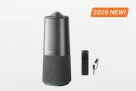
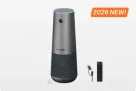






















A Bluetooth headset with a noise cancelling microphone uses multiple mics and DSP processing to strip background sound from your outgoing voice — that is ENC, not ANC. For all-day calls, open-ear designs like the Nuroum OpenEar Pro 2 suit awareness-first users, while the dual-ear HP31D fits focused, high-volume calling.
Key Takeaways
- ENC (microphone noise cancellation) cleans what callers hear; ANC only cleans what you hear — for calls, ENC is the spec that matters.
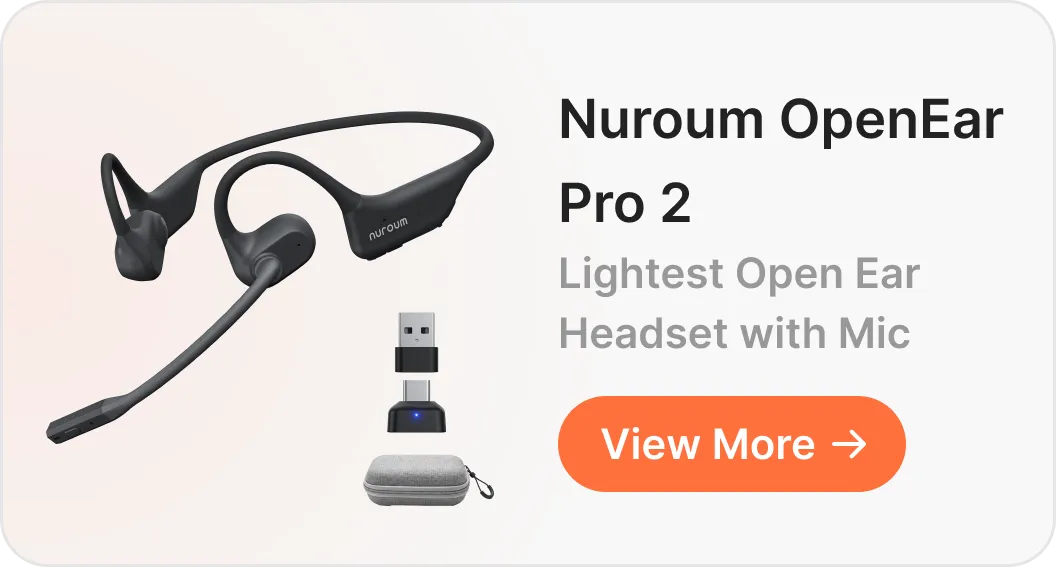
- At 31 g with dual ENC mics, the Nuroum OpenEar Pro 2 removes the ear-fatigue complaint common in 6–10 hour shifts while keeping you aware of your surroundings.
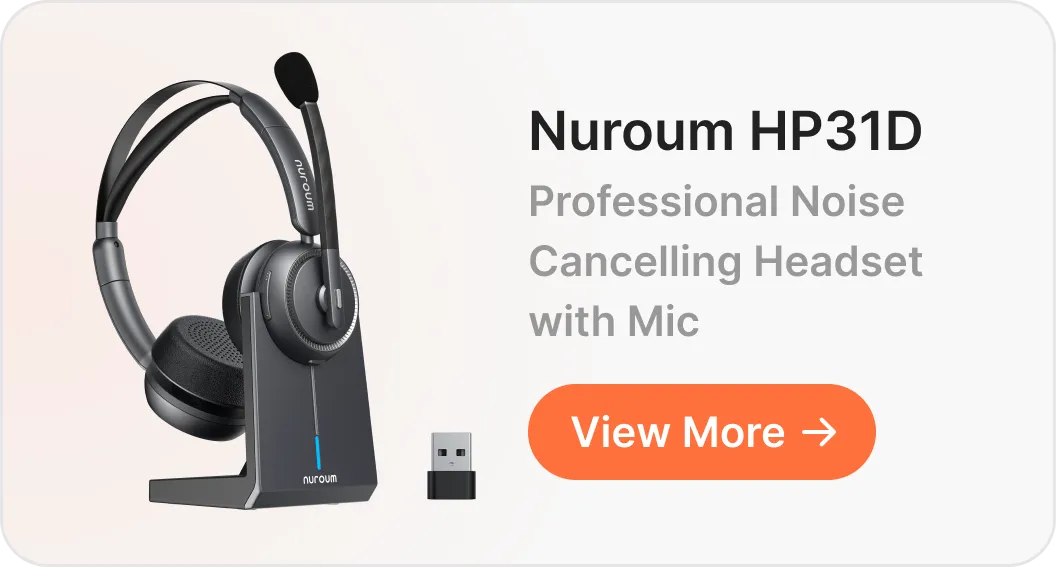
- The Nuroum HP31D's 45-hour battery covers roughly five 8-hour workdays between charges, and its USB dongle avoids Bluetooth pairing failures on locked-down work laptops.
- Mic boom placement within two finger-widths of your mouth improves noise rejection more than most spec-sheet upgrades.
How Does a Noise-Cancelling Microphone Work?
A noise-cancelling microphone does not create silence. It isolates your voice mathematically:
Two or more mics listen at once.
One mic sits close to your mouth and picks up mostly voice. Others capture the room.
A DSP chip compares the signals.
Sounds that reach all mics equally — traffic, keyboard clatter, office chatter — get identified as noise and subtracted.
Your voice gets rebuilt and sent.
The caller receives a cleaned-up signal, not the raw room audio.
This is called ENC (environmental noise cancellation), and it works entirely on the outgoing signal.
That is why the number and placement of microphones, plus the processing chip, matter more than almost any other spec.

ANC vs. ENC: What Matters More for Clear Calls?
| ANC (Active Noise Cancellation) | ENC (Mic Noise Cancellation) | |
|---|---|---|
| What it does | Quiets the world for you | Quiets the world for your caller |
| Where it works | Speaker/earcup side | Microphone side |
| Who it helps | You, in a loud space | Everyone you talk to |
Common user complaint solved: "People on the other end can hear my kids/dog in the background." — That is an ENC problem. Buying an ANC headset does nothing for it.
If your priority is clear calls, shop for a

What Makes a Bluetooth Headset Good at Blocking Background Noise?
Four things separate headsets that merely claim noise cancellation from ones that deliver it:
Multi-mic arrays
Dual-mic minimum. More mics give the DSP cleaner reference noise to subtract.
A real DSP chip
Dedicated processors (like the HiFi4 DSP used in both headsets below) handle noise suppression faster and more aggressively than generic Bluetooth chips.
Mic placement
A boom mic positioned within two finger-widths of your mouth beats any software fix.
Stable connectivity
Bluetooth dropouts mid-sentence ruin calls as surely as noise does — a USB dongle bypasses flaky laptop Bluetooth entirely.

Best Bluetooth Headsets with Noise-Cancelling Microphones for Different Needs
Finding the ideal noise-cancelling headset comes down to your primary work environment and personal comfort preferences. Whether you need full audio immersion in a busy office or continuous situational awareness while working from home, matching the right design to your workflow is key.
Below, we’ve broken down two top-performing models designed for distinct calling needs to help you decide which one fits your daily routine best.
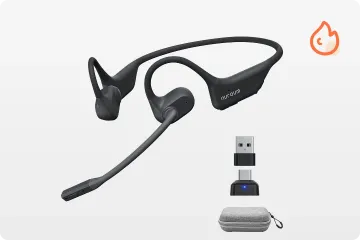
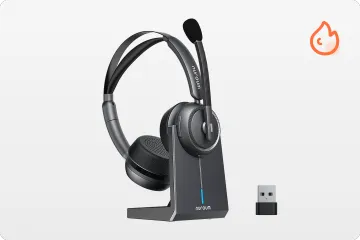
| Nuroum OpenEar Pro 2 | Nuroum HP31D (2nd Gen) | |
|---|---|---|
| Design | Open-ear, neck-hanging, 31 g | Dual-ear (binaural) over-head |
| Mics | Dual ECM omnidirectional + HiFi4 DSP | Dual ECM omnidirectional + HiFi4 DSP |
| Connection | USB-A/C dongle, plug-and-play | USB-A dongle + charging stand |
| Battery | All-day use | Up to 45 hours |
| Extras | Mute button | Mute button, charging base |
| Price | From $129 | From $90 |
| Best for | WFH, mobile workers, situational awareness | Call centers, customer support, deep-focus calling |
Nuroum OpenEar Pro 2 — best for all-day comfort and awareness
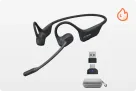
At 31 grams, the OpenEar Pro 2 hangs around your ears instead of clamping them. As an ultra-lightweight open ear headset with mic, its open design is the primary advantage for WFH parents and hybrid workers: you hear the doorbell and your kids, while your caller hears only you.
What real users say: "My ears hurt after wearing headphones all day." An open-ear, 31 g frame directly answers the 6–10 hour shift question — nothing presses on your ears, so there is nothing to fatigue.
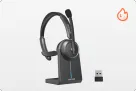
Nuroum HP31D — best for focused, high-volume calling
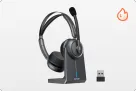
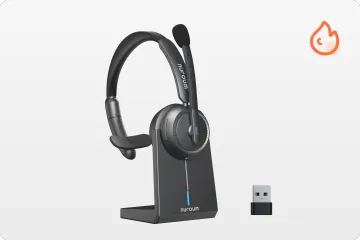
The HP31D is the workhorse: dual-ear isolation, up to 45 hours of battery (roughly five 8-hour workdays, so battery anxiety disappears), a charging stand, and a USB dongle for plug-and-play simplicity on Teams and Zoom. It serves as an exceptionally reliable wireless headset with mic for work.
How Do These Headsets Perform in Real-World Environments?
Home office (keyboard, kids, TV in the next room)
Both headsets' dual-mic ENC filters steady household noise well. The OpenEar Pro 2 lets you stay aware of the house; the HP31D lets you ignore it.
Open office (nearby conversations)
Voices are the hardest noise to cancel because they sit in the same frequency range as your speech. Here the HP31D's boom placement and dual-ear focus have the edge.

Commute and street (wind, traffic)
Steady low-frequency noise is ENC's easiest target. If you regularly call from truly loud places, read our best bluetooth headset for loud environments field review.
Long shifts
Users consistently report that comfort, not mic quality, is what fails first. Weight and clamping force decide whether a headset survives hour eight.
How to Choose the Right Noise-Cancelling Bluetooth Headset
Match the headset to your day, not the spec sheet:
- You wear a headset 6+ hours and need to hear your surroundings → open-ear (OpenEar Pro 2).
- You take back-to-back calls and want focus → dual-ear with big battery (HP31D).
- Your work laptop has unreliable Bluetooth → insist on a USB dongle; both picks include one.
- You switch between laptop and phone constantly → look for multipoint pairing and a physical mute button you can hit without looking.
Any wireless headset with noise cancelling microphone you shortlist should clear four bars: dual-mic ENC, a real mute button, 30+ hour battery, and plug-and-play setup.
FAQs
Can a Bluetooth headset with a noise cancelling microphone remove background noise for the person on the other end?
Yes — that is exactly what ENC does. Multiple mics capture your voice and the room separately, and the DSP subtracts the room before transmitting.
Are open-ear or over-ear headsets better for calls in noisy environments?
Open-ear wins on comfort and situational awareness during WFH or commuting, which is why many remote professionals prefer a dedicated
best wireless headset for work What is the difference between ANC and ENC?
ANC quiets what you hear; ENC cleans what your caller hears. For call quality, ENC is the spec that matters.
What features should I look for in a wireless headset with a noise cancelling microphone?
Dual-mic ENC with a DSP chip, a physical mute button, 30+ hours of battery, a reliable USB dongle to prevent
zoom audio not working