







































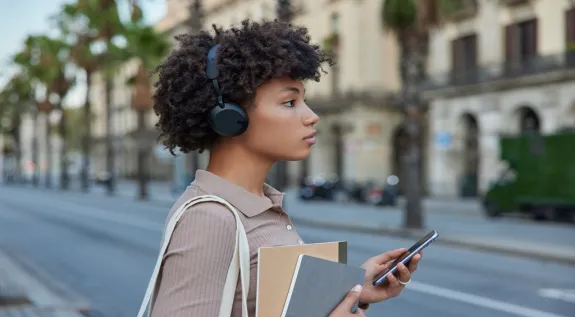
Walking meetings work best when movement does not compromise communication. The right headphones for walking combine a light, stable fit with clear microphone pickup and enough environmental awareness to hear people, bikes, and traffic. Open-ear designs are often the most practical choice for collaborative routes, while stronger noise control suits louder commutes.
Key Takeaways
Choose headphones for walking based on your route first: quiet paths favor open-ear awareness, while traffic-heavy routes demand stronger microphone noise control.
A headset that feels comfortable for ten minutes can still cause pressure after a full meeting, so test weight, stability, and glasses compatibility.
For hands-free calls, microphone placement and wind handling matter more than speaker size or maximum volume.
Keep at least enough ambient sound audible to hear approaching people, bicycles, and vehicles.
The right headphones for walking can turn an ordinary call into a productive change of scenery. Instead of staying seated for another video-free meeting, you can walk, talk, and stay engaged without losing track of the world around you.
Walking meetings depend on clear voice pickup, a comfortable fit, and enough environmental awareness to notice people, bicycles, and traffic.
With the right setup, the walk-and-talk becomes a practical work habit rather than a technical compromise.
Why Walking Meetings Are Becoming the New Way to Work
Walking meetings replace the conference room with movement.
They work well for one-on-one check-ins, brainstorming sessions, informal catch-ups, and calls that do not require screen sharing.
For remote workers, they also create a useful break from long stretches at a desk.
Changing your physical setting can change the tone of a conversation.
Walking side by side—or walking separately while connected by phone—can feel less formal than a scheduled meeting. That makes it easier to discuss ideas, give updates, or think through a problem.
Walking meetings also fit naturally into hybrid work.
A call can move with you from home to a nearby path, from the office to a coffee run, or from one building to another.
The challenge is keeping the conversation clear and comfortable while you move.
How Walking Meetings Support Workplace Mobility and Productivity
Workplace mobility is no longer limited to working from different locations. It also means being able to communicate effectively while changing posture, environment, and activity during the day.
They can help structure time more intentionally. A short walk creates a natural beginning and end, which may keep routine calls focused. It also separates discussion-heavy work from tasks that genuinely require a keyboard, documents, or a shared screen.

What to Look for in Headphones for Walking Meetings
If you are constantly adjusting the fit, repeating yourself, or worrying about nearby traffic, the headset is getting in the way.
| Feature | Why it matters | What to prioritize |
|---|---|---|
| Fit and weight | Prevents distraction during longer walks | Light frame, stable contact, no ear-canal pressure |
| Microphone quality | Keeps your voice understandable outdoors | Noise reduction and consistent mic placement |
| Wind handling | Reduces disruption on exposed routes | Mic shielding, thoughtful placement, route awareness |
| Controls | Lets you answer or mute without stopping | Simple buttons or reliable touch controls |
| Situational awareness | Helps you notice people and vehicles | Open-ear design or adjustable transparency |
| Battery and connection | Supports calls away from your desk | Enough runtime for your longest walking block |
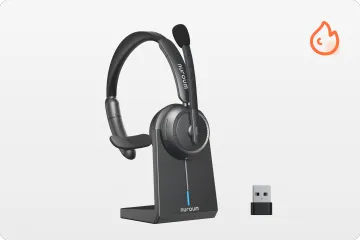
Lightweight headphones are especially important because walking adds motion to every fit problem. If you take frequent mobile calls, a dedicated headset with noise cancelling mic can help your voice remain clear when the background changes.
Do not assume more noise cancellation is always better. Strong isolation can be useful indoors, but outdoor walking requires a more careful balance between hearing your call and hearing your surroundings.
Why Open-Ear Headsets Make Sense for Walking Meetings
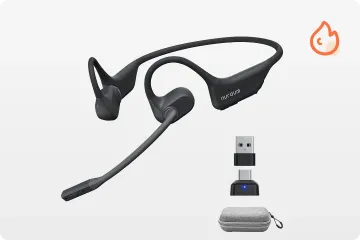
- Open-ear headsets sit outside the ear canal, so they allow outside sound to remain audible. That design supports environmental awareness without forcing you to remove one earbud or constantly adjust a transparency mode.
- They are particularly useful for routes with pedestrians, cyclists, intersections, or shared office spaces. You can stay present in the conversation while still hearing someone pass behind you or a vehicle approach.
- Comfort is another advantage. Because open-ear models avoid pressure inside the ear canal, they can feel easier during longer walks. The best designs distribute weight evenly and remain stable without clamping tightly.

How to Choose the Best Headphones for Your Walking Routine
Start by mapping your most common walking scenario. The right choice for a quiet neighborhood loop may not be the right choice for a busy commute.
Choose the right level of awareness
Use open-ear audio when you need to hear surroundings; use stronger isolation only in controlled environments.
Test the fit while moving
Walk, turn your head, and wear your usual glasses or outerwear. A stable fit matters more than a spec sheet.
Check microphone performance outdoors
Make a test call near wind, passing cars, and normal street noise before relying on the headset for an important meeting.
FAQs
1.Are open-ear headphones good for walking meetings?
Yes.
Open-ear headphones keep the ear canal uncovered, making it easier to hear colleagues, cyclists, traffic, and other surroundings. They are a strong option for walking meetings when situational awareness matters more than maximum noise isolation.
2.What makes headphones for walking different from office headphones?
Headphones for walking need a more stable fit, simple controls, reliable wireless performance, and microphones that handle movement and wind.
Office headphones may focus more on indoor comfort and isolation, while walking models must balance audio quality with awareness.
3.Are lightweight headphones better for long walking meetings?
Usually, yes.
Lightweight headphones place less pressure on the ears and head, which can make long conversations more comfortable.