

































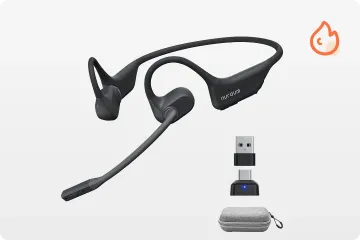
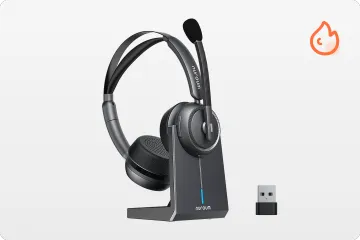
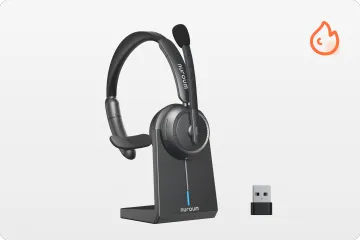

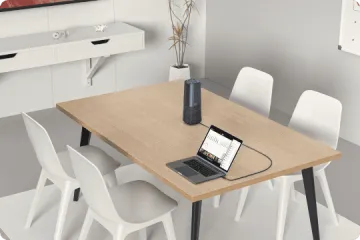




Ear soreness from long Zoom calls usually comes from clamping force, sealed ear cups, and heat buildup — not from volume. Lightweight headsets under 40 g, breathable cushions, and open-ear designs remove the pressure points that cause fatigue, while a noise-cancelling boom mic keeps your voice clear without sealing your ears.
Key Takeaways
Headphone soreness is mainly mechanical: clamping force above roughly 4–5 N and sealed, heat-trapping ear cups cause most pain after two hours of wear.
Over-ear headsets with memory foam cushions are the safest choice for quiet offices; on-ear designs trade isolation for ventilation; open-ear headsets eliminate canal pressure entirely.
For sensitive ears, prioritize headsets under 40 g with adjustable clamping force and breathable fabric or silicone contact points.
Microphone quality matters as much as comfort on Zoom — dual-mic ENC filtering keeps your outgoing audio clear even when you remove ANC pressure with an open-ear design.
Taking a 10-minute headset break every 90 minutes and lowering volume to around 60% cuts most ear fatigue, regardless of which headset you buy.
If you spend hours a day in video meetings, you know the pattern: the first call is fine, but by mid-afternoon your ears ache, your temples throb, and you start dreading the next invite.
Finding the best headphones for Zoom calls is not really about sound quality — it is about finding a headset you can wear from stand-up to wrap-up without sore ears or that hot, clammy feeling sealed ear cups create.
This guide covers why headphones cause discomfort, which features genuinely prevent ear fatigue, and how to choose between over-ear, on-ear, and open-ear designs.

What Causes Ear Fatigue When Wearing Headphones for Hours?
Ear fatigue is almost never about volume alone. It is usually a mechanical problem — pressure, heat, and contact — that builds over a long meeting day. Four factors do most of the damage:
Clamping force
Headbands that squeeze too hard press the ear cups against the pinna (the cartilage of your outer ear).
After an hour or two, that pressure becomes a dull ache around the ear and jaw.
Heat and moisture
Sealed leather ear cups trap warm, humid air, irritating skin and making ears feel sore and sticky, especially in warm home offices.
Hard contact points
Thin padding, stiff headbands, and ear cups that press on glasses arms create localized pain on cartilage and temples.
In-ear pressure
Earbuds press directly into the ear canal, which is packed with sensitive nerve endings — tolerable for music, painful after back-to-back calls.
Understanding these causes makes the fix obvious:
- Reduce pressure
- Improve airflow
Soften every point of contact

What Features Should You Look for in Headphones for All-Day Zoom Calls?
When shopping for the best headset for meetings you will wear all day, prioritize these comfort specs in order:
Weight
Aim for under 200 g for over-ear models, under 40 g for open-ear styles.
Clamping force
Look for adjustable headbands and flexible frames — secure, but never tight.
Breathability
Ventilated or open designs prevent the heat buildup that turns mild warmth into real soreness.
A headset that scores well on weight, clamping force, and breathability will outperform a "premium" model that ignores them.
How to Prevent Ear Fatigue During Back-to-Back Meetings
Even the most comfortable headset benefits from good habits that dramatically extend comfortable wear time:
Take micro-break
Remove your headset for 10 minutes every 90 minutes so your ears can cool and recover circulation.
Loosen the fit
Extend the headband one notch beyond snug. A slightly looser fit rarely affects audio but noticeably reduces clamping soreness.
Keep volume near 60 percent
Listening fatigue compounds physical soreness; Zoom's built-in volume normalization helps.
If you apply these habits and your ears still hurt daily, the headset itself is the problem — which brings us to design.

What Are the Best Headphones for Sensitive Ears?
For sensitive ears, headphone design matters more than any single spec.
Here is how the three main styles compare for long Zoom sessions:
| Design | Comfort over 4+ hours | Ventilation | Mic quality | Best for |
|---|---|---|---|---|
| Over-ear (closed-back) | Good if cushions are deep memory foam | Poor — traps heat | Excellent | Noisy offices, deep focus |
| On-ear | Moderate — presses on the pinna | Moderate | Good | Shorter meetings, hybrid days |
| Open-ear | Excellent — nothing touches the canal | Excellent | Good with ENC dual mics | Sensitive ears, all-day calls |
For people whose ears hurt no matter how soft the cushions are, open-ear designs remove the problem entirely.
Nothing enters or covers the ear canal — small directional speakers beam sound toward your ear from outside, which is why an open ear headphone with mic has become a popular category for professionals.
If you are curious about the acoustics, this explainer on how do open ear headphone work covers air conduction, bone conduction, and anti-leakage technology in detail.
How to Choose the Best Headphones for Zoom Calls and Everyday Work
Putting it all together, here is a simple decision path:
Assess your ears
If earbuds or tight headbands have ever made your ears ache, rule out in-ear and high-clamp on-ear designs entirely.
Verify battery and controls
· 12+ hours of talk time
· Physical mute button
· Ulti-device pairing
Match weight to your day
· Under 40 g for open-ear, under 200 g for over-ear.
· Glasses wearers should prioritize flexible silicone frames that do not pinch the arms.
Follow this path and the right headset usually picks itself: sealed over-ear for isolation, or a lightweight wireless open ear headphone for pressure-free, all-day wear.
FAQs
1.What are the best headphones for Zoom calls if my ears hurt after long meetings?
Choose a headset under 200 g (or under 40 g for open-ear) with minimal clamping force and soft, breathable contact points.
2.Are open-ear headphones good for Zoom meetings?
Yes.
Resting outside the ear canal, they remove the pressure and heat buildup behind most ear fatigue.
3.Why do my ears hurt after wearing headphones all day?
Clamping force on the pinna, heat trapped in sealed ear cups, hard contact points on cartilage or glasses arms, and in-ear pressure are the usual causes.
Volume and long sessions without breaks amplify them.