

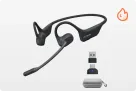
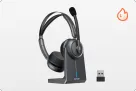
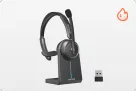
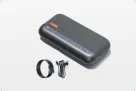
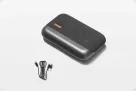




















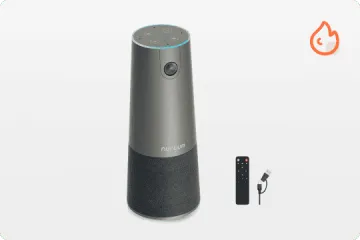
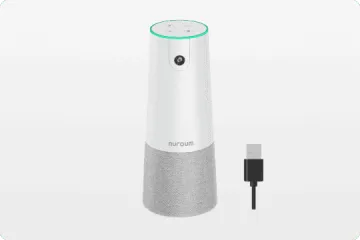


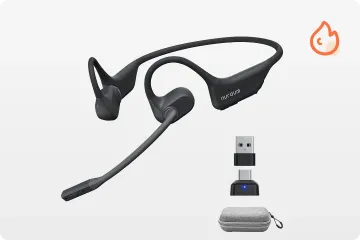
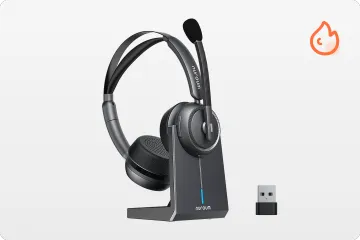
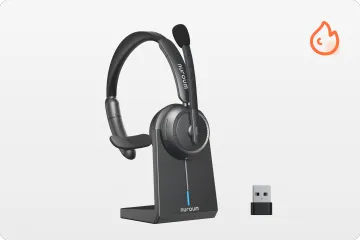

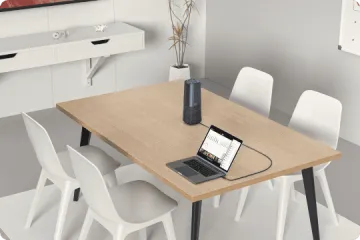




The best setup for double-duty listening is not total isolation. Choose a light wireless headset with mic for work that pairs a clear, noise-filtering microphone with an open-ear or ambient design, then match fit, battery life, controls, and connection stability to the places where you actually take calls.
Key Takeaways
If you supervise children or pets during calls, prioritize an open-ear or mono design over sealed ANC headphones.
The best call headset separates microphone noise reduction for listeners from sound isolation for the wearer.
For back-to-back meetings, prioritize a lightweight fit, simple mute control, and battery life that covers your longest workday.
Commuters should favor stable Bluetooth, wind-resistant microphone pickup, and enough ambient sound to hear traffic.
A good wireless headset with mic for work should do more than make you sound professional. If you work from home, share an office, commute, or juggle calls with family responsibilities, it also needs to let you stay present in the real world.
The challenge is finding audio gear that keeps your voice clear without making you miss a child’s question, a pet at the door, a smoke alarm, or a coworker trying to get your attention.
That is where open-ear and ambient-aware designs come in. Instead of sealing you inside a private sound bubble, they support “double duty” listening: you can join the meeting and still hear what is happening around you.
The Challenge of Taking Work Calls While Staying Connected to Your Surroundings
Remote and hybrid work rarely happen in perfect silence.
- A parent may need to lead a video call while listening for a toddler in the next room.
- A dog owner may have to answer a client call before the doorbell triggers barking.
- Even in an office, complete isolation can make collaboration awkward when someone approaches your desk.
A practical headset has to solve two different problems at once: reducing the noise sent through the microphone while allowing useful real-world sounds to reach your ears.
For many multitaskers, an open ear headphone with mic offers the most direct answer. It leaves the ear canal open, so the call is audible without disconnecting you from your home, office, or surroundings.
Why Traditional Headphones Can Make Multitasking During Calls Difficult
Closed-back and in-ear headphones are built around isolation.
That can be helpful on a plane or in a noisy office, but it creates trade-offs when your job and personal life overlap.
· If both ears are sealed, you may not hear a child calling you, a delivery at the door, or a pet getting into trouble.
· You may also speak louder than necessary because you cannot naturally hear your own voice.
Comfort is another issue.
· Large ear cups can trap heat, press against glasses, and feel heavy after several meetings.
· In-ear models may cause pressure or ear fatigue during a long shift.
When a headset feels distracting, people keep removing it, which increases the chance of missed calls and awkward microphone checks.
Isolation can also create stress.
Instead of relaxing into a conversation, you may keep wondering what you are missing.
If you are comparing how do open ear headphone work, the key difference is simple: they direct audio toward your ears without plugging them, preserving natural awareness.
How Ambient Sound Headphones Help Remote Workers Stay Aware
Ambient sound headphones are designed for people who need audio plus awareness.
· Some use an open-ear speaker or bone-conduction-style fit.
· Others use microphones and a transparency mode to pipe outside sound into closed headphones.
Both approaches can work, but open-ear models provide awareness continuously rather than relying on a listening mode.
The benefit is especially clear in home offices.
· You can hear a meeting while still noticing a baby monitor, oven timer, washing machine, or dog scratching at the door.
· Parents can answer a quick question without ripping off a headset.
· Office professionals can stay approachable instead of appearing unavailable behind oversized ear cups.
- A wireless open ear headphone also supports movement.
You can walk to the printer, refill coffee, check on lunch, or step into another room without managing a cable.
For phone-heavy roles, the right model can function as the best call headset because it combines mobility, comfort, and a microphone built for speech rather than music alone.
How to Choose the Best Call Headset for Your Daily Routine
The right headset for a private office is not always the right headset for a parent working near a playroom or a commuter walking through traffic.
| Work scenario | Best-fit design | Features to prioritize | Watch out for |
|---|---|---|---|
| Working near kids or pets | Open-ear or mono headset | Clear boom mic, light fit, quick mute | Excessive volume masking household sounds |
| Hybrid or shared office | Open-ear or light on-ear | Voice pickup, sidetone, stable connection | Sound leakage at high volume |
| Commuting or walking | Open-ear or transparency mode | Wind-resistant mic, secure fit, ambient awareness | Strong isolation near traffic |
| Focus-heavy private office | Closed headset with adjustable transparency | Microphone noise filtering, comfort, battery life | Accidentally enabling full isolation |
Look for a dedicated boom microphone or directional voice pickup.
Environmental noise cancellation, often shortened to ENC, focuses on what your microphone transmits. That is different from active noise cancellation, or ANC, which primarily changes what you hear.
In plain terms, ENC helps your listener; ANC helps you.
Test for all-day wear.
· Lightweight frames, flexible ear hooks, and breathable designs are usually better for long meeting schedules.
· Physical controls matter too. A raised mute button is easier to find than a touch panel when a child walks in or a dog starts barking.
Battery life should match your longest day rather than your average day.
· If you routinely move between scheduled calls, spontaneous check-ins, and phone conversations, choose enough talk time to avoid midday charging.
· Multipoint Bluetooth is also useful when you switch between a computer and phone.
The Right Balance Between Clear Calls and Environmental Awareness
The best setup does not treat awareness and professionalism as opposites.
Your microphone should minimize distractions for listeners, while your ears retain enough access to important sounds. That combination lets you respond quickly without disappearing from your environment.
- If you take calls around family members or pets, start with an open-ear design and a call-focused microphone.
- If your workplace is loud but you still need occasional awareness, choose a closed headset with adjustable ambient pass-through.
- If you commute, prioritize a stable connection and a microphone that handles movement and outdoor noise.
The goal is to hear the right things at the right time: your colleagues on the call, and the people, pets, and signals around you.
FAQs
1.Can I hear my children or pets while wearing open-ear headphones?
Yes.
Open-ear headphones leave your ear canals unobstructed, so you can hear voices, doorbells, timers, and pet activity while still listening to a call.
2.What makes the best call headset for remote work?
The best call headset for remote work combines a clear microphone, reliable Bluetooth or USB receiver connection, easy mute access, and a fit you can wear for hours.
3.Do ambient sound headphones reduce call quality?
Not necessarily.
Ambient sound headphones let outside sound reach your ears, but call quality depends more on the microphone and its noise-processing features.