



































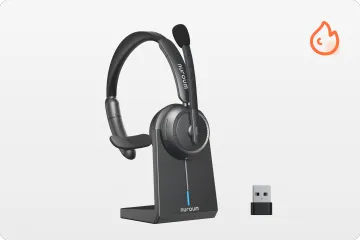





As a project manager for a leading construction firm, my days were a whirlwind of site inspections, client meetings, and coordination with contractors. My job often led me beyond the confines of boardrooms and into the open air of construction sites. It was here, amid the clang of machinery and the dust of progress. I was looking forward to buying headphones which balance safety and noise cancelling. In this blog, I will introduce outdoor jobs, and my favorite open-ear headphones, hoping to help you who are doing outdoor work.
Headphones for Outdoor Jobs: A Complete 2026 Guide to Safety, Comfort & Productivity
Every morning, a worker straps on a hard hat and walks onto a construction site where jackhammers and excavators run all day. A trail guide leads a group through a forest where the wind swallows every instruction. A surveyor maps a ridge line hours from the nearest road. These jobs share more than fresh air — they demand hearing that stays sharp, focus that survives noise, and gear that holds up to mud, rain, and sweat.
Outdoor work is demanding, and the right headphones can make or break your day. This guide explains what outdoor jobs are, the challenges they bring, and the six concrete ways headphones help — then shows you exactly how to choose a pair that keeps you safe, comfortable, and productive.
What Are Outdoor Jobs?
Outdoor jobs are occupations where a significant share of the work happens outside traditional indoor settings. Workers operate in construction sites, fields, forests, parks, orchards, and remote wildlands, and they interact directly with the elements. They generally fall into four categories:

- Agriculture and Horticulture: Farmers and horticulturists are responsible for cultivating crops, managing livestock, or maintaining gardens and ornamental plants. They work in fields, orchards, nurseries, and greenhouses. They need to know plant care, animal husbandry, irrigation techniques, and agricultural machinery operation. Physical stamina and an understanding of environmental factors affecting plant growth are crucial.

- Environmental Conservation and Natural Resource Management: Environmental conservationists and natural resource managers focus on protecting and managing natural environments, including forests, wildlife habitats, and bodies of water. They are equipped with knowledge of ecology, conservation practices, and environmental laws. Skills in data collection, research, and community engagement may also be required depending on the specific role.
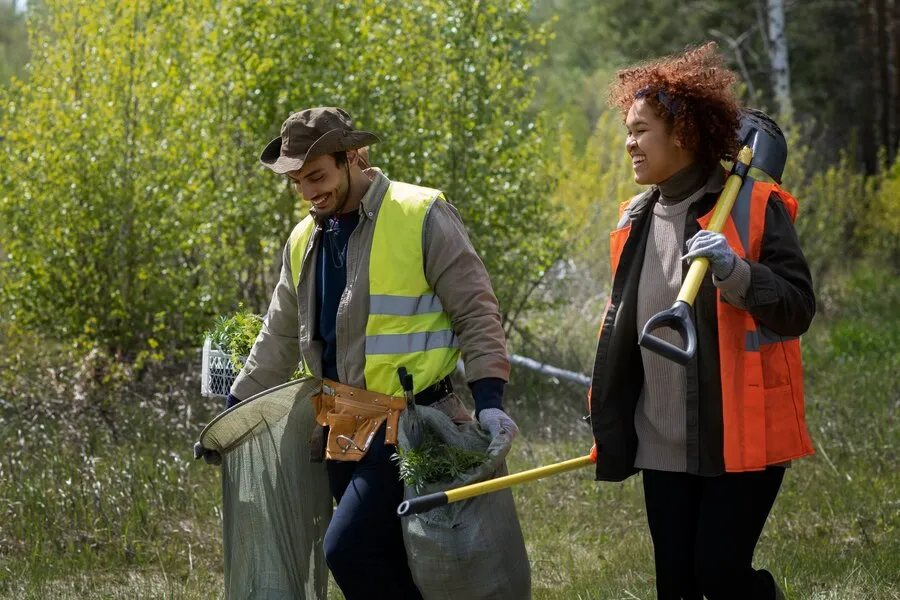
- Outdoor Sports and Adventure Guides: Outdoor sports and adventure guides lead individuals or groups in activities such as hiking, rock climbing, kayaking, skiing, and camping. They are expertise in the specific outdoor activity, wilderness survival skills, first aid certification, leadership abilities, and effective communication skills to ensure the safety and enjoyment of participants.

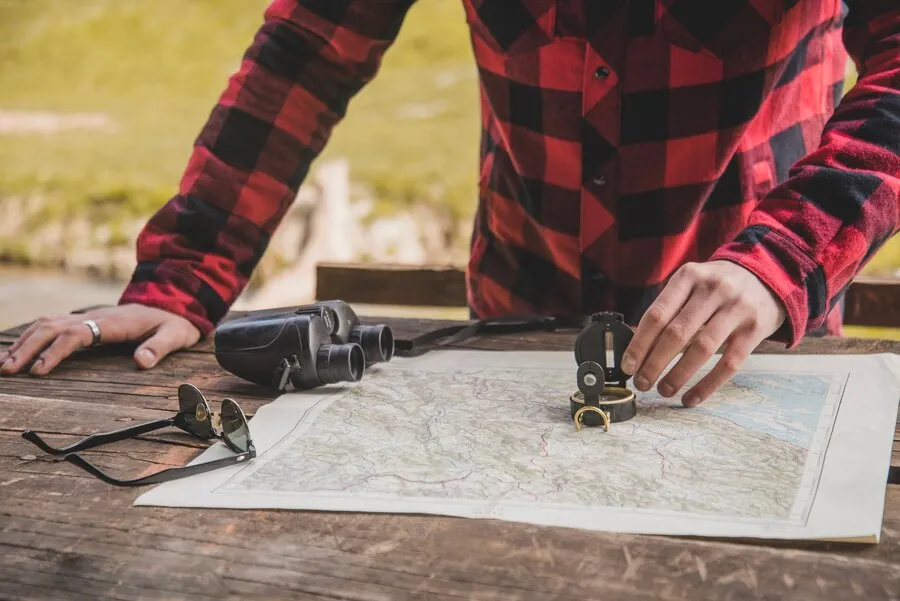
- Geographical Survey and Geological Exploration: Geographical surveyors and geological explorers study and map geographic features, land use patterns, and geological formations. They work in diverse environments ranging from urban areas to remote wilderness. They are proficient in surveying instruments, interpreting maps and geographic data, and conducting geological assessments. Strong analytical skills and knowledge of geographic information systems (GIS) are often essential.
The Real Challenges of Working Outdoors
- Weather conditions: extreme heat, cold, rain, or snow affect both comfort and safety, demanding proper clothing and precautions against weather-related illness and injury.
- Noise disturbance: construction, mining, and industrial work generate continuous, intense noise from drilling, blasting, and processing that can damage hearing and disrupt concentration and communication.
- Terrain and environment: rugged mountains, dense forests, and open plains raise the risk of slips, trips, and falls on uneven ground and steep slopes.
- Remote locations: many sites sit far from medical help and communication networks, requiring self-sufficiency, emergency preparedness, and often wilderness or first-aid training.
- Equipment and tools: specialized gear must be properly maintained and operated, because failure or misuse creates safety risks and stalls productivity.
6 ways headphones can benefit outdoor jobs
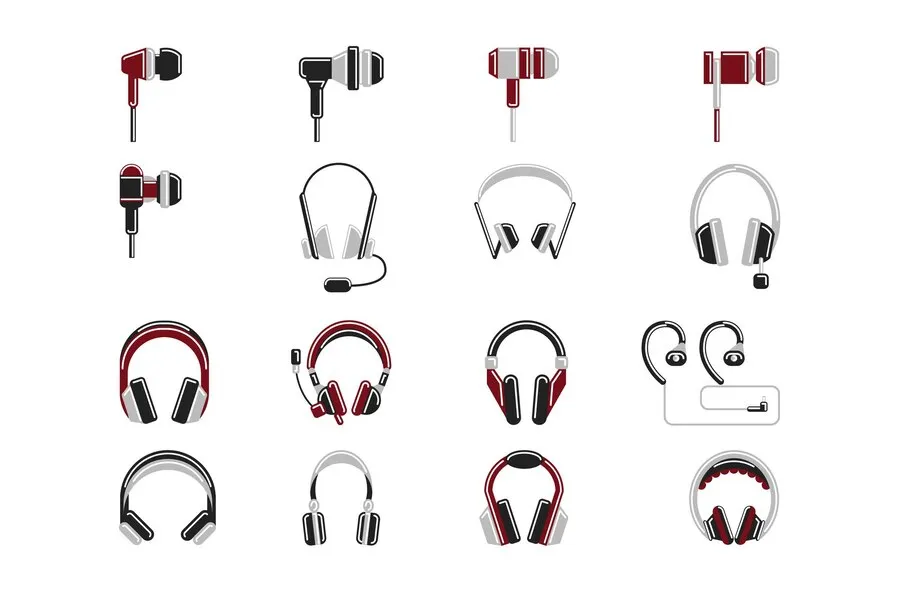
The right headphones can do more than provide audio. For many professionals, the best headphones for outdoor work should balance safety, comfort, durability, and communication performance. Whether you work in construction, agriculture, surveying, or outdoor recreation, choosing a suitable headset for outdoor jobs can improve your daily workflow.
#1 Safety Features
Certain types of headphones are designed with open-ear technology, making open-ear headphones for work a popular choice for outdoor professionals. This design allows users to remain aware of their surroundings while listening to audio, helping them hear important environmental sounds such as nearby vehicles, equipment, or verbal instructions.
#2 Hearing Protection
One of the primary benefits of headphones in outdoor jobs is their ability to provide hearing protection. Many outdoor workplaces have high noise levels from machinery, traffic, or construction activities. Certified hearing protection devices, such as noise-rated earmuffs, are designed to reduce harmful noise exposure. Some workplace headsets can also improve communication in noisy environments.
#3 Communication Enhancement
In some outdoor jobs, communication is essential for coordination and safety. Headphones equipped with microphones can facilitate clear communication even in noisy environments. Workers can use them to communicate with colleagues, receive instructions, or coordinate tasks effectively without needing to shout or strain to hear.
#4 Noise Isolation
Noise-isolating headphones can help workers focus on their tasks by blocking out ambient noise. This can be particularly beneficial in environments where concentration is crucial, such as surveying, landscaping, or outdoor research work. By minimizing distractions, headphones can improve productivity and accuracy.
#5 Entertainment and Motivation
For jobs that are physically demanding or monotonous, headphones can provide entertainment through music, podcasts, or audiobooks. This can help maintain worker morale, reduce stress, and keep energy levels up throughout the workday.
#6 Hands-Free Convenience
Wireless headphones or Bluetooth headsets allow outdoor workers to enjoy the benefits of headphones without being tethered to a device. This hands-free capability is advantageous in jobs where mobility is key, such as construction, maintenance, or event management.
Tips for choosing headphones for outdoor jobs
- Noise isolation vs. Awareness: Decide whether you need noise isolation to block out external sounds or prefer headphones that allow you to hear your surroundings (important for safety in outdoor environments). Some headphones offer a balance with features like ambient sound modes.
- Durability: Opt for headphones that are designed to withstand outdoor conditions. Look for features like water or sweat resistance, rugged construction, and materials that can handle dust and debris.
- Comfort: Since outdoor workers may wear headphones for several hours, lightweight designs and secure fits are essential. A comfortable headset for outdoor jobs should reduce pressure and remain stable during movement.
- Battery Life: For outdoor use, especially if you're away from charging opportunities for a while, consider headphones with a long battery life. Look for models that offer at least 10-15 hours of playback on a single charge.
- Wireless Connectivity: Wireless headphones for outdoor jobs offer greater freedom of movement, eliminating tangled cables and making them practical for construction, maintenance, and field work.
- Sound Quality: Choose headphones with good sound quality that suits your preferences. Look for balanced audio with clear highs, detailed mids, and sufficient bass, especially if you enjoy music during work.
- Easy controls: Check for intuitive controls that are easy to operate even while wearing gloves or with dirty hands. Features like built-in microphones for calls and voice assistants can be useful.
- Portability: Consider the portability and storage options of headphones. Foldable designs or carrying cases are handy for transportation and storage when not in use.
Nuroum OpenEar Pro 2: Top Picks for Outdoor Jobs
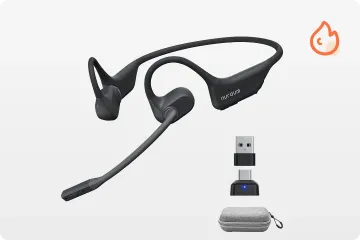
The Nuroum OpenEar Pro 2 is designed as one of the best open-ear headphones for outdoor work, offering a balance of awareness, comfort, and reliable communication for professionals who spend time outside.As an open ear headphone bluetooth solution, it provides wireless freedom while supporting clear calls and everyday outdoor activities.
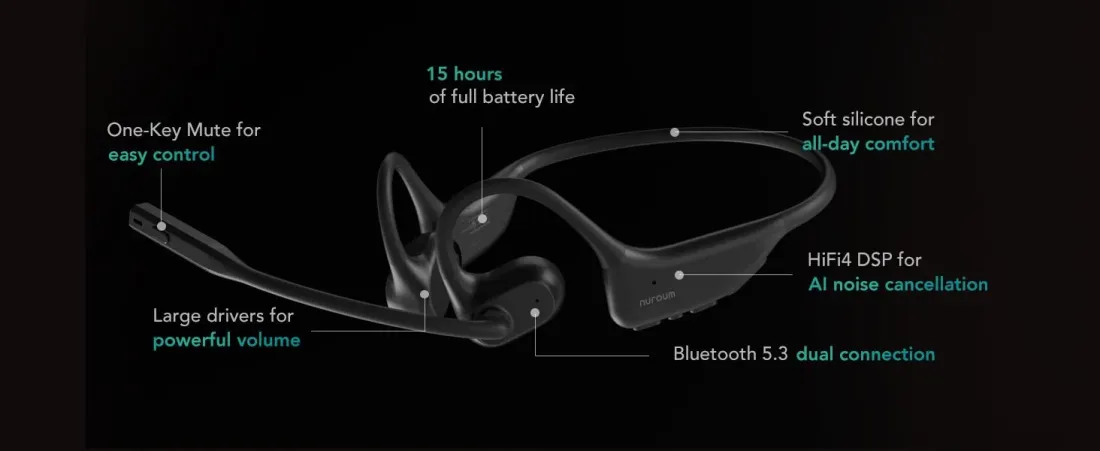
The Nuroum OpenEar Pro 2 is designed for the specific demands of outdoor jobs:
- Balance awareness and noise cancelling: an open design leaves your ears open to ambient sounds for safety, while large dynamic drivers and a HiFi4 DSP still deliver clear, detailed audio.
- Water or sweat resistance: an IPX6 waterproof rating stands up to heavy rain and frequent splashes, so the headphones endure moisture, dust, and dirt on the job.
- Comfortable and portable: At just 31g, the lightweight design provides comfortable wearing during long shifts, making it a practical wireless headset for outdoor workers.
- Long battery life: magnetic charging resists sweat and water, with 12 hours of talk time and 15 hours of playback to see you through long shifts.
- Easy controls: a mute button and multi-function button handle play/pause, calls, and mute — even while wearing gloves or working hands-free.
FAQs
- Are open-ear headphones safe for outdoor work?
Yes. Open-ear designs keep your ears open to ambient sounds — traffic, warning shouts, machinery — so you stay aware of your surroundings while still hearing your audio. This makes them a safer choice than fully noise-isolating earbuds in active job sites.
- How is IPX6 different from IPX4?
IPX4 resists light splashes, while IPX6 withstands powerful water jets and heavy rain. For outdoor work where you face rain, sweat, and frequent splashes, an IPX6 rating offers noticeably stronger protection.
- Can I wear headphones under a hard hat?
Yes, especially slim open-ear models. Because they sit on the ear rather than covering it, they fit comfortably under hard hats and safety helmets without compromising the fit or your safety gear.
- How do I clean headphones after a dusty or muddy shift?
Wipe the exterior with a soft, slightly damp cloth and dry it fully before charging. Water-resistant models can be rinsed more freely, but always avoid submerging them and check the manufacturer's guidance.