








































- Open-back headphones deliver a wider, more natural soundstage and cooler long-session comfort but leak sound and block nothing.
- Closed-back headphones isolate noise and keep audio private, making them the default for offices, calls, and commuting.
Your environment — not sound quality alone — should decide which design you buy.
Key Takeaways
Open-back headphones sound more spacious but leak audio and offer zero noise isolation — they only make sense in quiet, private rooms.
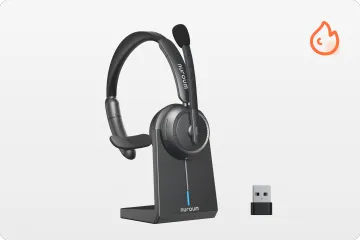
Closed-back headphones are the right call for shared offices, commuting, and calls; pairing one with a noise cancelling mic covers remote-work needs.
For sessions longer than two hours, open-back designs run cooler and reduce ear fatigue because heat and humidity escape through the ear cups.
If you can only own one pair, closed-back is the versatile choice; add open-back later as a dedicated quiet-room upgrade.
If you have shopped for over-ear headphones lately, you have hit the closed vs open back headphones question almost immediately — and the answers online are rarely helpful.
One camp insists open-back is the only way to hear "real" soundstage; the other points out, correctly, that open-back is useless on a train or in an open-plan office.
The truth is simpler: these are two different acoustic designs built for two different environments.
This guide breaks down how each design works, how it changes what you hear, and which one fits the way you actually live and work in 2026.
What Are Open-Back and Closed-Back Headphones?
Among the many headphones types on the market — in-ear, on-ear, over-ear, wireless, wired — the most consequential divide between headphones designs is what happens on the outside of the ear cup.
- Open-back headphones have perforated or grilled outer cups that let air and sound pass freely through the earcup. The driver breathes into the room, not into a sealed chamber.
- Closed-back headphones seal the outer cup completely, trapping sound inside and keeping outside noise out.
- A third, less common category — semi-open — vents the cup partially and sits between the two.
This single structural difference drives almost everything else: soundstage, isolation, leakage, bass behavior, and even how hot your ears get after two hours.
Closed vs Open Back Headphones: What Are the Key Differences?
Here is the head-to-head comparison at a glance:
| Factor | Open-Back | Closed-Back |
|---|---|---|
| Soundstage | Wide, spacious, "out of head" | Narrower, more intimate |
| Noise isolation | None | Moderate to strong |
| Sound leakage | Heavy — others will hear it | Minimal |
| Bass quantity | Lighter, tighter | Stronger, more impact |
| Heat and sweat | Excellent ventilation | Ears warm up over time |
| Best environment | Quiet, private rooms | Offices, transit, shared spaces |
The pattern is clear: open-back trades practicality for acoustic realism, while closed-back trades a bit of spaciousness for usability anywhere.
Neither is a flaw — they are deliberate engineering choices aimed at different listening situations.
How Do Different Design Affect Sound Quality?
In acoustic terms, open-back designs have a genuine advantage.
Because the rear of the driver vents into open air, sound waves do not bounce around inside a sealed cup and reflect back into your ear.
The result is a wider, more precise soundstage — instruments feel placed around you rather than crammed inside your skull — and a more natural, less "boxy" midrange.
Closed-back headphones are not worse. They are different.
- The sealed chamber builds air pressure, which gives them stronger sub-bass and low-end punch — one reason they dominate among electronic and hip-hop listeners.
- Isolation also lets you hear fine detail at lower volumes in noisy places, which is its own kind of sound quality.
So are open back headphones better? In a quiet room, for pure spaciousness, often yes. Everywhere else, no.
Which Is More Comfortable for Long Listening Sessions?
Comfort is underrated in this debate, and it matters for remote workers wearing headphones six-plus hours a day.
Open-back designs have a structural edge: the vented cups let heat and humidity escape, so your ears stay noticeably cooler during long sessions. Many open-back models are also built lighter, since they skip the damping material needed to seal a cup.
Closed-back headphones trap heat, and after a couple of hours your ears can feel warm and slightly clammy, especially with leatherette pads. On the other hand, the passive isolation means you can listen at lower, safer volumes instead of cranking the level to drown out background noise.
The Pros and Cons of Open-Back and Closed-Back Headphones
Open-back headphones — pros:
- Wide, natural soundstage with precise instrument placement
- More breathable; less ear heat and fatigue in long sessions
- Tighter, more accurate bass presentation
Open-back headphones — cons:
- Sound leaks out — anyone nearby hears your music
- Zero isolation — every ambient sound comes through
- Weaker sub-bass impact; unusable in public or shared spaces
Closed-back headphones — pros:
- Solid noise isolation and private listening
- Stronger bass and more low-end energy
- Works anywhere: office, commute, plane, calls
Closed-back headphones — cons:
- Narrower, more "in your head" presentation
- Can sound slightly boxed-in or colored in the midrange
- Ears get warm over extended wear
How to Choose the Right Headphone Design for Your Lifestyle
Match the design to your dominant environment, not to internet hype:
Home listening in a quiet, private room
Go open-back.
This is the one scenario where its strengths shine and its weaknesses disappear. If you prioritize a spacious, natural listening experience and long-term comfort, this is your design.
Office work and video calls
Closed-back, ideally with active noise cancellation.
A noise cancelling headphone for work keeps you focused, and your colleagues will not hear your meeting audio leaking.
Commuting and travel
Closed-back, no debate.
A wireless headphone with noise cancelling mic or a bluetooth noise cancelling headset with mic handles engine rumble, announcements, and phone calls in one package.
FAQs
1. Are open back headphones better than closed-back headphones?
Neither is universally better.
- Open-back wins on soundstage and ventilation in quiet rooms.
- Closed-back wins on isolation, bass impact, and usability everywhere else. Your environment decides.
2.Can I use open-back headphones in an office?
It is not recommended. They leak enough sound to bother coworkers and let all office noise in, pushing you toward higher volumes.A closed-back model with a noise cancelling microphone is the practical pick.
3.Do open-back headphones have worse bass?
Less sub-bass quantity, yes, because open cups cannot trap air pressure. Many listeners actually prefer the tighter, more accurate low end — but bass-heavy genres hit harder on closed-back models.