

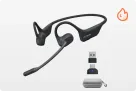
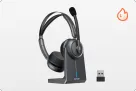
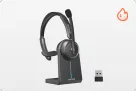
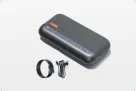
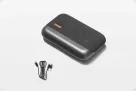




























Open-ear headphones let employees hear music or calls without sealing off colleagues, alarms, or nearby conversations. They are not ideal for every noisy office, but they offer a practical middle ground for shared spaces: enough audio focus to work, enough environmental awareness to respond naturally, and a pressure-free fit that supports longer wear.
Key Takeaways
Choose open-ear work headphones when conversation and awareness matter more than maximum isolation.
If pressure or warmth becomes noticeable after one to two hours, prioritize a lightweight design that does not seal or enter the ear canal.
For frequent calls, microphone placement and background-noise handling matter more than headphone style alone.
Keep the volume low enough to hear a colleague speaking at a normal conversational level.
The best work headphones do more than play audio. In a cubicle, they also send a social signal. Large, sealed headphones can help you concentrate, but they may tell coworkers that you are unavailable—even when you are happy to answer a quick question.
Open-ear headphones offer a more balanced approach. They let you hear music, meetings, and notifications while keeping part of the office environment audible. For hybrid workers and shared-office teams, that combination can make it easier to stay focused without seeming closed off.

Why Headphones Can Make You Seem Less Approachable in a Cubicle
Headphones create a visible boundary. When coworkers cannot tell whether you are on a call, listening to music, or simply trying to concentrate, they may hesitate before speaking to you. Over time, that hesitation can turn normal collaboration into a series of interruptions, chat messages, or delayed conversations.
This does not mean headphones are rude. They are often necessary in open offices. Good cubicle etiquette is about choosing the right level of isolation for the moment and making your availability easier to read.
Open-Ear vs. Traditional Headphones: Which Is Better for Shared Offices?
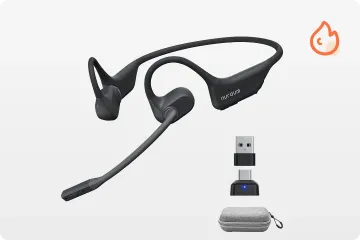
Open-ear headphones sit outside or just above the ear canal instead of sealing it. Depending on the design, they deliver sound while leaving the ear open. That makes them a practical form of ambient sound headphones for people who need awareness as well as audio.
| Feature | Open-ear headphones | Traditional sealed headphones |
|---|---|---|
| Environmental awareness | High | Low to moderate |
| Noise isolation | Low | Moderate to high |
| Long-wear pressure | Usually minimal | Can build around or inside the ear |
| Call suitability | Strong with a good microphone | Strong, especially in noisy spaces |
| Social signal | More approachable | More closed off |
| Best use | Collaboration, light focus, calls | Deep focus, travel, loud environments |
The trade-off is straightforward. Open-ear models keep you connected, but they do not disappear into loud surroundings.
- If you regularly work near printers, sales calls, or heavy foot traffic, a noise cancelling headphone for office may provide the separation you need.
If your day involves frequent teamwork, an open-ear design will usually feel more natural.

How to Choose Work Headphones That Balance Focus and Awareness
Start with your actual work pattern rather than a generic “best” list. A good choice should support your longest meetings, your typical noise level, and the amount of interaction your role requires.
Match awareness to your environment
Choose open-ear headphones if you need to hear coworkers, doorbells, or office announcements.
Choose stronger isolation only when external noise is the bigger problem.
Prioritize fit before features
If you are looking for earphones that don't hurt your ears, avoid designs that press into the ear canal or clamp tightly.
Weight, frame shape, and compatibility with glasses matter as much as padding.
Look for intuitive controls
Physical buttons or simple touch controls make it easier to mute, answer, or pause without breaking your workflow.
The right choice is not always the one with the most isolation. It is the one that helps you work comfortably while still fitting the communication style of your workplace.
Why Open-Ear Headphones Are a Smart Choice for Modern Workplaces
Modern work is rarely one long, uninterrupted focus session. Many employees move between solo tasks, informal conversations, video calls, and shared spaces.
- Open-ear headphones support that rhythm because they reduce the friction of switching between listening and speaking.
They can also feel more comfortable over long periods.
Because the ear canal remains open, there is less pressure and less of the plugged-up sensation some people experience with earbuds.
- Open-ear headphones are also useful for hybrid routines. You can use them at your desk, keep them on while walking to a meeting, and remain aware when moving through shared areas.

How to Use Headphones in the Office Without Disrupting Workplace Communication
Even the most considerate device can create friction if your habits are unclear. A few simple rules make headphones in the office easier for everyone to interpret.
Signal call status clearly
Use a mute indicator, status light, or calendar status when available.
Avoid speaker-like leakage
Check whether colleagues can hear your audio at your normal listening level.
Switch modes when needed
Use open-ear headphones for collaborative periods and stronger isolation for scheduled focus blocks.
Respect shared norms
If your team prefers chat before conversation, follow that pattern instead of treating headphones as a barrier or invitation.
These habits matter because cubicle etiquette is ultimately about predictability. Coworkers should know when they can interrupt you, and you should be able to focus without becoming unreachable.
FAQs
1. Are open-ear work headphones appropriate for cubicles?
Yes, when used at a considerate volume.
Open-ear work headphones let you hear colleagues, notifications, and nearby movement while still taking calls or listening to audio.
2.Do ambient sound headphones block office noise?
They keep part of the environment audible so you can respond to coworkers and remain aware of your surroundings while you work.
3.Are open-ear models good earphones that don't hurt your ears?
They can be a good option because they avoid pressure inside the ear canal and usually feel less sealed.