






















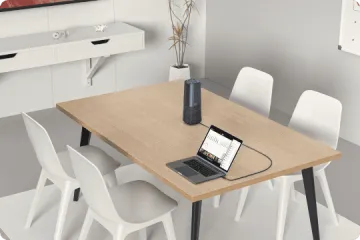



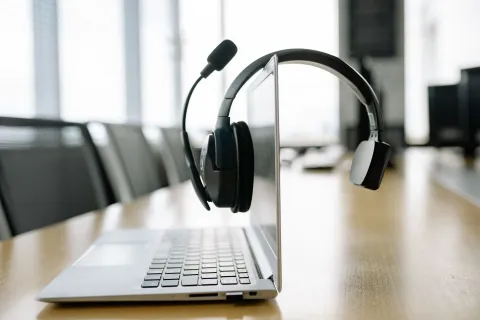
Headset vs headphones—what's the real difference? While they may look similar, they are designed for different priorities. Headsets focus on clear communication with dedicated microphones and call controls, while headphones are built primarily for immersive music and entertainment. This guide breaks down the key differences, compares the best use cases, and explores whether an open-ear headset could offer the best balance for your daily routine.
Key Takeaways
- Headsets prioritize communication: A dedicated boom microphone, noise cancellation, and call controls make them better for meetings and voice calls.
- Headphones prioritize audio: They generally offer better sound quality, bass, and immersion for music and entertainment.
- Your workflow should decide: Frequent callers benefit from a headset, while occasional callers and music-focused users may prefer headphones.
- Open-ear headsets offer a middle ground: They combine call functionality and environmental awareness for work and life on the move.
- There is no universal winner: The best choice depends on whether you prioritize communication, entertainment, or a balance of both.
If you're comparing headset vs headphone, the key difference is simple:
Headphones are designed primarily for listening. Headsets are designed for listening and talking.
That difference affects the microphone, controls, connectivity, and overall design. The right choice depends on whether you spend more time in meetings, listening to music, gaming, or multitasking.
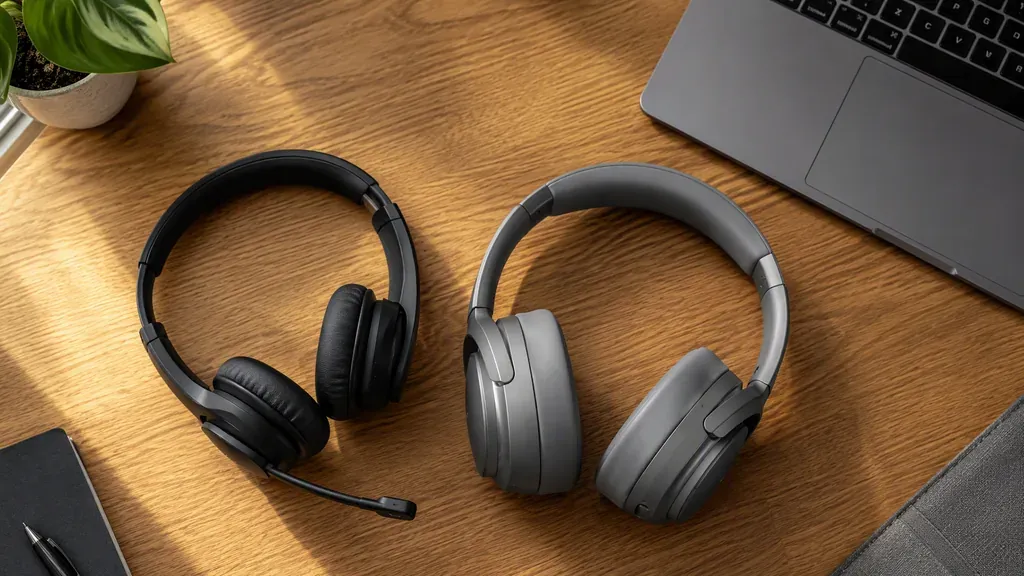
Headset vs Headphones: Key Differences
| Factor | Headset | Headphones |
|---|---|---|
| Microphone | Dedicated mic, often with noise cancellation | None or basic built-in mic |
| Primary use | Calls, meetings, voice chat | Music, movies, entertainment |
| Audio focus | Speech clarity | Full-range sound and bass |
| Controls | Mute, call controls, volume | Play/pause, ANC, volume |
| Connectivity | Often includes USB dongle + Bluetooth | Usually Bluetooth or wired |
| Best for | Work, calls, gaming chat | Music, travel, casual listening |
Neither is universally better. Headsets prioritize communication; headphones prioritize listening
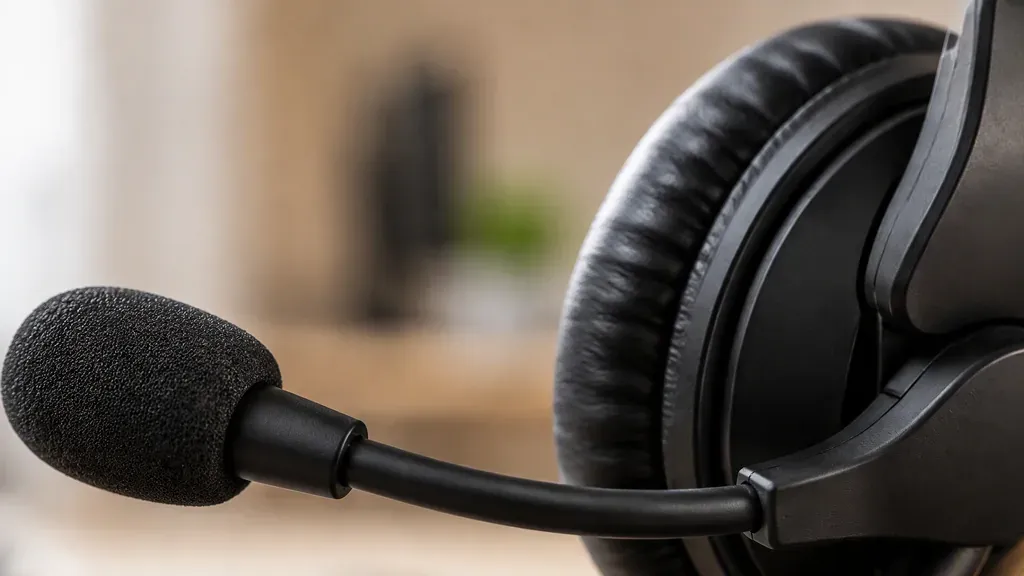
Which Is Better for Your Use Case?
1. 💼 Work & Meetings: Headset Wins
If you spend your day on Zoom, Microsoft Teams, or Google Meet, a dedicated headset is usually the better choice.
A boom microphone sits closer to your mouth, while features like noise cancellation, physical mute controls, and USB dongles make frequent calls easier.
For call-heavy roles such as customer support, sales, and reception, the best call center headset with noise cancelling microphone is in a category where microphone endurance and voice clarity are non-negotiable — and the same principles apply to any professional who spends hours on calls:
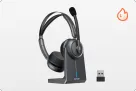
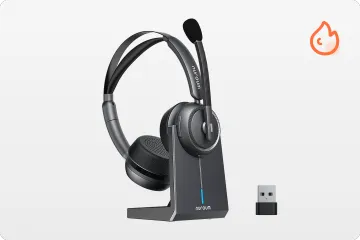
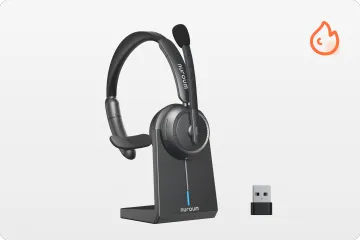
- Nuroum HP31D — Dual-ear wireless headset with a noise-cancelling mic, up to 45 hours of battery life, charging stand, and USB-A dongle.
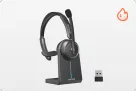
- Nuroum HP31S — Single-ear version for users who need to keep one ear free while working.
Best for: Frequent meetings, customer calls, remote work, and focused office communication.

2. 🎵 Music & Entertainment: Headphones Win
For music, movies, and immersive entertainment, traditional headphones generally have the advantage.
They typically offer:
- Wider soundstage
- Deeper bass
- More detailed audio
- Stronger passive isolation or ANC
Gaming is somewhere in between. A gaming headset makes sense for multiplayer communication, while headphones may offer better sound for single-player games.
Best for: Music, movies, gaming, commuting, and travel.

3. 🏠 Remote & Hybrid Work: It Depends
For remote workers, your call load and environment should determine the choice.
Choose a headset if:
- You spend 1+ hours a day in meetings
- You work around background noise
- You need reliable call controls
- You want plug-and-play connectivity
If your home office has unpredictable background noise — kids, pets, street sounds — the best noise cancelling headset with mic for working from home can be the difference between being heard clearly and being asked to repeat yourself on every call.
Choose headphones if:
- Most of your day is focused work
- Calls are occasional
- Music and entertainment are bigger priorities
Best for: Choose based on your balance of calls, focus time, and entertainment.

Open-Ear Headsets: A Third Option
You don't always have to choose between traditional headphones and a closed headset.
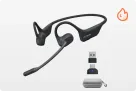
Open-ear headsets sit outside the ear canal, allowing you to hear your surroundings while taking calls or listening to audio. When comparing the best open ear headset with mic for daily work use, the open-ear category carves out a unique space between the isolation of traditional headphones and the communication focus of boom-mic headsets.
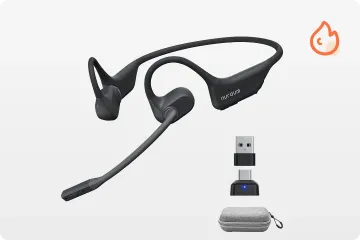
Nuroum OpenEar Pro 2
The Nuroum OpenEar Pro 2 is designed for users who want work-focused communication without completely blocking out their surroundings.

- 31g lightweight design
- Dual noise-cancelling microphones
- USB-A/C dongle
- Mute button
- Open-ear design
Best for: WFH professionals, mobile workers, and anyone who needs to stay aware of coworkers, traffic, or their surroundings.
Trade-off: Open-ear designs provide awareness rather than strong noise isolation.
How to Choose: A Quick Decision Guide
Still deciding? Ask yourself three questions:
| Question | Choose Headset | Choose Headphones |
|---|---|---|
| How often are you on calls? | Frequent meetings | Occasional calls |
| What's your environment? | Shared or noisy | Quiet/private |
| What's your priority? | Clear communication | Music & entertainment |
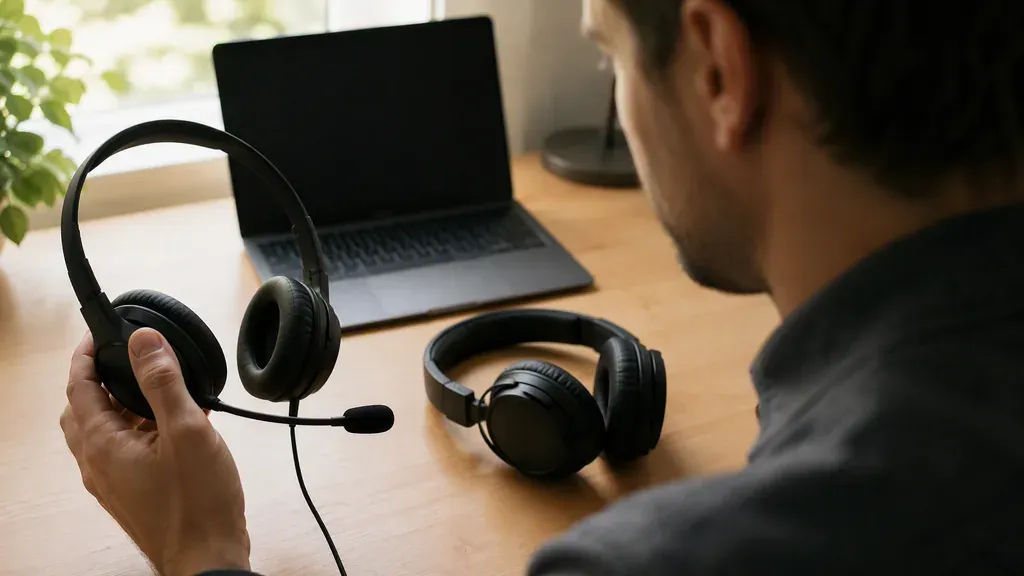
The Simple Answer
For work → Headset
For music → Headphones
For both → Consider a headset + headphones or an open-ear model
If you are looking for the best wireless headset for work that covers calls, comfort, and connectivity without the bulk of a full gaming or audiophile setup, the headset side of this comparison offers the most practical path for most professionals.

FAQs
Can I use regular headphones for work calls?
Yes, but built-in mics often pick up more background noise. For frequent meetings, a dedicated headset with a boom mic usually delivers clearer voice quality.
Is a headset better than headphones with a built-in microphone?
Usually, yes. A boom mic sits closer to your mouth and is better optimized for calls, while built-in headphone mics prioritize convenience. For music, traditional headphones may still be better.
Are open-ear headsets good for office use?
They're excellent if you need situational awareness — shared offices, home workers with family around, or anyone who wears a headset for many hours. They reduce ear fatigue but provide less noise isolation than dual-ear models.
Do gamers need a headset instead of headphones?
For multiplayer voice chat, yes — the boom mic keeps teammates happy. For single-player games where immersion matters most, quality headphones paired with a separate microphone can sound even better.
Should I choose a wired or wireless headset for meetings?
Wireless with a USB dongle is the most convenient: instant pairing, stable connection, and freedom to move. A best wireless headset with mic for work that includes a USB dongle sidesteps the Bluetooth pairing friction and audio quality compromises that can disrupt meetings.