

















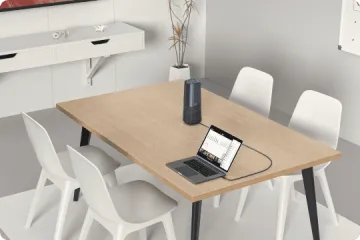




A customer is calling about a delayed refund. As another agent talks nearby, the background conversation bleeds into the microphone, making it harder for AI to distinguish the customer’s voice. The system mishears “refund approved” as “refund denied,” forcing the agent to clarify and prolonging the call. In an AI-driven call center, even smart software can struggle with noisy audio. That is why choosing a better headphone for call center agents matters: frontline AI is only as good as its audio.
Key Takeaways
- Better input produces better AI. A clear microphone protects every downstream transcript and summary.
- Ear design is workflow design. Dual-ear supports focus; single-ear preserves awareness.
- Comfort belongs in the business case. Fit and reliable controls affect whether agents can keep using the hardware through long shifts.

Why Do Human Agents Still Matter in AI-Driven Call Centers?
Human agents remain essential because AI retrieves, drafts, and flags, while people interpret emotion, navigate exceptions, and take responsibility for the outcome.
ContactBabel’s 2025 US guide found that 52% of responding call centers used call transcription, 45% used call summaries, and only 5% used in-call agent assistance.
Those figures point to AI working alongside people, not replacing them. A bot may surface a policy, but an agent decides whether it fits a frustrated customer’s situation. As AI becomes more involved in real-time support, agents need to listen, judge, and act together. A reliable call center headset helps keep customer conversations clear, so agents can focus on the human decisions AI cannot make.
Why Does AI-Assisted Customer Service Need Clear Audio?
AI is only as dependable as the conversation data it receives. A noise cancelling headphone for call center agents should improve voice capture before transcription and analysis begin.
| Stage | What happens | What poor input causes |
|---|---|---|
| Audio capture | Microphones collect both speakers | Hiss, overlap, or distant voice |
| Speech processing | ENC and echo reduction isolate speech | Weak or distorted words |
| AI analysis | Transcription, intent, sentiment | Missing names, dates, or intent |
| Agent assistance | Suggestions, knowledge, summaries | Confident but incorrect output |
Background conversations, keyboard clicks, and overlapping voices increase the chance of errors. A noise-cancelling work headset is essential AI-assisted call center customer service hardware, helping reduce background noise for clearer conversations and more reliable AI support.

How Should You Build AI-Assisted Call Center Customer Service Hardware?
Cleaner audio supports better understanding, resolution, and customer satisfaction; it does not guarantee those outcomes on its own. An AI assisted call center customer service hardware stack needs clear input, comfortable tools, dependable connections, and a measurement plan. Build from the microphone outward.
- Microphone noise cancellation: ENC filters what the caller or system hears. It is different from ANC, which reduces sound reaching the agent. A noise canceling headset for work helps keep your voice clear in busy environments.
- Connection options: Bluetooth multipoint helps with a laptop and phone; a USB dongle provides plug-and-play access to restricted work PCs.
- Prevent agent burnout; premium headsets help only when comfort is measured. The common complaint “my ears hurt after wearing headphones all day” points to a real purchasing risk. Check adjustable fit, cushioning, shift-level wear, and controls that avoid repeated screen checks.
- Outcome tracking: Compare transcript-editing time, repeat requests, FCR, CSAT, disconnects, and agent satisfaction before and after deployment.

How to Choose the Right Headphone for Call Center Teams
Choose by workflow, then verify the microphone, fit, connection, and support details. For a noise cancelling work headset, the microphone path matters more than a dramatic noise-reduction claim.
| Buying criterion | What to verify |
|---|---|
| Microphone | Voice-focused pickup, ENC, echo reduction, clear mute feedback |
| Ear design | Focus versus environmental awareness |
| Shift comfort | Adjustable headband, soft cushions, manageable weight |
| Connectivity | Wireless stability, multipoint, wired or dongle fallback |
| Battery | Rated call time that covers real shifts, not just music playback |
Nuroum HP31D vs. HP31S: Which Workflow Fits?
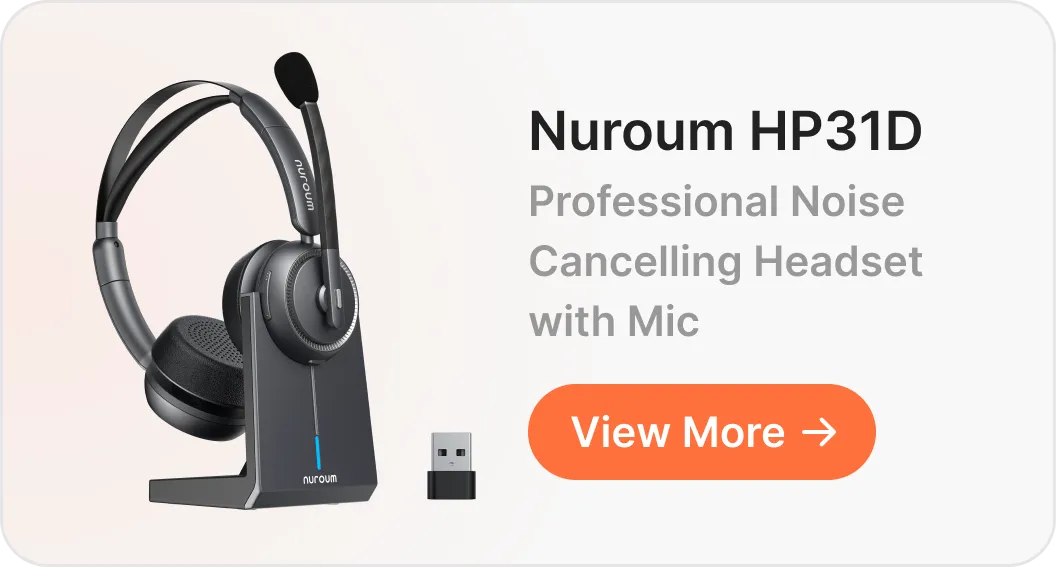
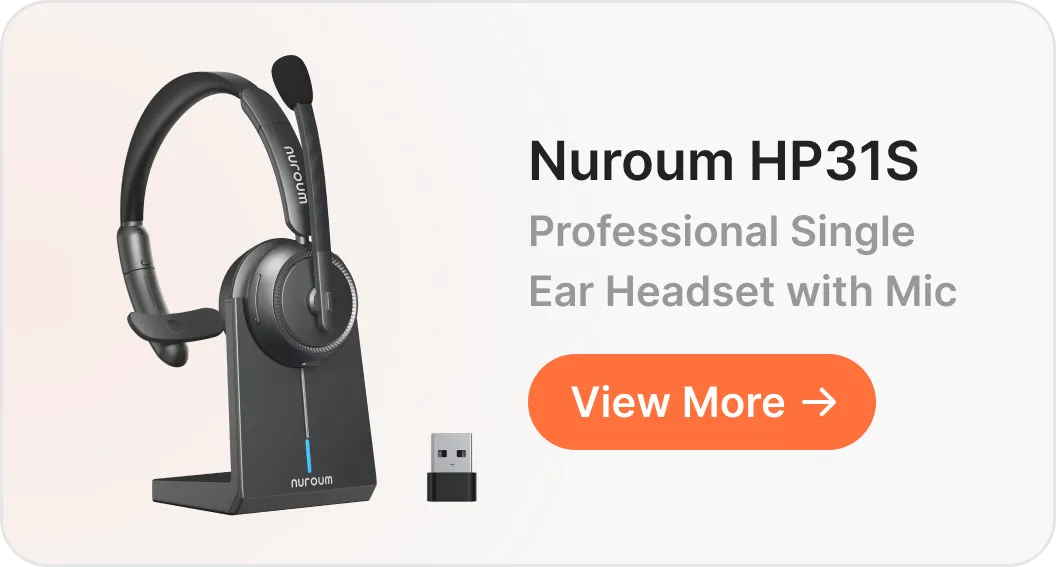
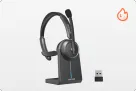
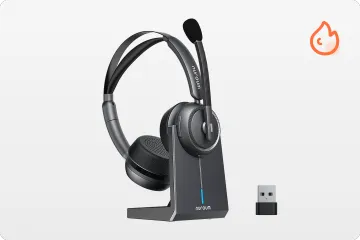
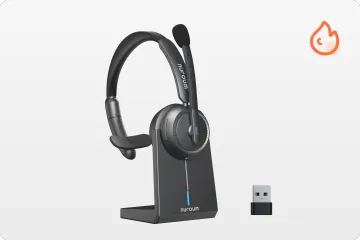
The HP31D is the focus-oriented choice; the HP31S is the awareness-oriented choice. Both 2nd-generation models combine dual-microphone AI ENC with a HiFi4 DSP, Bluetooth 5.4 multipoint, USB-A dongle and wired options, a charging stand, one-click mute, and up to 35 hours of calls or 45 hours of music.
| Model | Design | Best fit | Trade-off |
|---|---|---|---|
| Nuroum HP31D | Dual-ear | Complex complaints, noisy floors, high-volume focus | Less awareness of nearby colleagues |
| Nuroum HP31S | Single-ear | Open-plan teams, receptions, frequent coordination | Less listening isolation |
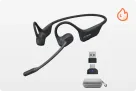
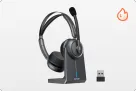
The HP31D’s dual-ear design suits deep-focus work, while its 250° boom and one-click mute keep common controls within reach. The single-ear HP31S keeps one ear open for a supervisor or teammate—a pattern common in call centers because collaboration rarely pauses during a shift. While no headset can prevent agent burnout on its own, premium headsets can support comfort during long shifts. See why call centers use wireless mono headsets for more context.
What real users say: One buyer of both models described the distinction:
For home office use, I prefer the mono headset over the stereo, as the full environmental noise isolation is not what I want.
— Mads H, 5-star verified Nuroum website review, May 13, 2026
A remote customer-service worker described a practical noise test:
The noise reduction is amazing. Even with hammering and drilling going on next door, my clients hear me perfectly, and I don’t get distracted.
— Harper.W, 5-star verified Nuroum website review, February 4, 2026
Her experience supports evaluating the microphone in the place where agents work. It does not promise identical results in every acoustic environment.
For more single-ear options, compare the best single ear Bluetooth headset for phone calls.

Which Call Center Headset Setup Fits Your Team?
Match the headset to the work rather than issuing one model to everyone. Different agents can need different acoustic priorities on the same floor. Choosing the right headphone for call center means balancing focus, collaboration, and comfort.
- Focus-intensive teams: Choose the dual-ear HP31D for complex cases, quieter concentration, or heavy background activity.
- Collaboration-heavy teams: Choose the single-ear bluetooth headset HP31S where agents coach one another and need environmental awareness.
- Hybrid and budget-conscious teams: Favor models with a dock and dongle included; these reduce accessory decisions and support laptop, phone, and wired fallback.
Start with a pilot across varied queues and locations. Ask agents about comfort, then compare AI-assisted workflows with the same metrics used for service quality.
Better AI Starts with Better Communication
AI can make a call center smarter, but it cannot compensate for poor audio input. Clear capture, appropriate ear coverage, and practical reliability turn AI assistance into a useful second set of eyes—not another source of errors.
Compare the HP31D for focused listening and the HP31S for collaborative awareness. For broader options, see our guide to the best call center headsets or the best office headset picks for hybrid work.

FAQ: What Else Should AI-Ready Call Center Buyers Check?
Verify platform behavior, battery assumptions, and wired fallback before standardizing equipment.
1. Should every agent get the same headphone for call center work?
Not necessarily. Collaboration-heavy roles may suit a single-ear design; focus-heavy queues may suit a dual-ear design. A noise cancelling work headset can also help reduce background distractions in busier environments.
2. How should IT verify compatibility when choosing AI-assisted call center customer service hardware?
Test microphone and speaker selection in the actual calling application. Confirm which on-headset call controls work, and check that USB dongles meet device-management policies.
3. Does a 35-hour call rating mean five eight-hour shifts?
No. It is an estimated maximum. Nuroum rates the HP31S and HP31D for up to 35 hours of calls at 70% volume; real use varies with connection and conditions.
4. Can a wireless noise cancelling headphone for call center also offer a wired connection?
Yes. The HP31S and HP31D support Bluetooth, a USB-A dongle, and a USB cable, which gives IT fallback options when wireless is restricted.
5. Can premium headsets prevent agent burnout during long shifts?
No headset can prevent burnout on its own, but comfortable premium headsets may help reduce physical discomfort during extended calls. Consider fit, weight, and listening comfort alongside audio quality.