



























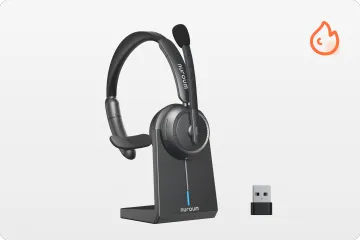

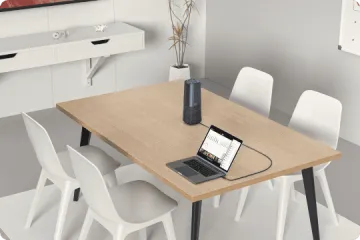




Ever wondered how some headsets can capture your voice clearly even in a noisy office or busy café? The answer is beamforming microphone technology. By combining multiple microphones with advanced DSP processing, beamforming headsets can focus on your voice while filtering out surrounding noise. This guide explains how microphone arrays work, how beamforming improves communication, and why technologies like those found in the Nuroum HP31D are becoming essential for remote work, online teaching, and professional calls.
Key Takeaways
- Beamforming microphone uses multiple microphones and DSP algorithms to focus on your voice while reducing unwanted background noise.
- A microphone array improves call quality by aligning, reinforcing, and filtering audio signals in real time.
- Compared with traditional single microphones, beamforming technology delivers clearer voice pickup for meetings, online teaching, and call centers.
- A professional beamforming microphone headset combines microphone arrays, DSP, and AI noise reduction for reliable communication in noisy environments.
- The Nuroum HP31D uses dual microphones, HiFi4 DSP, and AI-powered ENC to enhance voice clarity and suppress background distractions.
Every remote worker has been there: you're mid-sentence on a call and your colleague asks, "Sorry, can you repeat that? There's a lot of noise behind you." The culprit is usually a single microphone that hears everything — the keyboard, the dog, the HVAC — just as well as it hears you. Investing in a work from home headset with noise cancelling microphone is the first step toward solving this problem at the hardware level. A beamforming microphone exists to stop that. It's the technology quietly making modern work headsets dramatically better at picking up one voice and ignoring everything else.
This guide explains what a beamforming microphone is, how a microphone array works, and how that DSP magic ends up inside an everyday headset. By the end, you'll understand what separates a decent headset mic from a genuinely professional one, and you'll know what to look for when you're choosing a beamforming microphone headsets for meetings, calls, and AI voice tools.
What Is a Beamforming Microphone?
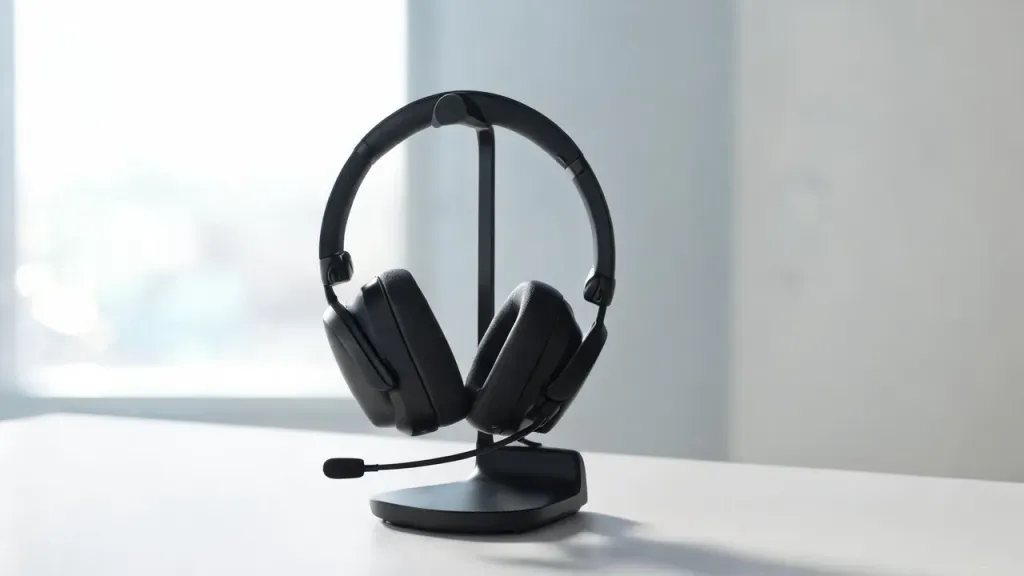
A beamforming microphone is a microphone that "points" its sensitivity toward a specific direction — usually your mouth — instead of picking up sound equally from all sides. It achieves this by combining the signals from multiple microphones arranged in a microphone array, then using digital signal processing (DSP) to reinforce sound coming from the target direction and suppress sound arriving from elsewhere.
Think of it like a spotlight instead of a floodlight. A single omnidirectional mic is a floodlight: it captures sound from every direction with roughly the same sensitivity. A beamforming setup is the spotlight: it concentrates its attention on the person speaking while leaving the rest of the room in the dark.

The name comes from the "beam" of sensitivity the array creates. In practice, this beam is not a physical object — it's a mathematical pattern computed in software. The microphones physically capture sound, and the DSP decides how to combine them so that your voice is loud and clear while background noise is pushed down.
How Does a Microphone Array Work?
A microphone array is simply a group of microphones placed at known positions, usually a fixed distance apart. Because each microphone sits in a slightly different spot, it captures the same sound field at a slightly different moment in time.
That timing difference is the key. Sound travels at a fixed speed, so a voice coming from directly in front of the array reaches each microphone at (almost) the same instant. But background noise coming from the side reaches the microphones at clearly different times. The DSP exploits this contrast:
Alignment: The processor delays and aligns the signals so the voice from the target direction lines up across all microphones.
Reinforcement: Aligned signals are summed, which makes the target voice stronger.
Cancellation: Signals that are misaligned (the noise) partially cancel each other out when combined.
The result is a clean, focused pickup of the person speaking, with office noise reduced before it ever reaches the person on the other end of the call. This beamforming for microphone arrays is what gives modern headsets their "noise-cancelling" microphone performance.

How Beamforming Helps Headsets Capture Your Voice
A headset is an ideal place for a beamforming microphone because the geometry is fixed and the target is predictable. The microphones know roughly where your mouth will be, so the array can be tuned to focus there.
In a noisy home office or a busy call-center floor, that focus matters. The best headphones for calls in noisy environment combine beamforming microphone arrays with DSP-powered noise suppression to isolate your voice from the chaos around you. Without beamforming, a headset mic transmits your voice mixed with the vacuum, the construction next door, or fifty other conversations. With it, the DSP leans into your voice and actively suppresses everything else, so your message arrives clear on the first try.
This is especially valuable for AI voice tools and dictation, where accuracy depends on clean audio. It also reduces "talker fatigue" — the mental strain of repeating yourself and straining to hear whether you've been understood. When your headset reliably captures your voice, the entire conversation feels more natural.
Beamforming also keeps your voice consistent, because the microphone locks onto your mouth and holds the volume steady whether you lean forward, swivel your chair, or turn your head slightly. That consistency matters on long conference calls, where a fluctuating signal makes you harder to understand and more tiring to listen to.
How Is Beamforming Implemented in Microphone Arrays?
If you're the curious type (or a developer wondering how to implement beamforming for microphone arrays yourself), the pipeline is fairly consistent across products:
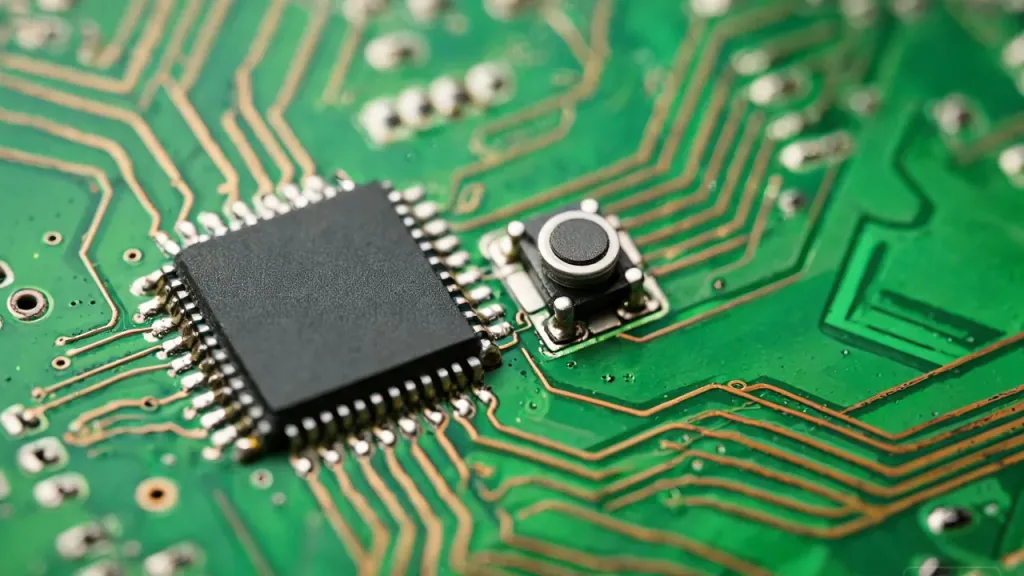
Capture: Two or more microphones sample the audio simultaneously and synchronously. On a headset, these are typically small MEMS mics in the boom or earcup.
Sample-rate lock: All channels must be sampled in perfect sync, or the timing analysis breaks down. This is why array mics are designed as a unit rather than bolted together ad hoc.
DSP algorithms: A digital signal processor applies the core math. Common approaches include delay-and-sum beamforming (simple and robust) and adaptive beamforming (which learns and updates the beam in real time to track noise changes).
Post-processing: After beamforming, the signal often passes through echo cancellation, gain control, and sometimes a neural-network model for extra noise reduction.
For most people, you don't need to implement any of this. Modern headsets like the Nuroum HP31D wrap the entire chain — microphone array, DSP, and AI noise reduction — into a single product, so the hard part is done for you. When choosing a best wireless headset for work, look for one that integrates these technologies out of the box rather than requiring manual configuration.
What Makes a Good Beamforming Microphone Headset?
Not all "noise-cancelling" headsets are created equal, and the phrase can mean different things. Here's what separates a genuinely good beamforming microphone headset from a marketing label:
Real microphone array: Look for two or more microphones working together, not a single mic marketed as noise-cancelling.
Dedicated DSP: A capable processor (like a HiFi4 DSP) does the heavy lifting of beamforming and noise reduction.
AI or neural-network enhancement: Extra models can push background-noise rejection further than pure DSP alone.
Low latency: For real-time calls, latency must stay low so the audio feels live. Bluetooth 5.4 with low-latency codecs helps here.
Comfort and ergonomics: A great mic is useless if you can't wear the headset all day. Look for soft cushions, a padded headband, and a boom that stays where you put it.
A reliable mute: A dedicated mute button with a private voice prompt means you can cut audio instantly without your team hearing it.

If you want a no-compromise work headset, look for a unit that combines a best wireless headset with mic for work with genuine beamforming and wide platform compatibility. That combination is what makes a headset usable across Zoom, Teams, Webex, and your phone.
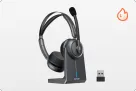
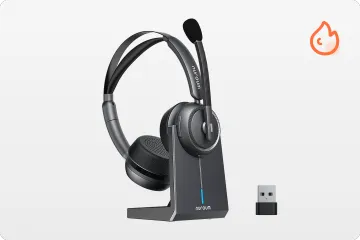
Nuroum HP31D: A Communication Headset Powered by Advanced Microphone Technology
The Nuroum HP31D is a good concrete example of these ideas in practice. It pairs dual noise-cancelling microphones with AI-Powered ENC (Environmental Noise Cancellation) driven by a HiFi4 DSP and a neural network, reducing up to 99.9% of background noise. In plain terms, your voice is captured and separated from the room before it's transmitted, which is exactly the beamforming-style behavior described above.
Beyond the microphone array, the HP31D is built for real workdays. Bluetooth 5.4 with multi-point connection lets you switch between two devices, and the bundled USB-A dongle gives you low-latency, plug-and-play audio on computers without Bluetooth. You get up to 35 hours of call time and 45 hours of music on a single charge, plus a charging stand and a one-click mute button. The 250° rotatable boom and 180° rotatable earcups keep things comfortable whether you prefer the mic on the left or the right.
It's compatible with Windows, Mac, Linux, Android, and iOS, and it works out of the box with Teams, Zoom, Webex, and other platforms. If you're shopping for a reliable bluetooth noise cancelling headset with mic for calls, online courses, or a call center, the HP31D is worth a look.
Of course, beamforming and ENC aren't the only path to a clear voice; other headsets use differently tuned DSP or mic placements. What matters is that the technology genuinely reduces background noise rather than just marketing the label. The HP31D is a strong example of a modern headset that puts the microphone array to real use.
FAQs
What is a beamforming microphone?
A beamforming microphone uses two or more microphones arranged in a microphone array to combine their signals with DSP algorithms. It focuses on the speaker's voice in a specific direction while canceling sounds from other angles, improving voice clarity on calls.
How does a microphone array cancel background noise?
A microphone array samples the same sound field at slightly different points. Because background noise reaches each mic at slightly different times, the DSP estimates and subtracts that shared noise, while reinforcing the voice arriving from the intended direction.
Is a beamforming microphone headset better than a normal headset mic?
For voice communication, yes. A beamforming microphone headset separates your voice from office noise, typing, and HVAC hum better than a single-mic design. It's especially useful for remote work, call centers, and busy home offices. For call center environments in particular, a best call center headset with noise cancelling microphone built on beamforming technology ensures agents are heard clearly through every shift.
How do I implement beamforming for microphone arrays?
Implementation involves arranging multiple microphones in a fixed geometry, sampling them synchronously, then applying a delay-and-sum or adaptive beamforming algorithm in a DSP processor. Many commercial headsets package this into a single chip so you don't have to build it yourself.
Does the Nuroum HP31D use beamforming microphone technology?
Yes. The Nuroum HP31D uses dual noise-cancelling microphones with AI-Powered ENC driven by a HiFi4 DSP and a neural network, reducing up to 99.9% of background noise so your voice stays clear on every call.