

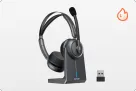
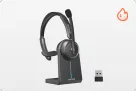
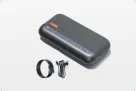
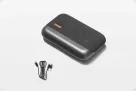




















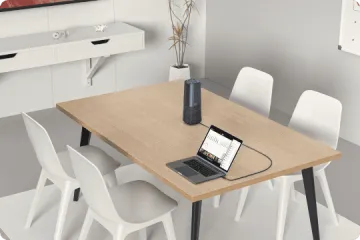




Clear communication depends on more than just having a microphone — it depends on how intelligently that microphone processes sound. DSP (Digital Signal Processing) is the technology working behind the scenes to remove background noise, enhance your voice, and make every word easier to understand. In this guide, we explain how DSP works, why it matters more for voice communication than music, and how DSP-powered headsets like the Nuroum HP31D help professionals stay heard in any environment.
Key Takeaways
- DSP (Digital Signal Processing) is the key technology behind clearer voice communication, transforming raw microphone input into clean, professional audio.
- Unlike traditional noise cancellation, microphone-side DSP improves what others hear by filtering background noise, reducing echo, and enhancing voice clarity.
- AI-powered DSP helps headsets adapt to complex environments, suppressing unpredictable noises like conversations, typing, and household sounds in real time.
- A professional DSP headset is essential for remote workers, online teachers, and call center teams who rely on consistent voice quality.
- The Nuroum HP31D combines HiFi4 DSP, AI noise cancellation, and dual-mic technology to deliver reliable communication in noisy environments.
What Is a DSP in Audio? Why It Matters More for Voice Than Music
If you have been on a video call where your colleague's voice came through crystal clear despite a barking dog and running dishwasher in the background, you have experienced the power of DSP. Short for Digital Signal Processing, DSP is the invisible technology that separates a muffled, noisy call from a professional-grade conversation. But what is a DSP in audio, exactly—and why has it become a non-negotiable feature in communication headsets rather than a nice-to-have for music lovers?

The truth is, DSP matters far more for voice than it ever did for music. While audiophiles debate subtle differences in soundstage and tonal warmth, remote workers, customer support agents, and online educators face a more pressing problem: making sure the person on the other end can hear them clearly. This guide breaks down what DSP is, how it works in modern headsets, and why a DSP-powered communication tool like the Nuroum HP31D has become essential for professional work.
What Is a DSP in Audio?
At its core, DSP—Digital Signal Processing—is the use of mathematical algorithms to manipulate audio signals in real time. When sound enters a microphone, it arrives as an analog waveform. A DSP chip converts that signal into digital data, processes it using specialized algorithms, and converts it back to analog for output.
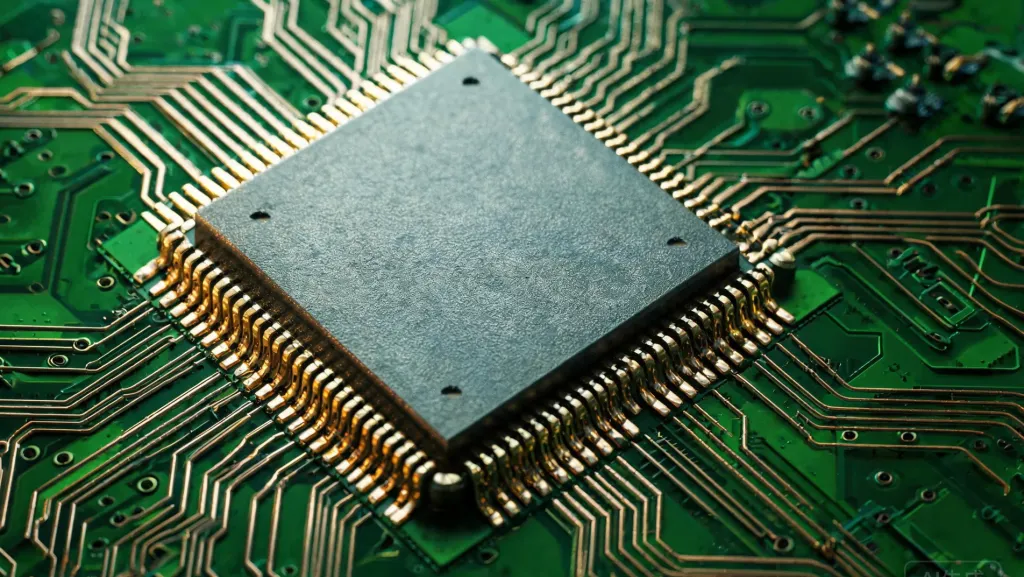
Digital signal processing chips are purpose-built microprocessors designed to handle these operations at incredible speed. Unlike a general-purpose CPU that juggles countless tasks, a DSP chip is optimized for the rapid multiply-accumulate operations that audio filtering requires. This specialization allows it to process audio frames in milliseconds—fast enough that the listener never perceives a delay.
In a headset context, the DSP chip handles several critical functions simultaneously:
- Noise reduction: Filtering out steady background sounds like fans, air conditioners, and keyboard clatter
- Echo cancellation: Removing the speaker's voice that leaks back through the microphone
- Voice enhancement: Boosting the frequencies where human speech is most intelligible
- Automatic gain control: Adjusting microphone sensitivity so your voice stays at a consistent volume
The key insight is that DSP does not just make audio sound better—it makes communication possible in environments where it otherwise would not be. Without DSP, a headset picks up every ambient sound indiscriminately, leaving the listener struggling to separate your voice from the noise.
Why DSP Matters More for Voice Than Music
Here is a question that surprises many people: if DSP is so powerful, why does it not matter as much for music as it does for voice?
The answer comes down to what each application demands. Music playback is a one-way experience. You press play, and the DSP's job is mostly enhancement—adjusting EQ, adding spatial effects, or applying subtle compression. If the DSP introduces a tiny artifact or misses a nuance, most listeners will not notice. The audio file already contains a professionally mixed, mastered signal.

Voice communication is fundamentally different. It is bidirectional, real-time, and unpredictable. The DSP must process an unknown, constantly changing audio environment—someone walks into the room, a siren passes outside, a colleague starts typing—while preserving the clarity and naturalness of your speech. There is no second take, no post-production, no mastering engineer.
Three factors make voice the harder problem:
- Unpredictability: Music is a fixed recording; voice happens live with no control over what enters the microphone
- Latency sensitivity: A 50-millisecond delay in music is unnoticeable, but the same delay in conversation creates an awkward exchange
- Intelligibility over fidelity: Music listeners want warmth and detail; call participants want clarity and comprehension
This is why professional headsets with noise cancelling mic technology invest heavily in DSP. When comparing the best headsets for work, the ones with dedicated DSP processors consistently outperform generic Bluetooth models on voice clarity — because the goal is not to make your voice sound like a studio recording, it is to make sure every word is understood on the other end, regardless of where you are working from.
How DSP Improves Microphone Quality
The microphone is where DSP earns its keep. A raw microphone signal is messy—it captures everything in its pickup pattern, including sounds you do not want the listener to hear. DSP transforms that raw input into a clean, professional voice signal through several layered techniques.
- Spectral noise gating is the first line of defense. The DSP analyzes the frequency spectrum of incoming audio and identifies which frequencies contain your voice versus background noise. Steady-state noises—like the hum of an air conditioner or the whir of a computer fan—can be identified and suppressed without affecting the frequencies where speech lives.

- Echo cancellation removes the speaker's voice that leaks from your headset speaker back into your microphone. The DSP creates a reference model of the outgoing audio and subtracts it from the incoming microphone signal, eliminating the echo before transmission. If you are experiencing persistent echo issues on calls, learning how to fix echo on mic can help you diagnose whether the problem is room acoustics, software settings, or hardware limitations.
- Voice activity detection allows the DSP to distinguish between when you are speaking and when you are silent. During silent periods, the microphone can be attenuated to prevent ambient noise from leaking through—this is what prevents the "I can hear your whole office" problem on conference calls.
- Automatic gain control ensures your voice volume stays consistent whether you are whispering or speaking normally, preventing the dramatic volume swings that force listeners to constantly adjust.
Together, these DSP functions take a standard microphone capsule and make it perform like a professional broadcast setup. For anyone using a wireless headset with mic for work, this is the difference between being asked to repeat yourself and being heard the first time.

DSP Noise Cancelling Explained
One of the most common points of confusion is the relationship between DSP noise cancelling and active noise cancellation (ANC). They sound similar, but they serve different purposes and operate on different sides of the headset.
ANC works on the listener's side. Microphones on the exterior of the earcups pick up ambient noise, and the DSP generates an inverted sound wave—180 degrees out of phase—that cancels the incoming noise through destructive interference. This reduces what you hear, useful for focus and comfort, but does nothing for the person on the other end of your call.
DSP noise cancelling on the microphone works on the speaker's side. The boom microphone picks up your voice along with surrounding noise, and the DSP filters out the unwanted sounds before transmitting your voice. For professionals who take calls from unpredictable environments, the best headphones for calls in noisy environment demonstrate exactly how microphone-side DSP transforms a chaotic acoustic space into a clear, professional signal.
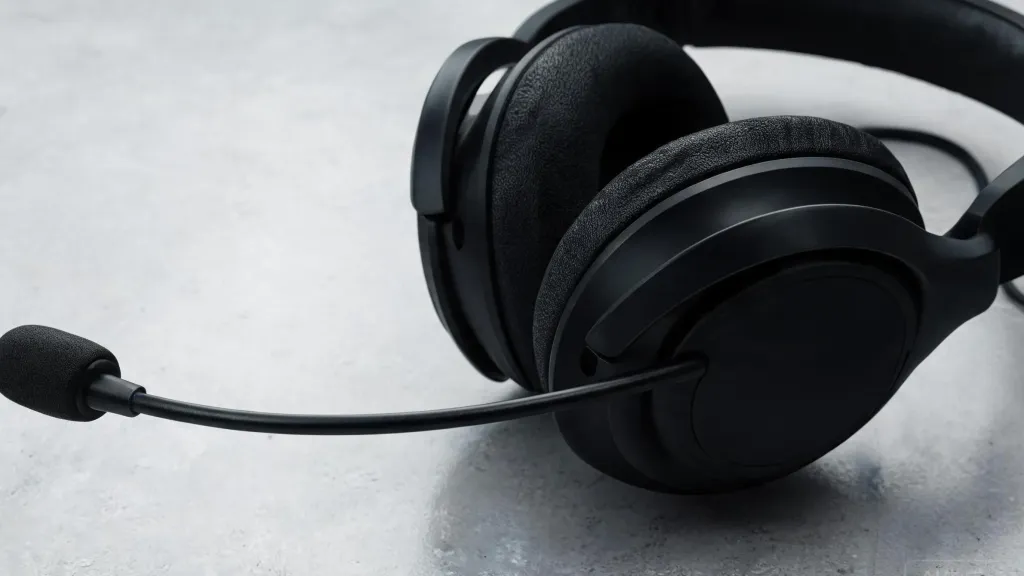
Modern DSP headsets often combine both technologies, but for professional communication, microphone-side DSP noise cancelling is the more critical of the two. A headset with excellent ANC but poor microphone DSP will make your environment quiet while making your voice noisy on calls—the exact opposite of what a professional needs.
The latest advancement is AI-enhanced DSP, which replaces fixed algorithms with neural network models trained on vast datasets of speech and noise samples. Traditional DSP uses preset filters that work well for predictable, steady noises but struggle with complex, variable sounds like overlapping conversations or sudden impacts. AI-enhanced DSP can distinguish between a voice and a similarly pitched noise in real time, achieving noise reduction depths of 40 to 60 dB compared to the 10 to 15 dB typical of conventional DSP filters.
Nuroum HP31D: DSP Designed for Professional Communication
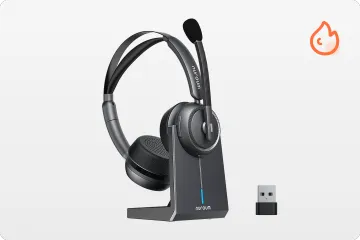
Not all DSP headsets are built the same. The Nuroum HP31D is engineered specifically for professional communication, combining a dedicated HiFi4 DSP processor with AI-powered environmental noise cancellation through its ProperClean 2.0 audio technology.

The HiFi4 DSP at the heart of the HP31D runs a deep learning model that removes up to 60 dB of background noise—enough to virtually eliminate air conditioners, keyboard clatter, household activity, and office chatter. Nuroum reports up to 99.9% background noise reduction, which in practice means the person on the other end of your call hears your voice, not your environment. For remote professionals who need a work from home headset with noise cancelling microphone, the HP31D's DSP-driven ENC delivers the vocal clarity that makes every call feel like a private office conversation.
Key specifications that make the HP31D a standout bluetooth noise cancelling headset with mic:
| Feature | Specification |
|---|---|
| DSP Processor | HiFi4 with neural network |
| Noise Reduction | Up to 60 dB (99.9% of background noise) |
| Microphone | Dual-mic AI noise reduction with voice boost |
| Bluetooth | 5.4 with multi-point connection |
| Latency | 30 ms ultra-low |
| Battery | 35 hours calls / 45 hours music |
| Connectivity | Bluetooth, USB-A dongle, USB-C cable |
| Compatibility | Teams, Zoom, Webex, Windows, Mac, Linux, iOS, Android |
| Price | Approximately $90 |
What sets the HP31D apart from generic Bluetooth headsets is the combination of a purpose-built DSP with AI-trained noise models. Rather than relying on fixed frequency filters, the neural network adapts to the acoustic environment in real time—suppressing a baby crying in one moment and a vacuum cleaner in the next without distorting your voice.
The dual-microphone array adds another layer of voice isolation. By comparing signals from two microphones at different distances from your mouth, the DSP performs beamforming—focusing on sound from the direction of your voice while attenuating sounds from other directions.
At approximately $90, the HP31D delivers DSP performance that rivals headsets costing two to three times as much, making it one of the most value-oriented options for professionals who need reliable call quality every day.
Who Benefits Most from a DSP Headset?
DSP technology is not just for audiophiles or tech enthusiasts. For certain professionals, it is the difference between a productive workday and a frustrating one.
- Remote and hybrid workers benefit from DSP's ability to transform any room into a viable workspace. A bluetooth headset with noise cancelling microphone ensures that whether you are calling from a kitchen table or a co-working space, your background does not become the meeting's focal point.
- Customer support teams and call center agents spend hours each day on calls, often in open-plan environments where dozens of colleagues are doing the same. Without DSP, every call becomes a competition between voices. For these high-density environments, the best call center headset with noise cancelling microphone filters out the cross-talk and keyboard noise, letting the agent focus on the customer and the customer focus on the agent.
- Online educators need their voice to carry clearly through video platforms where compression and bandwidth limitations already degrade audio quality. DSP pre-cleans the signal before it reaches the platform, giving students the best possible chance of understanding every word.

- Developers and AI tool users represent a growing category. As AI voice assistants, dictation tools, and coding copilots become part of the daily workflow, the accuracy of speech recognition depends heavily on input quality. DSP removes the noise that causes misrecognition, making AI interactions faster and more reliable.
- IT buyers and procurement teams should care about DSP because it reduces support tickets. Fewer "I cannot hear you" complaints and fewer meeting restarts translate directly into time saved across an organization.
FAQs
- Is DSP the same as active noise cancellation (ANC)?
No. ANC generates anti-noise waves to reduce ambient sound reaching your ears through the earpieces. DSP processes the microphone signal to clean up your outgoing voice by filtering out background noise before it reaches the listener. Most professional headsets use both, but microphone-side DSP is the more critical technology for call quality.
- Do I need a DSP headset if I already own noise-cancelling headphones?
If your primary use is calls, meetings, or AI voice interaction, yes. Consumer ANC headphones focus on what you hear, not what others hear from your microphone. A DSP headset ensures your voice is clean and intelligible on the receiving end, which matters more for professional communication than music playback quality.
- Can DSP improve AI voice assistant accuracy?
Yes. AI voice assistants and speech-to-text engines perform significantly better with clean audio input. DSP removes background noise and isolates speech before the signal reaches the AI model, reducing misrecognition and improving response accuracy, especially in noisy environments where built-in laptop microphones struggle.
- Does DSP processing add noticeable latency to calls?
Modern DSP chips process audio in real time with latency typically under 30 milliseconds, which is imperceptible in conversation. High-quality headsets like the Nuroum HP31D achieve 30 ms total wireless latency, keeping calls natural and responsive.
- How much should I expect to spend on a good DSP headset?
Professional DSP headsets range from $80 to $300. The Nuroum HP31D offers a HiFi4 DSP processor with AI-powered noise cancellation at approximately $90, making it one of the most value-oriented options for professional communication without sacrificing core DSP performance.